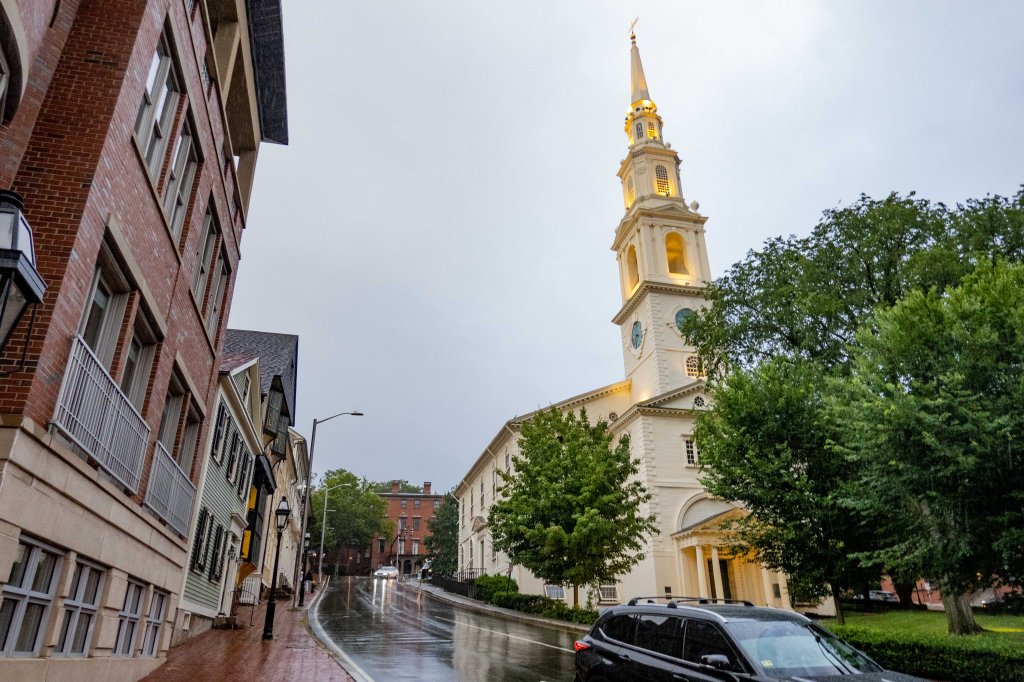
Today’s plan was Newport, Rhode Island, the town famous for its jaw-dropping Gilded Age mansions and its genuinely cute downtown. It delivered on both fronts, more or less.
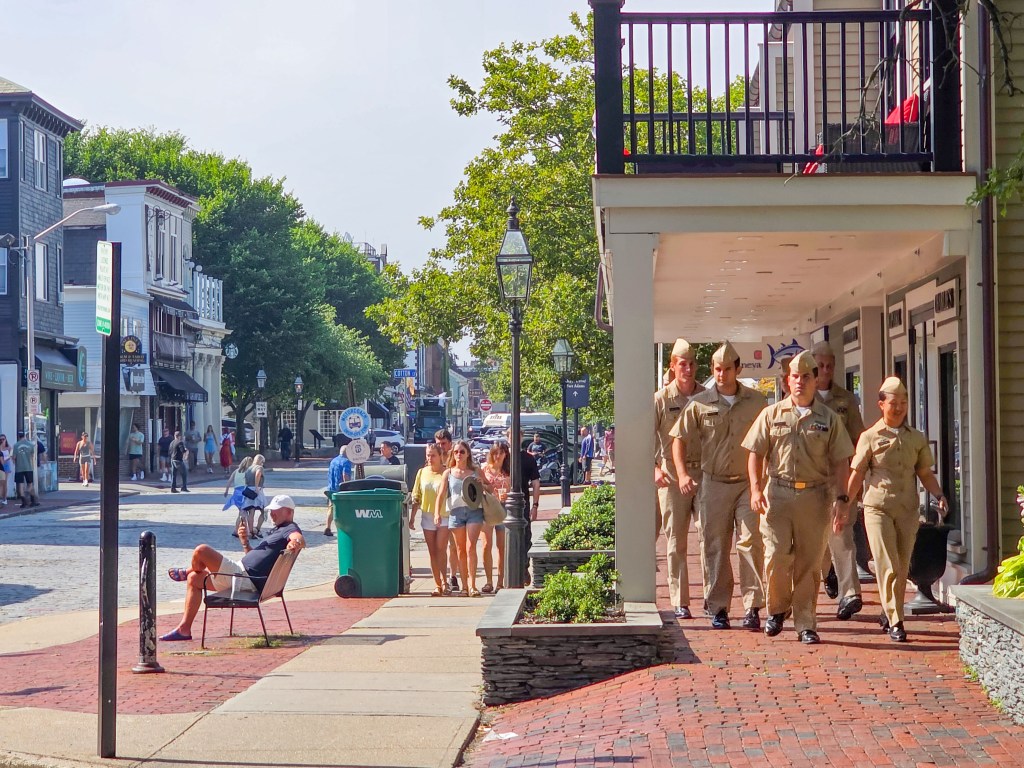
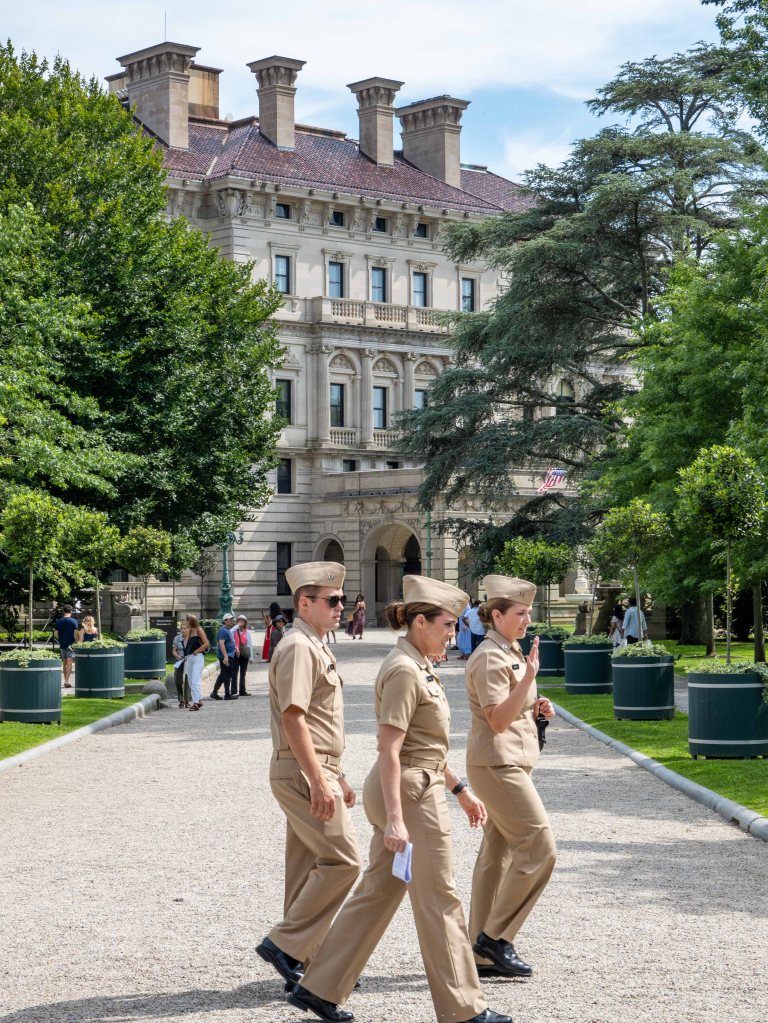
Newport is also the location for the U.S Navy Naval Station, which is home of the home to the Naval War College. We saw many military people walking around town.
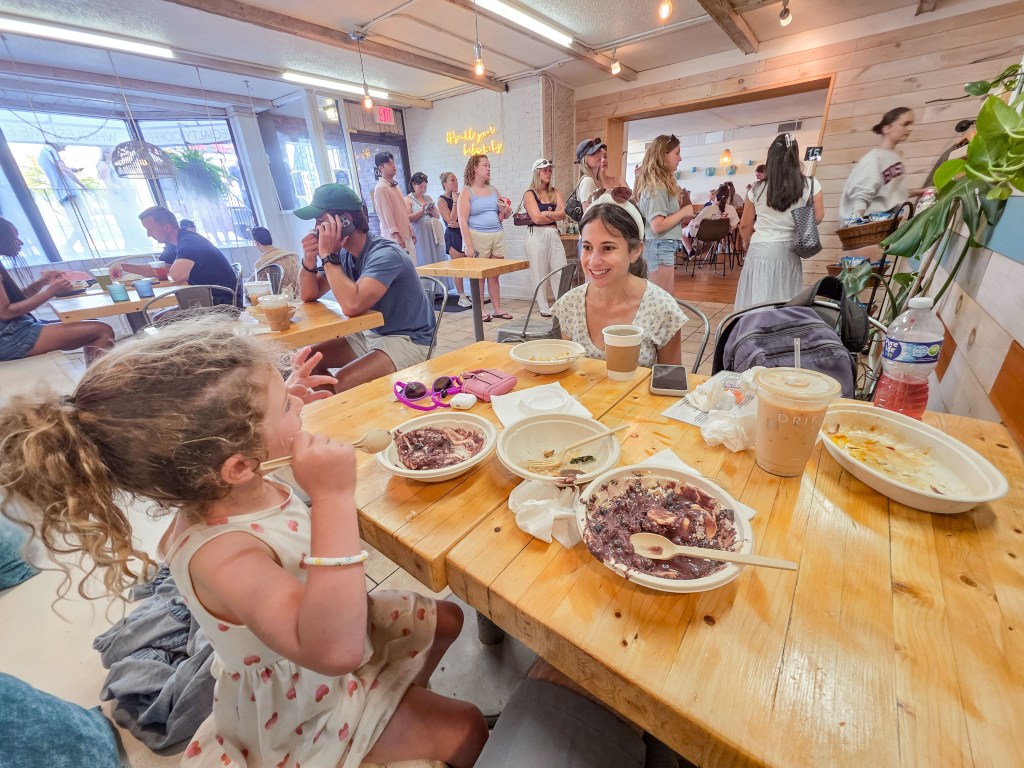
Breakfast at the Accidental Instagram Spot
We started the day at an acai bowl restaurant, and it was delicious, and also completely packed. I’m fairly convinced we stumbled onto the town’s unofficial Instagram hotspot purely by luck, since the line and the number of phones aimed at bowls suggested we weren’t the only ones who’d found it.

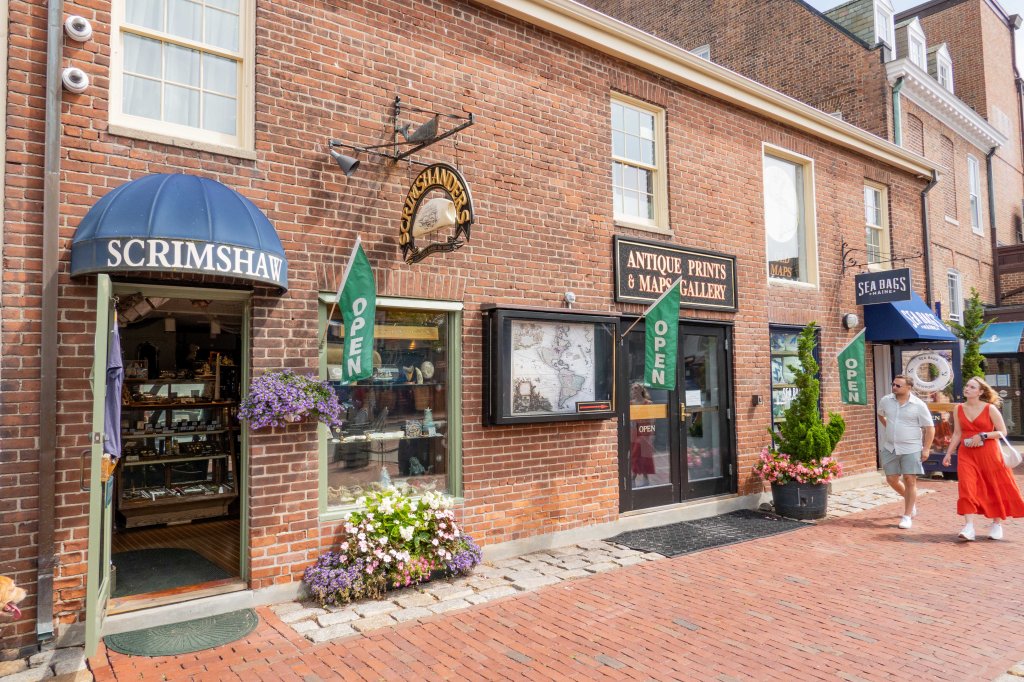
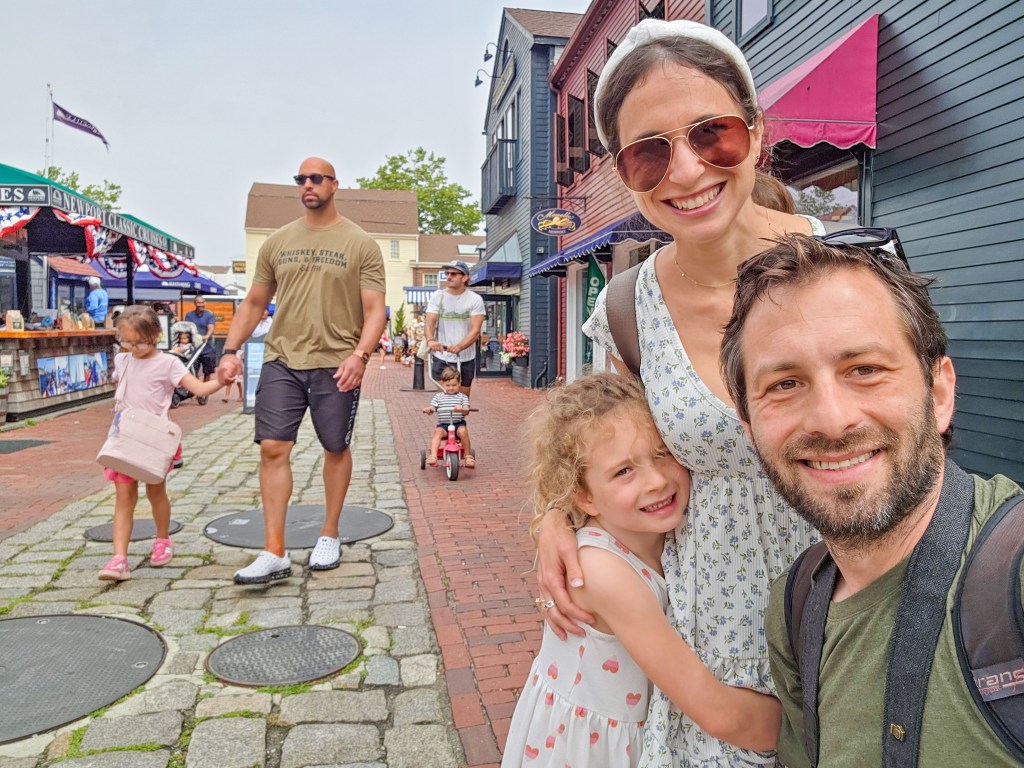
We had a reservation timeslot for our first mansion tour, so with time to burn, we wandered the downtown area a bit. Newport has a very specific look, and I mean that literally: the people here dress like they walked straight out of a Barbie and Ken playset. Crisp linen, boat shoes, sunglasses that cost more than our rental car. Some genuinely wealthy people, and some very committed to looking like it. Either way, the effort was impressive.
Before we get to the marble and the gold leaf, it’s worth knowing that Newport was doing interesting things for roughly 250 years before a single Vanderbilt ever showed up.
The town was founded in 1639 by English settlers, many of whom had just been kicked out of Puritan Boston for religious dissent (Anne Hutchinson, one of the most famous religious rebels in colonial history, was among the founders). Just two years later, in 1641, the Newport town statutes formally guaranteed “liberty of conscience and religion,” making it one of the first places in the entire Atlantic world to legally separate church from government. That single decision shaped everything that came after: Newport became a magnet for people who weren’t welcome anywhere else, including Quakers by the 1650s (who eventually made up more than half the town’s population) and one of the earliest Jewish communities in North America, also arriving in the 1650s.
That Jewish community is responsible for one of the most quietly important buildings in all of American history: Touro Synagogue, built between 1759 and 1763 by architect Peter Harrison. It’s the oldest surviving synagogue building in the United States, and it’s the reason we have one of the most quoted lines about religious freedom in the country’s founding. In 1790, George Washington visited and received a letter from the congregation’s warden. His reply, which the synagogue still celebrates every year, promised that the new American government “gives to bigotry no sanction, to persecution no assistance.” That original letter is now valued in the millions of dollars, and it’s a direct line from a tiny colonial congregation in Newport straight to the First Amendment.
Unfortunately, Eitan’s research failed us this time and it didnt show up on the top things to do in Newport, so we didnt visit it. FOMO!!
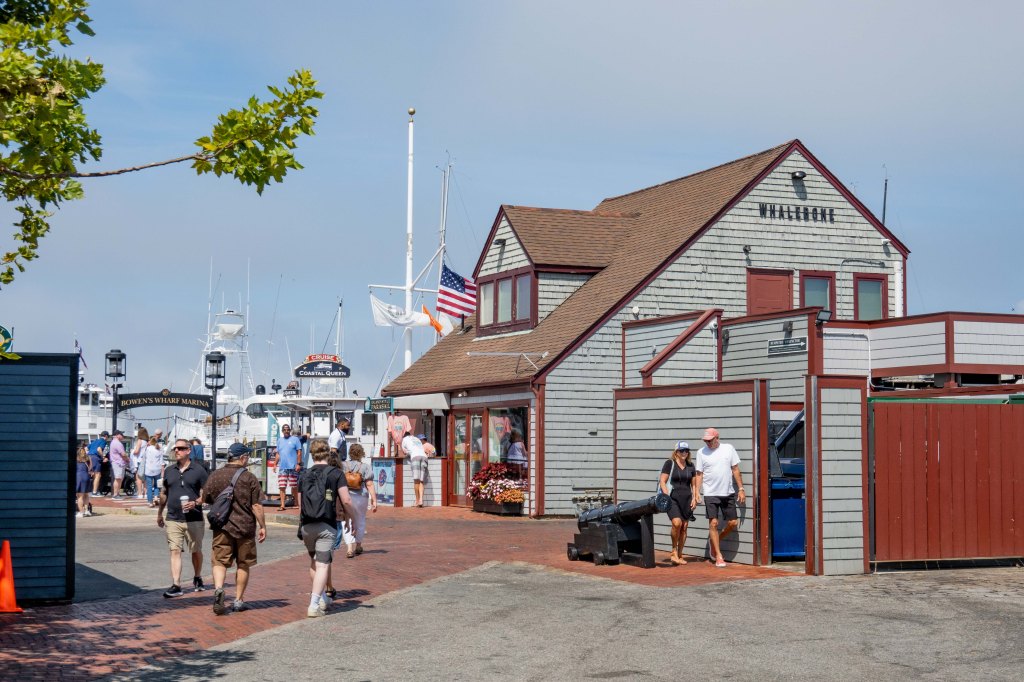
None of this was purely noble, though, and it’s worth being honest about it: that same religious tolerance existed alongside deep involvement in the Atlantic slave trade. By the 1700s Newport had grown into one of the five busiest ports in colonial America, with over 150 wharves handling rum, candles, furniture, and human beings as part of the notorious triangle trade. It’s a genuinely uncomfortable contradiction sitting right at the center of the city’s origin story, tolerance and atrocity built side by side on the same waterfront.
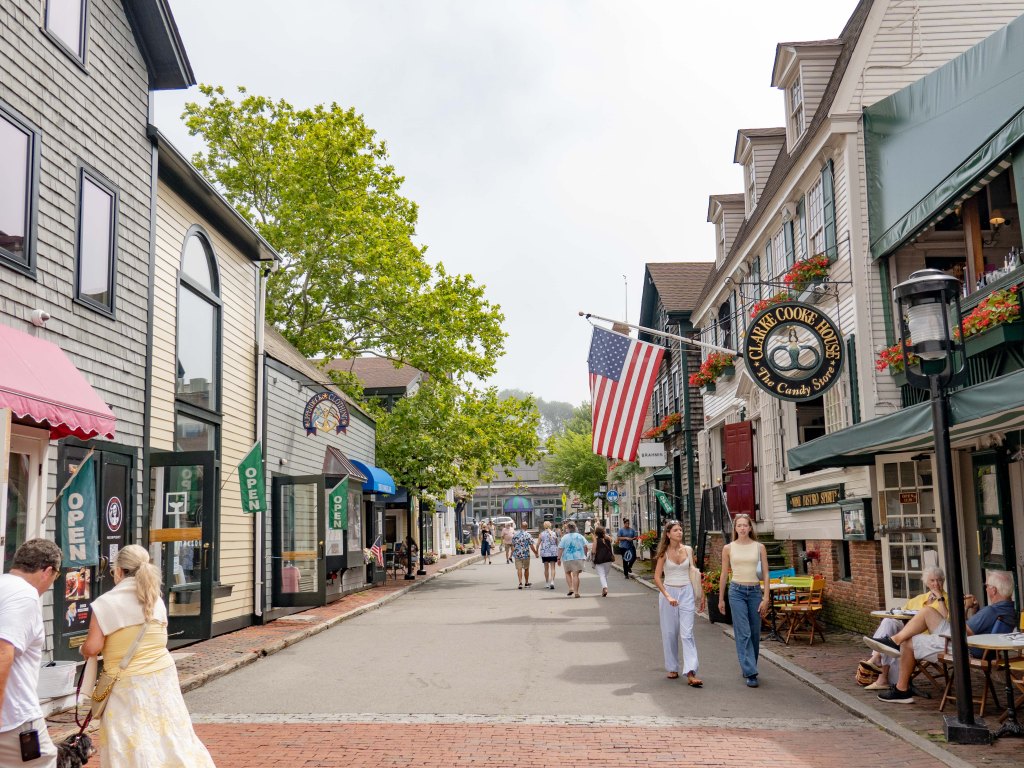
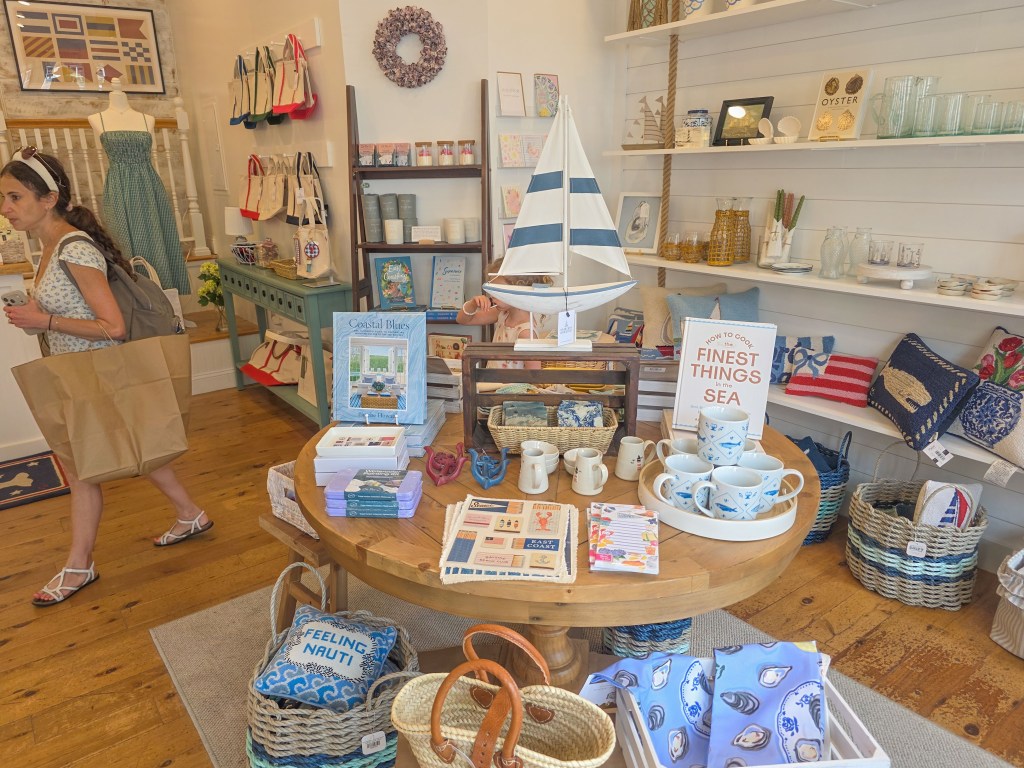
We strolled down Thames Street, the town’s main shopping strip, packed with souvenir shops and local art galleries, the kind of street built for slow window shopping while you wait for your mansion appointment. As one does.


The Breakers: Vanderbilt Excess, Fully Loaded
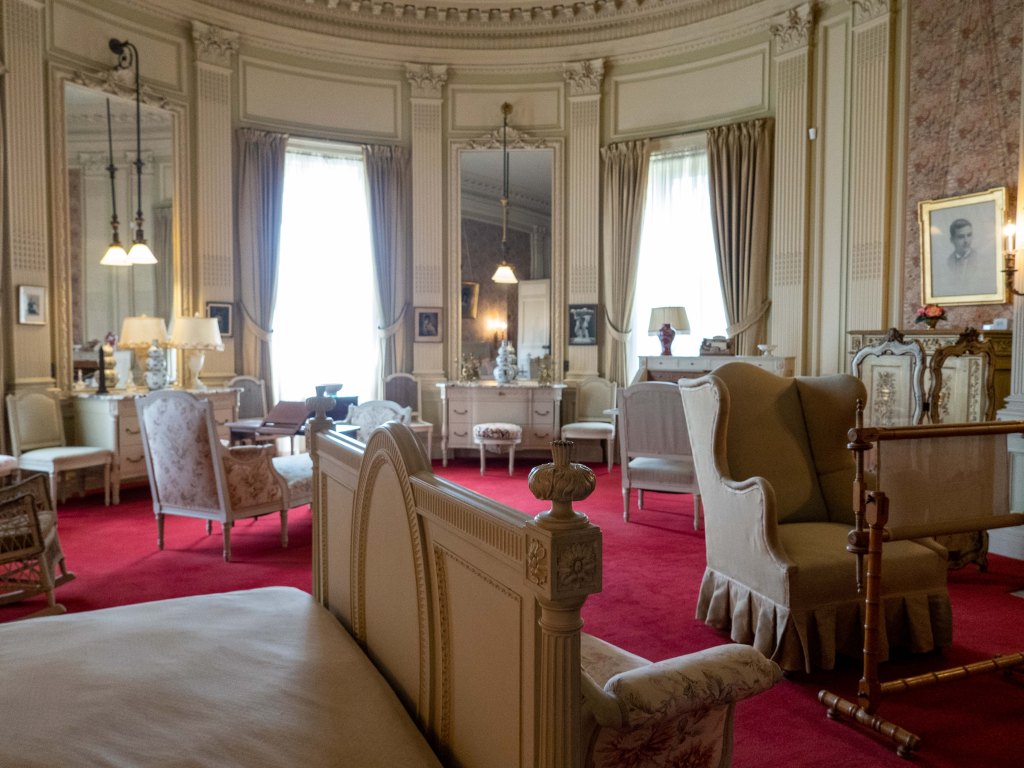
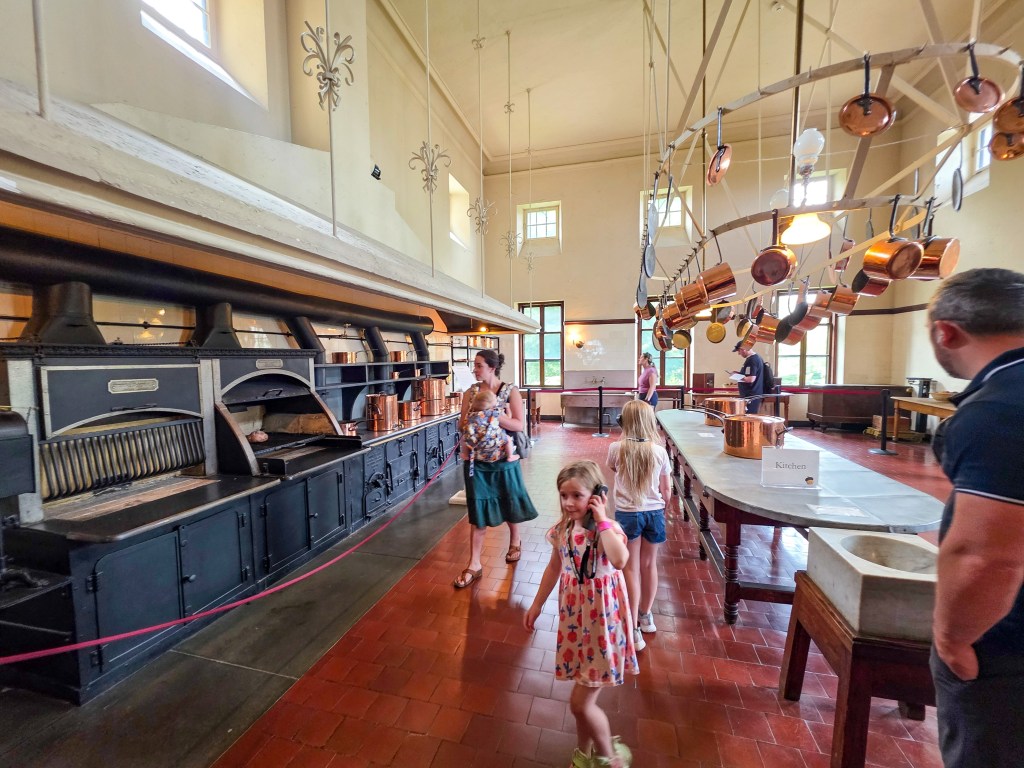
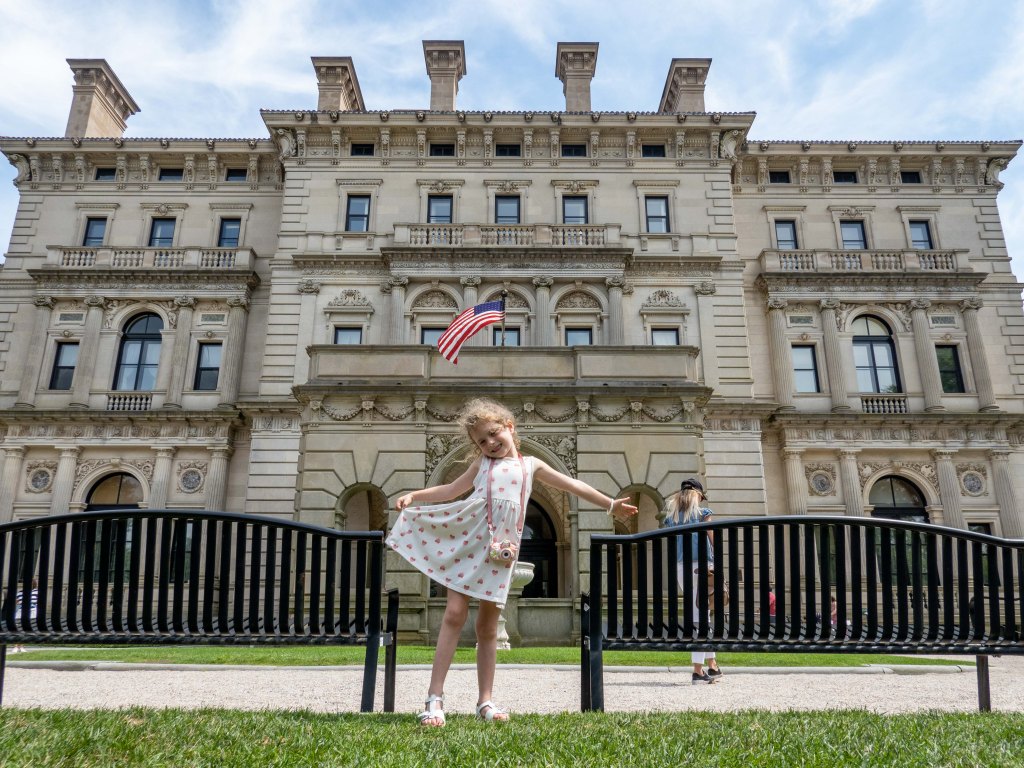
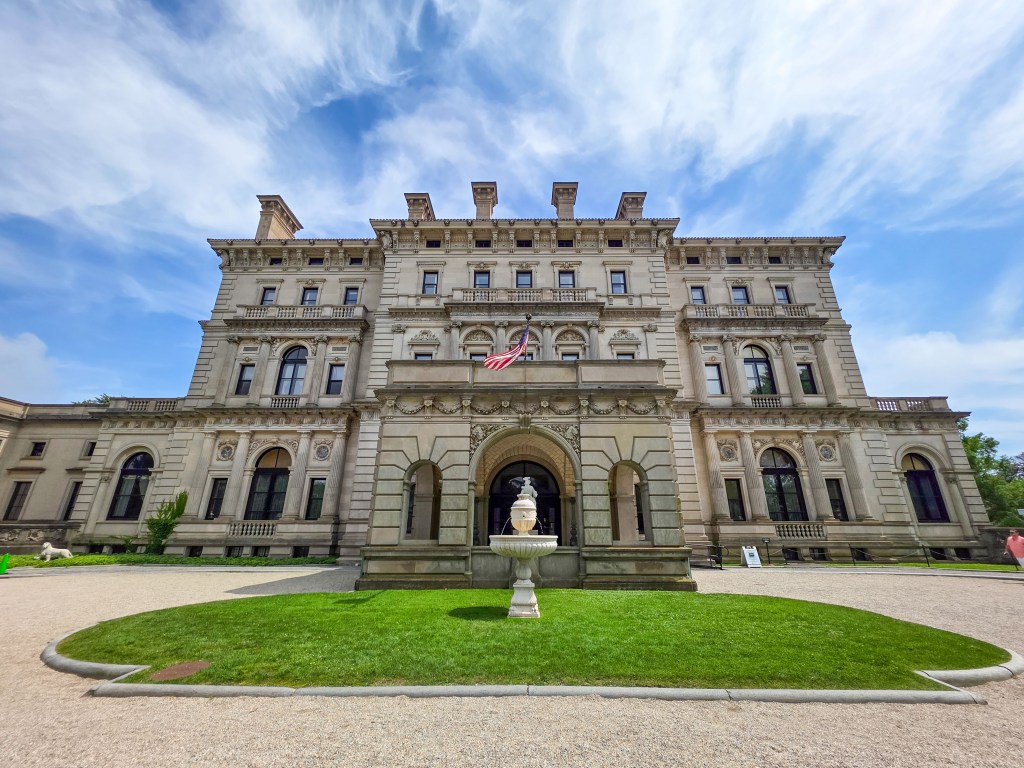
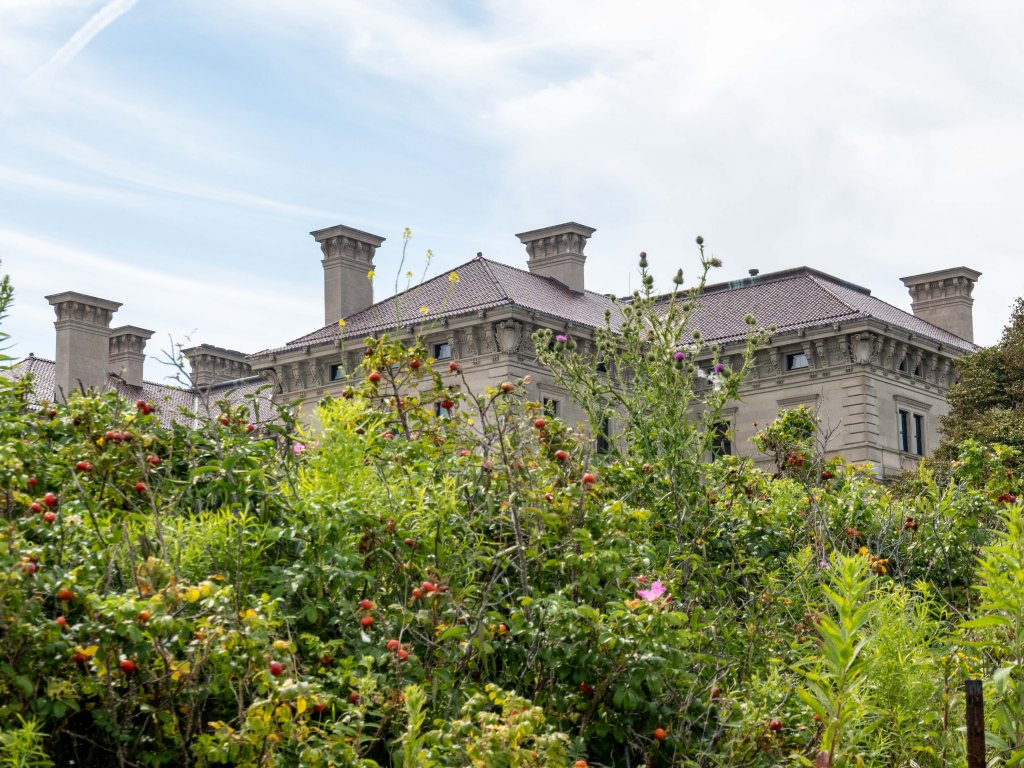
Once our timeslot arrived, we drove into the mansion district and toured The Breakers, the largest and most opulent of Newport’s summer “cottages,” built for the Vanderbilt family in the 1890s.
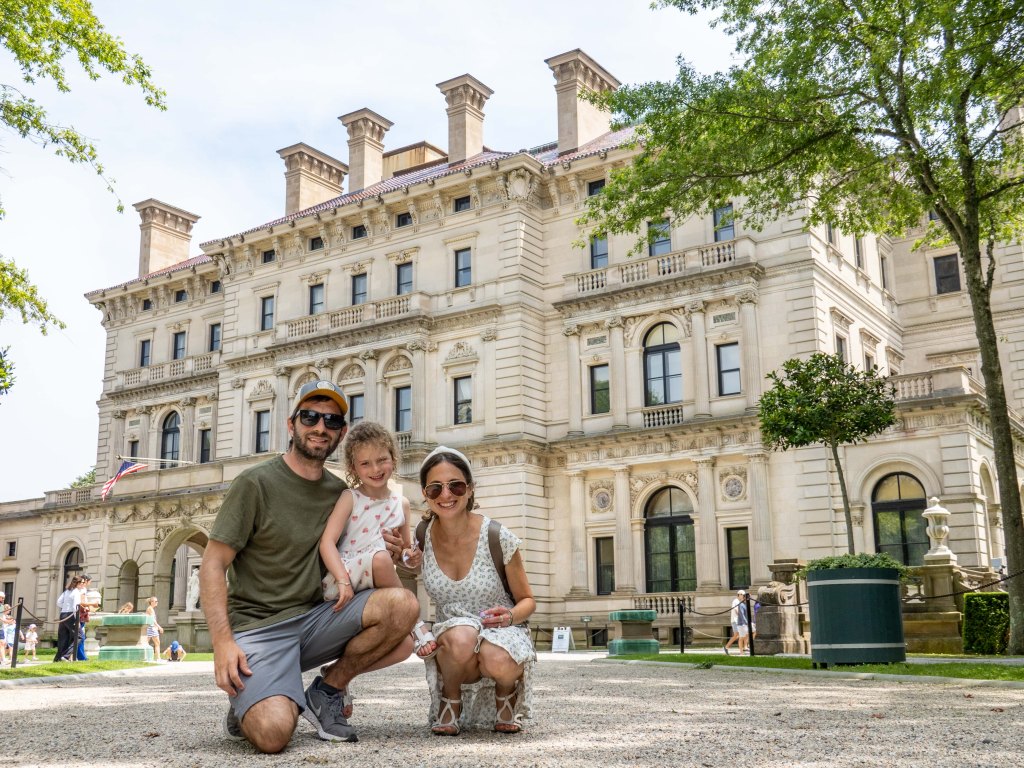
A bit of the history behind it, because it’s a genuinely wild story: Cornelius Vanderbilt II bought an earlier wooden mansion on this exact spot in 1885. That original house burned down in a kitchen fire in 1892, and rather than mourn the loss, Vanderbilt saw an opportunity. He hired architect Richard Morris Hunt (who also designed the pedestal for the Statue of Liberty, casually) to build something bigger, grander, and, this time, fireproof.
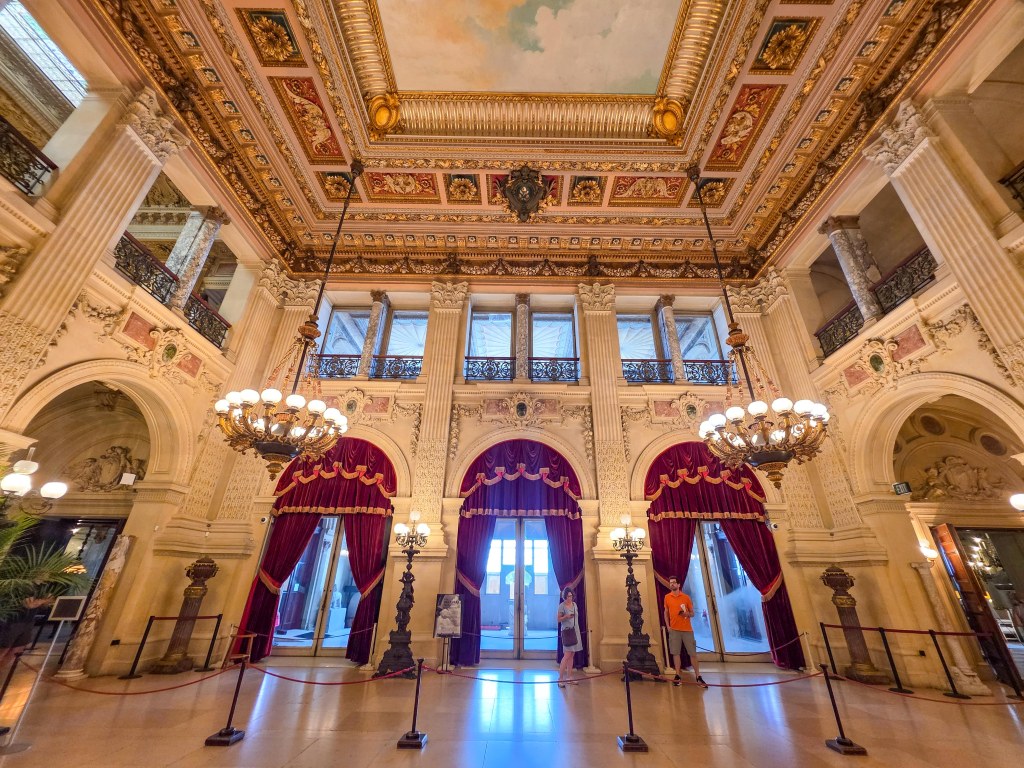
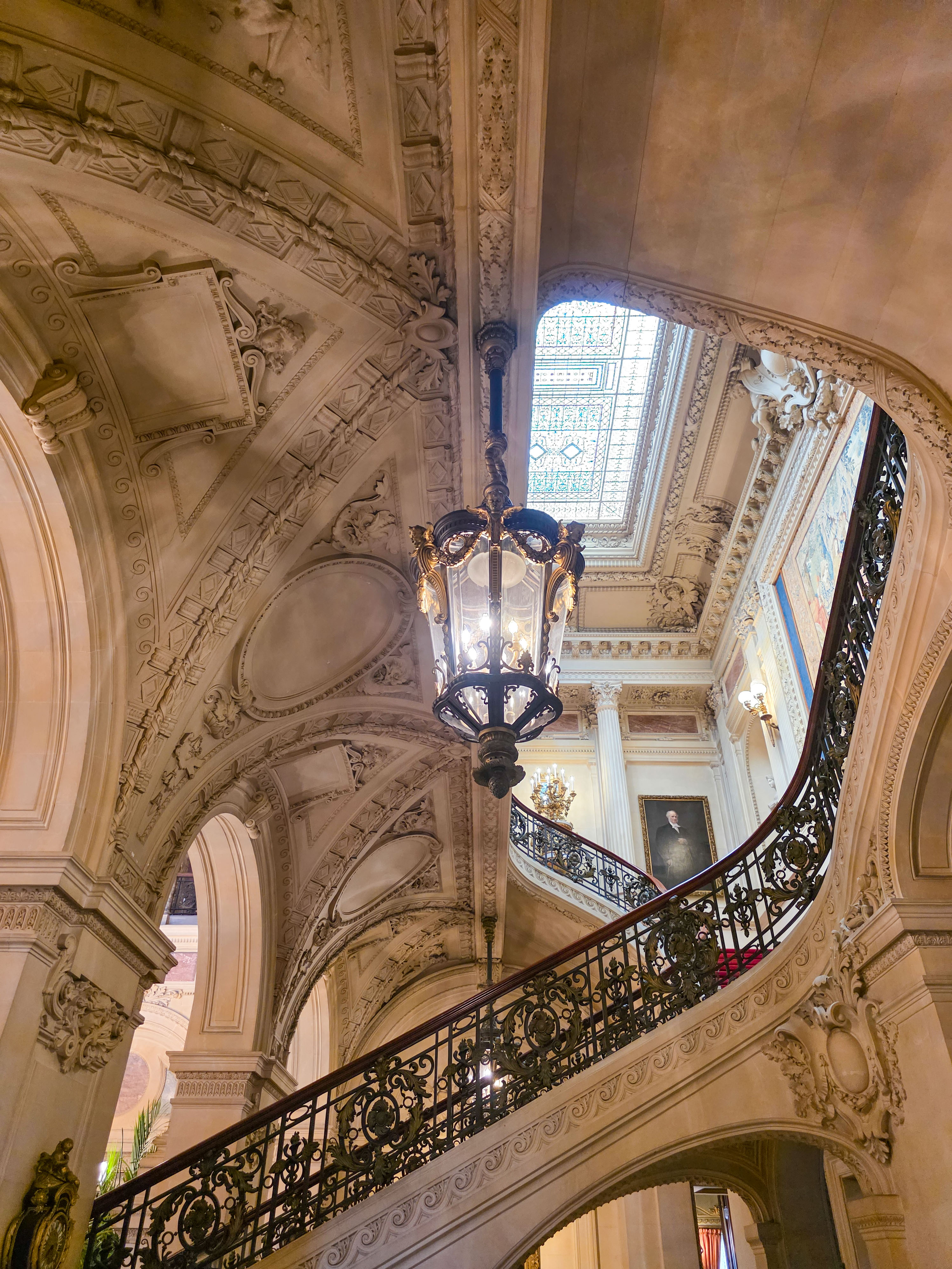
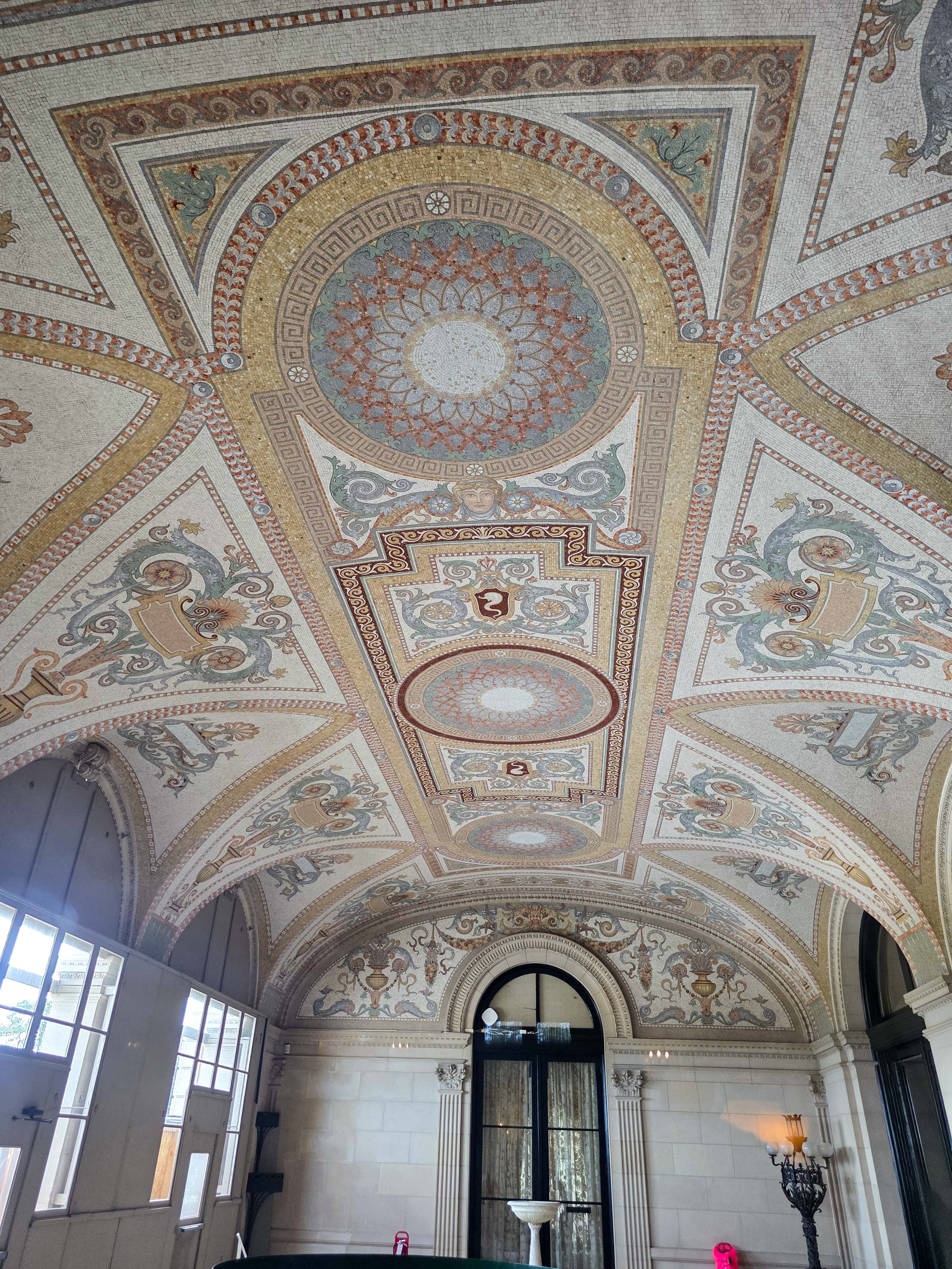
The result was a 70-room, five-floor Italian Renaissance palazzo made almost entirely of steel and masonry with no wooden structural parts at all, and Vanderbilt even insisted the boiler be buried underground, far from the house, just to eliminate any fire risk whatsoever.
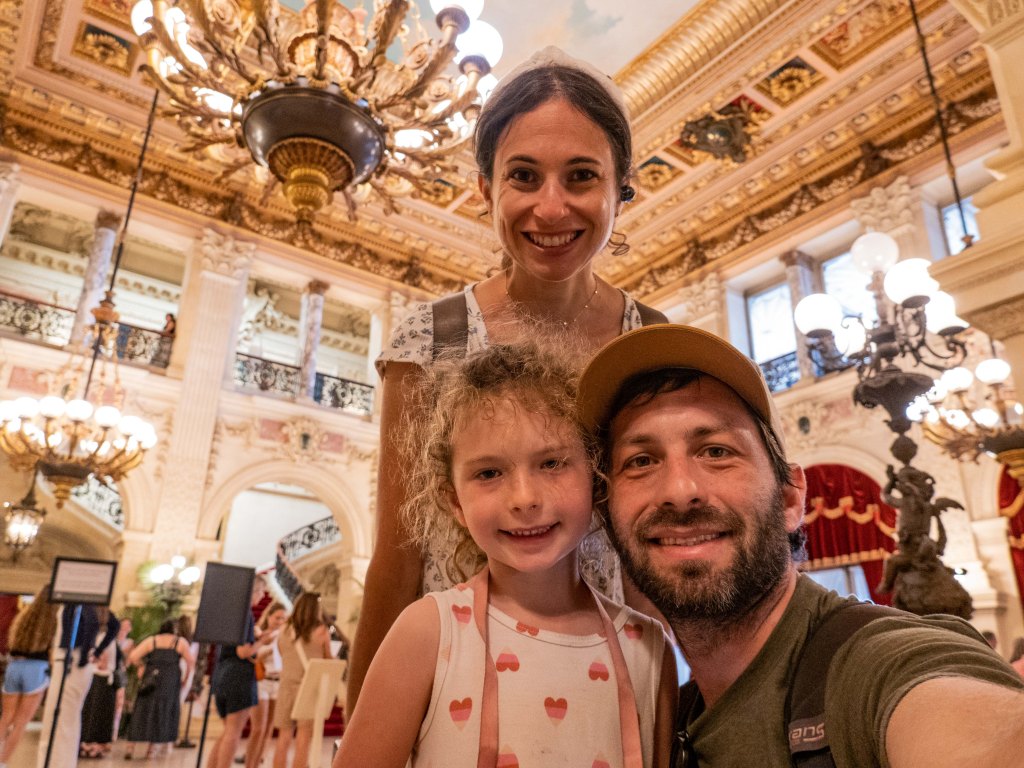
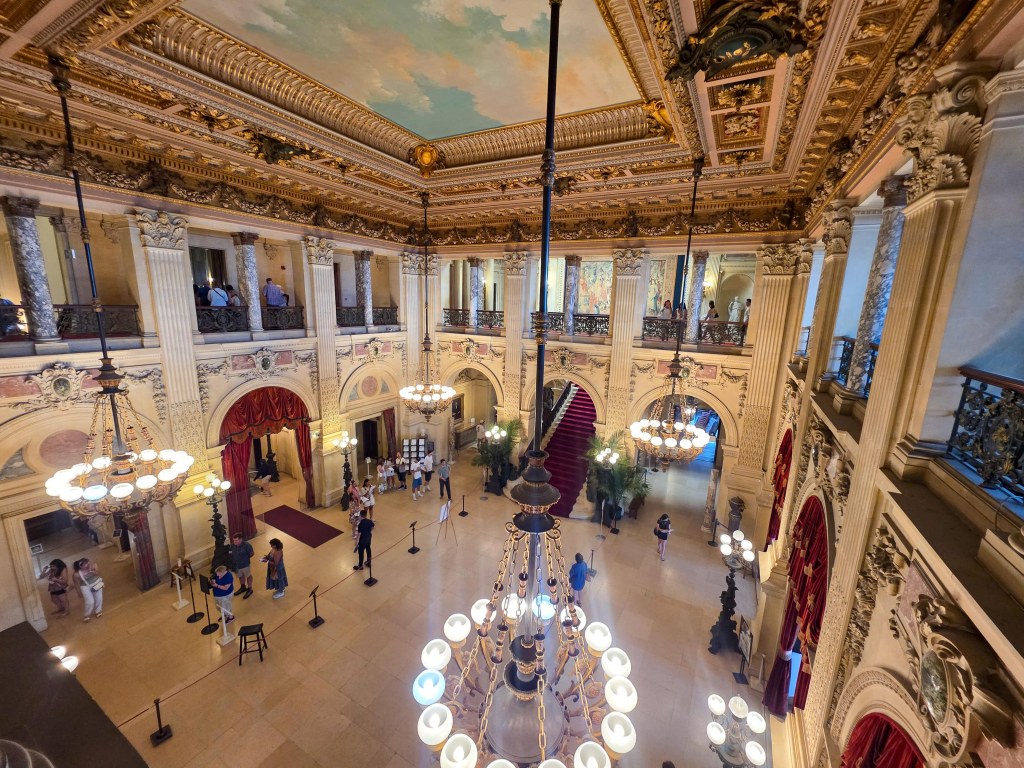
The final cost ran over $7 million in 1890s dollars, which translates to well over $150 million today, making it likely the most expensive home ever built in New England at the time.
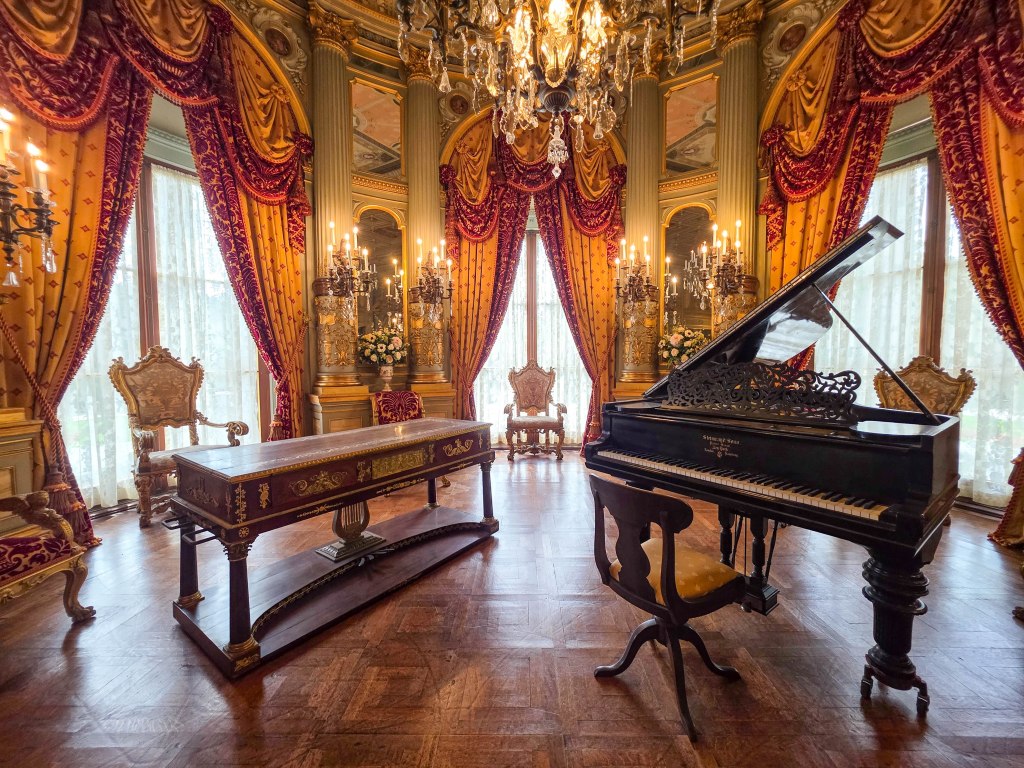
They give you a link to download an audio guide app as you walk through, and it made the whole tour somewhat engaging. It was extra repetitive for us since we’d visited the Vanderbilt family’s other legendary mansion, the Biltmore Estate in Asheville, North Carolina, a few years back, but getting to compare the two branches of Vanderbilt excess side by side was a real treat. Different generation, same appetite for absurd grandeur.
Newport also took a beating during the Revolutionary War, occupied by British forces from 1776 to 1779, which devastated its economy, followed by French troops under General Rochambeau who used it as a staging ground through 1781. The town never fully bounced back as a major commercial port after that. And that, weirdly enough, is the whole reason the mansions exist at all: bypassed by the industrial boom that transformed other New England cities, Newport reinvented itself in the 1800s as a summer escape for the ultra-wealthy, eventually earning the nickname “Queen of the Resorts.” The Gilded Age families didn’t discover Newport so much as they moved into a beautiful, sleepy town that industrialization had left behind.
One more piece of Newport’s identity worth knowing: it was the home of the America’s Cup, the oldest trophy in international sports, from 1930 all the way to 1983. For over 130 years straight, dating back to 1851, an American yacht club had never once lost the Cup, the longest winning streak in the history of organized sports. Then, right here in Newport in 1983, the Australian challenger Australia II, sporting a controversial and revolutionary “winged keel” design, came back from a 3-1 deficit to beat the American boat Liberty in the deciding seventh race. The streak ended, the Cup left the country for the first time ever, and Newport’s status as America’s sailing capital was cemented in the most dramatic way imaginable.
Snacks, a Nap, and an Unexpected Bouldering Session
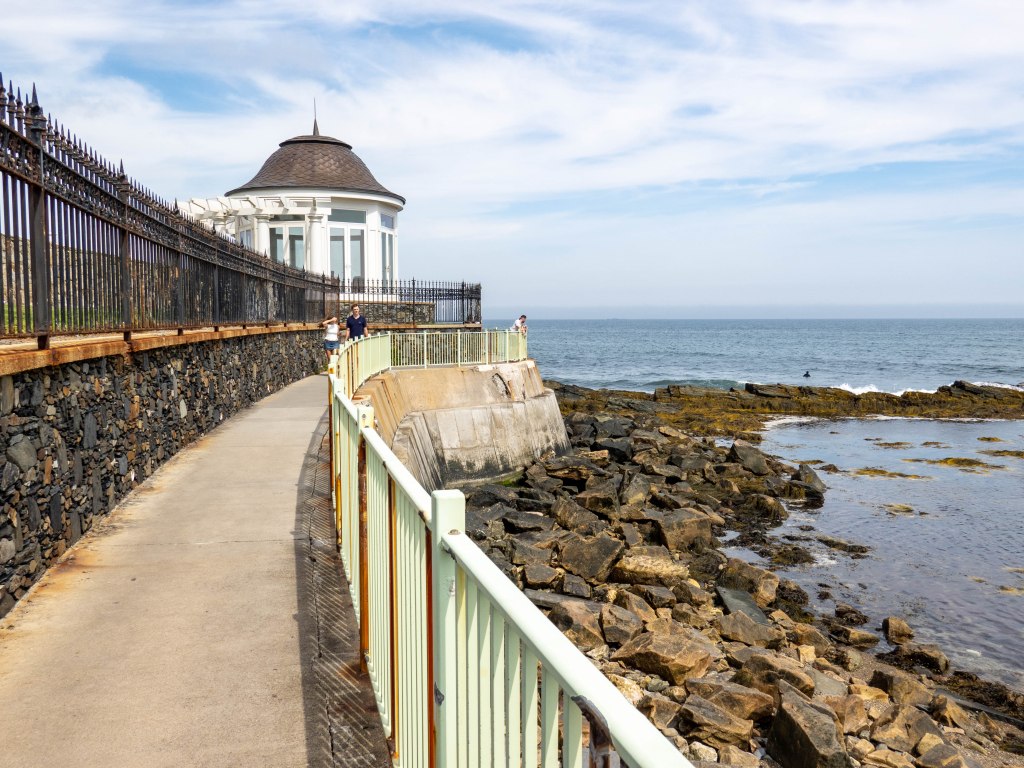
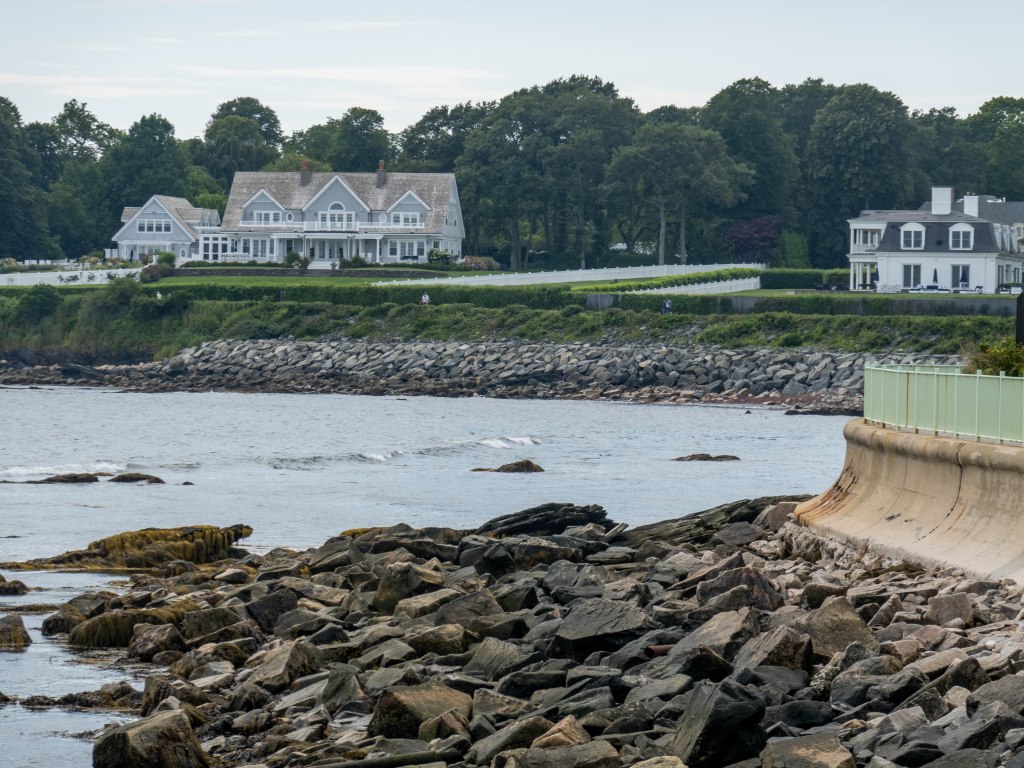
We grabbed a few snacks from the museum restaurant and relaxed for a bit before setting off on the famous Cliff Walk, a scenic coastal path that runs behind the mansions along the ocean.
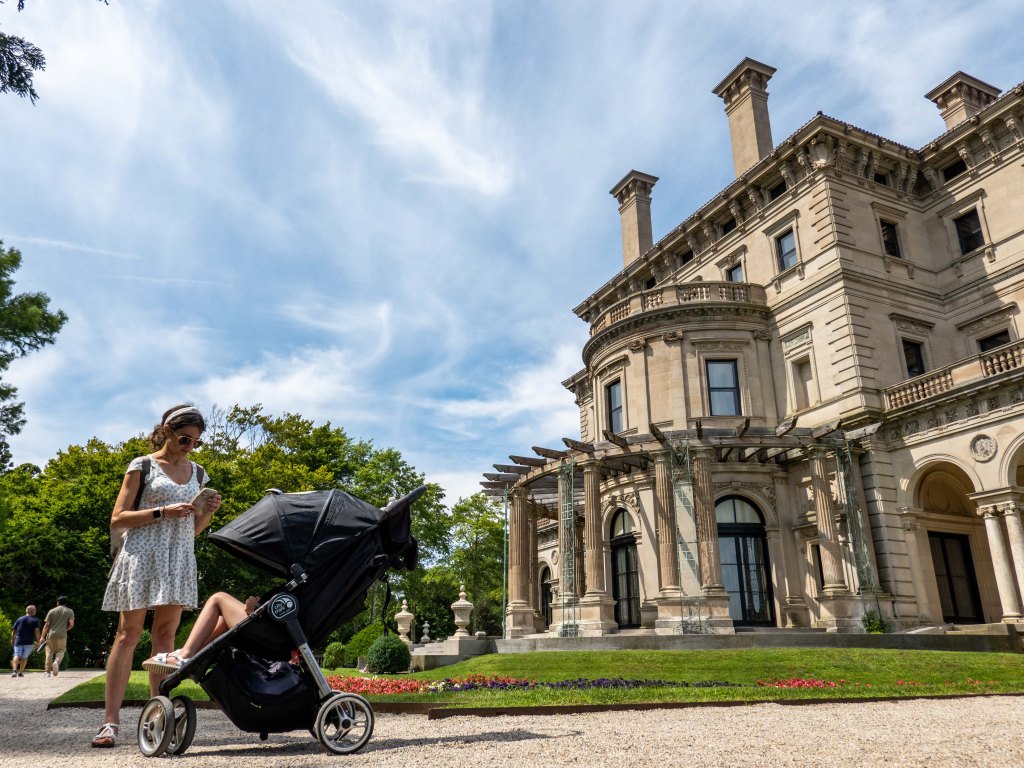
Here’s what we didn’t know going in: the Cliff Walk is only a “path” in the loosest possible sense in some sections. Parts of it turn into genuine rock scrambling, hopping across boulders directly above crashing ocean waves. With a stroller in tow and Ariela fast asleep in it, this was not the moment to test our luck as amateur cliff climbers. We wisely turned around and explored the other direction instead.
Marble House: The Purple Room That Sealed the Deal
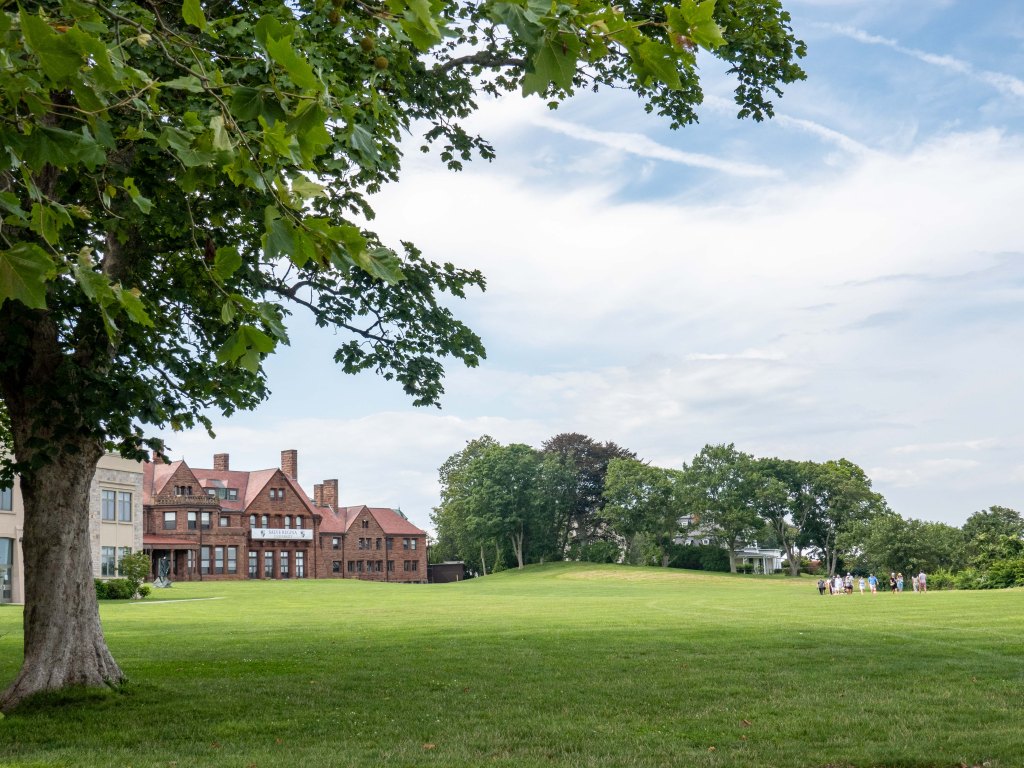
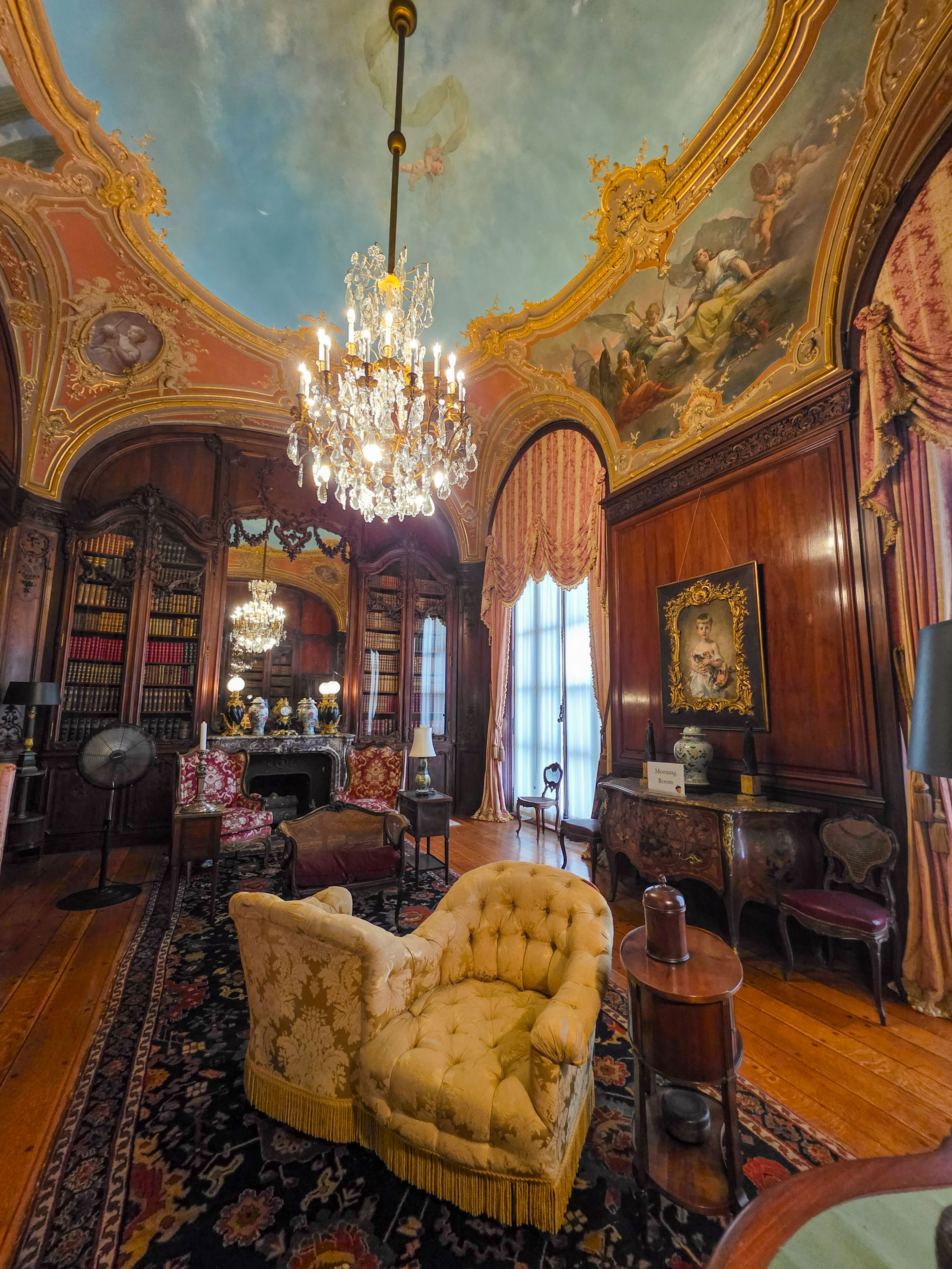
Since the boulder route was a dead end for us, we decided to squeeze in a second mansion: Marble House. Ariela was too worn out to tag along, so she stayed in the car with Sarah while Eitan went in first to scout it out. One look at the famous purple bedroom, and Eitan came back out to tell Sarah it was absolutely worth the visit, so they came in to see it together.
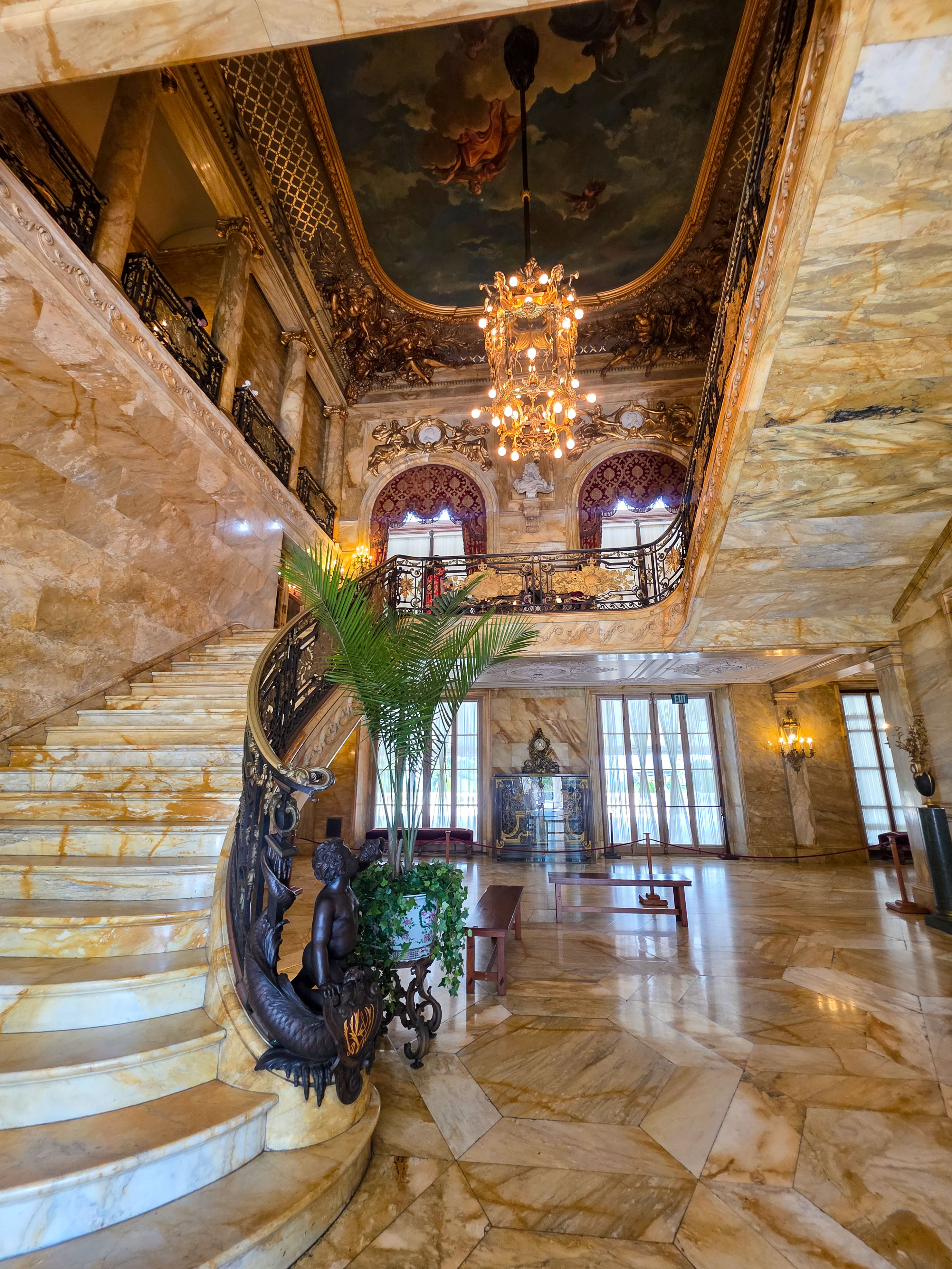
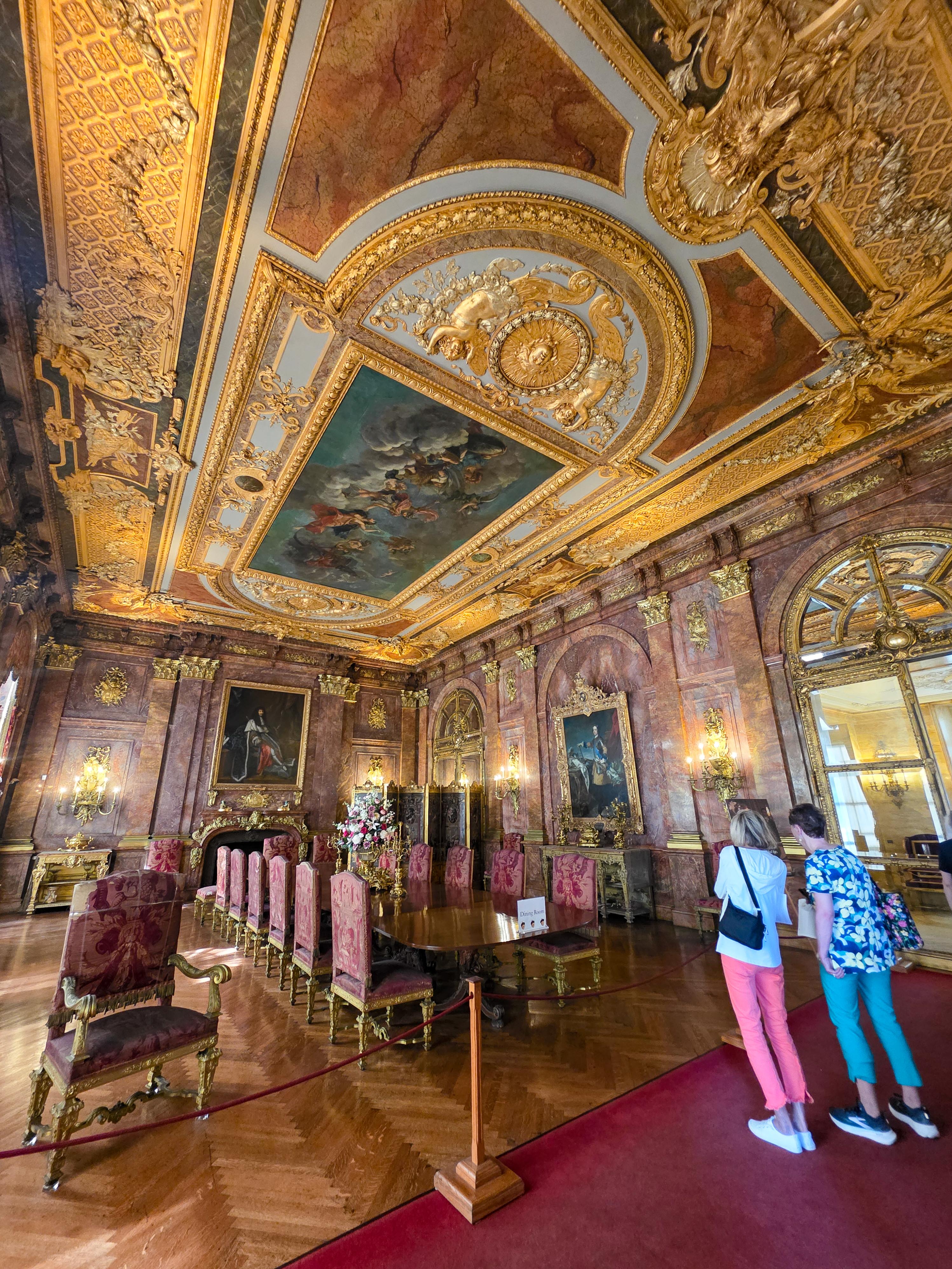
The dining room’s deep purple walls, are made from marble imported all the way from Algeria, cut using a technique called bookmatching, where a single slab is sliced in half so the two halves mirror each other’s veining pattern perfectly. The dining chairs in that same room are solid bronze covered in gold leaf, weighing 75 pounds each, so heavy that a footman had to physically help seat each guest.
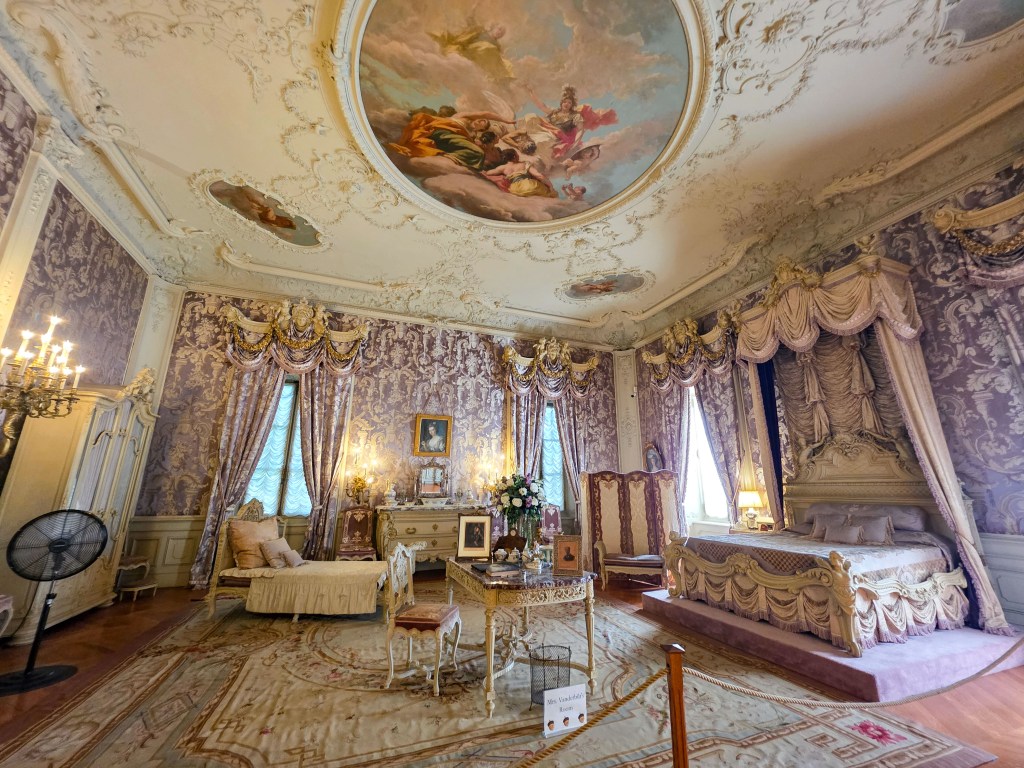
Marble House has an equally wild backstory. It was built in 1892 as a 39th birthday present from William K. Vanderbilt to his wife, Alva, and it used a staggering 500,000 cubic feet of marble, at a total cost of roughly $11 million, an almost incomprehensible sum for the era.
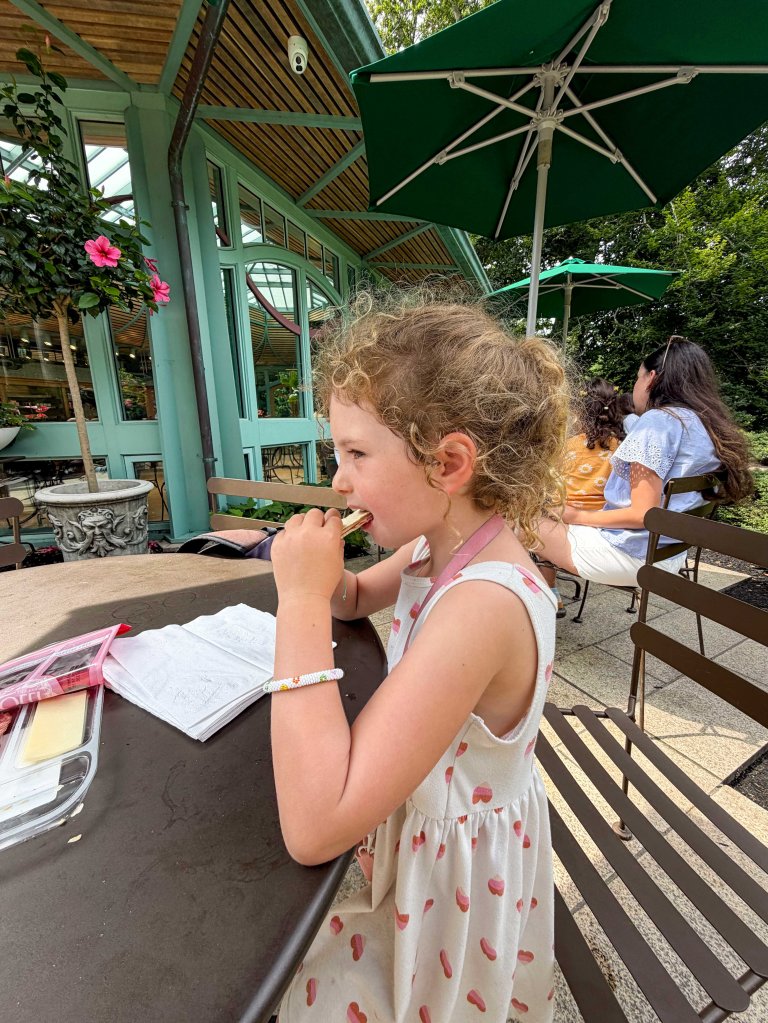
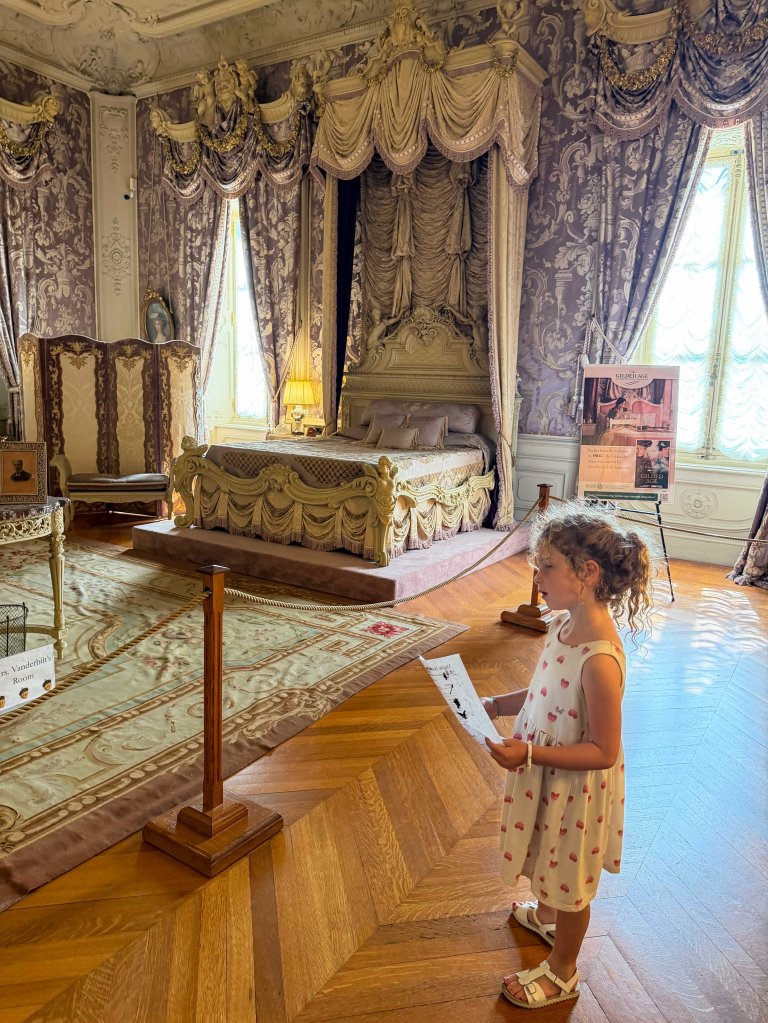
This mansion had a nice scavenger hunt for kids. Problem, the place was closing in 5 minutes, and Ariela does not like to leave anything unfinished. Unfortunately, they did kicked us out to close it.
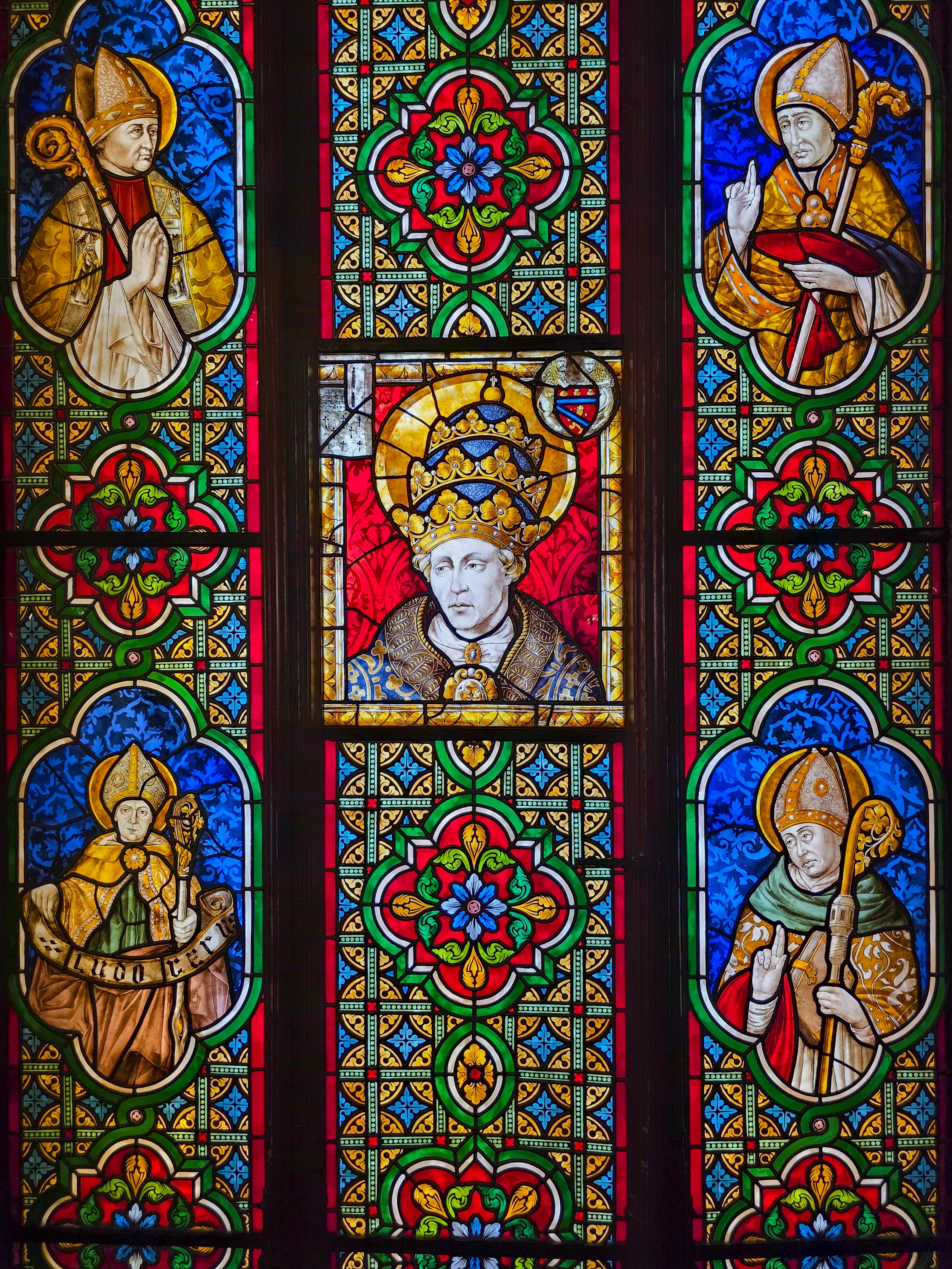
But the best part of the Marble House story isn’t the marble at all. A few years after the house was completed, Alva Vanderbilt divorced her husband, an almost unthinkable move for a woman of her social standing at the time, and she became one of the first prominent society women in America to do so publicly and without shame. She later used Marble House’s grounds to host women’s suffrage rallies, turning a monument to Gilded Age excess into a stage for the fight for women’s right to vote. A summer cottage with actual historical teeth.
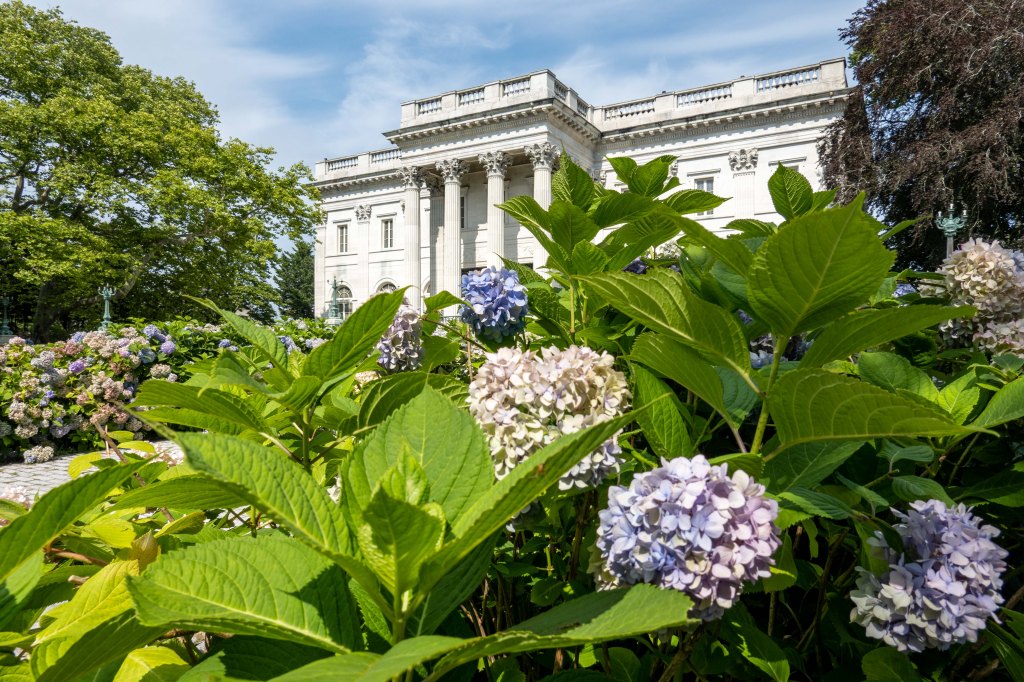
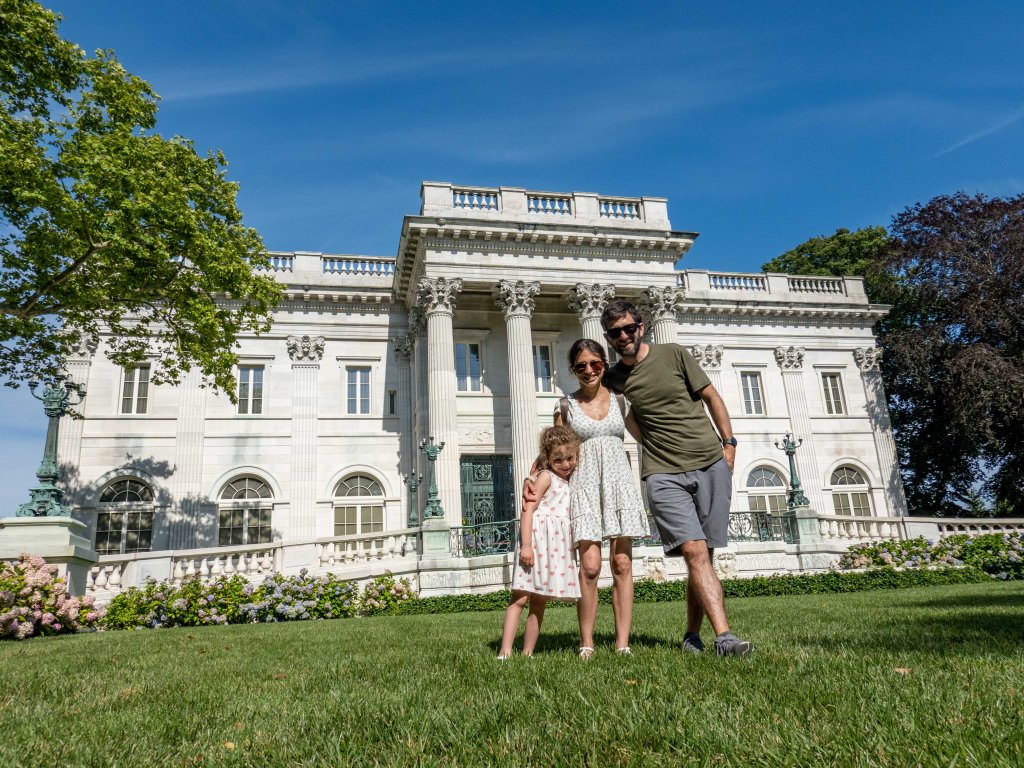
We snapped a few photos outside and hit the road back toward Providence.

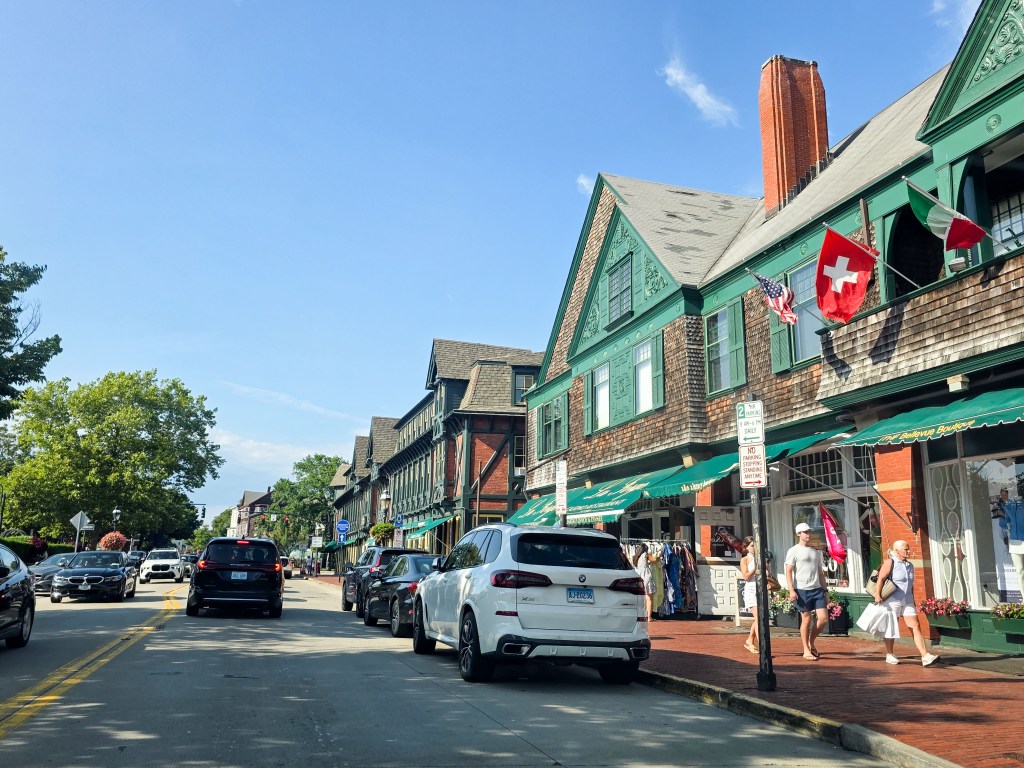
On the way out of Newport, wr drove through this nice street that looked straight out of Europe
Dinner at Fred, Then Off to “The Show”
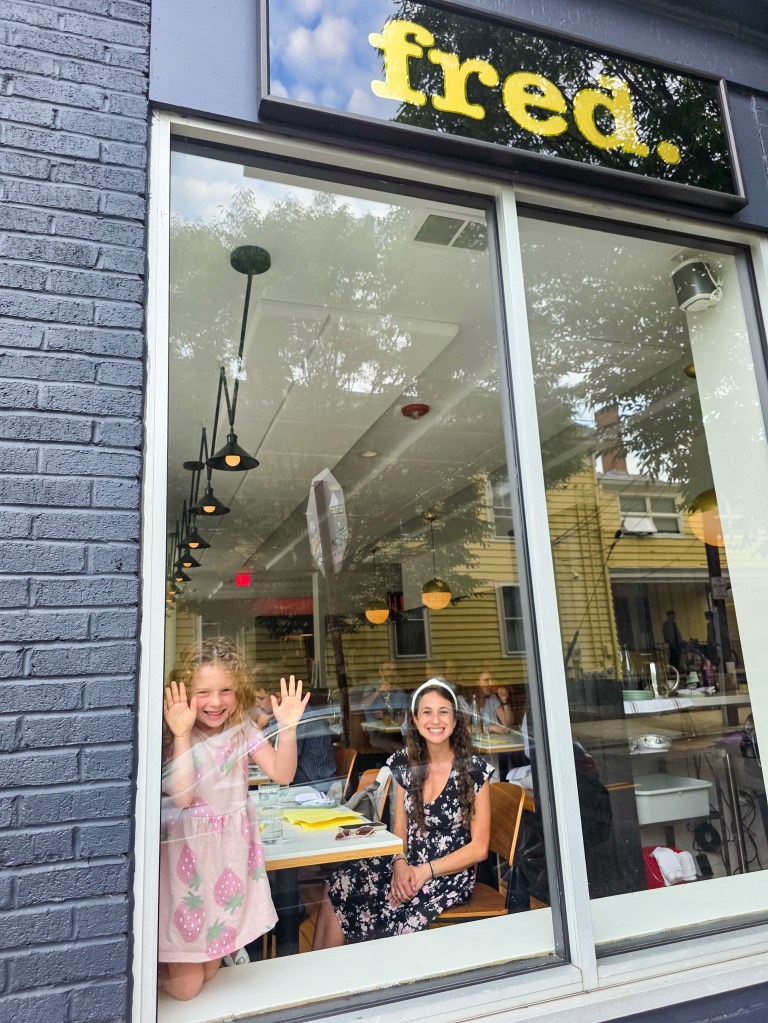
Before the evening’s main event, we stopped for dinner at a wonderful restaurant called Fred. We shared several plates, including roasted carrots with tahini, garlic broccoli, and a short rib, all excellent choices that set us up nicely for the rest of the night where we will be attending the Water and Fire show in downtown!


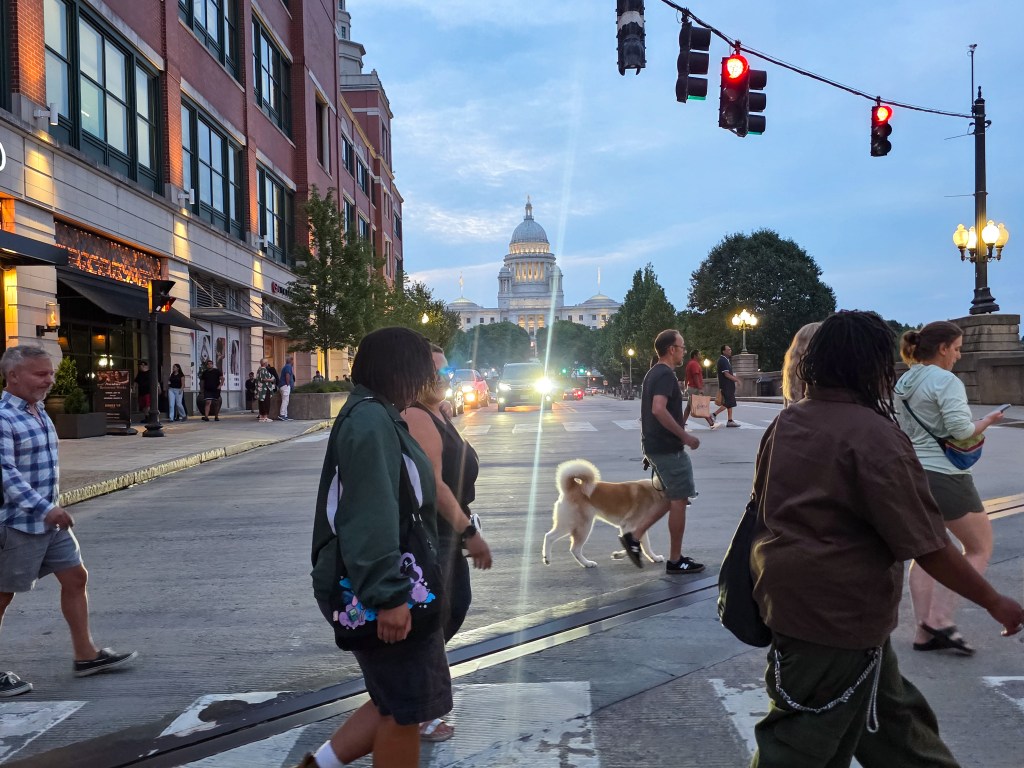
Then… the show: We had to survive finding parking, which took forever in the mall’s neighboring parking structure. We finally found a spot on what felt like floor 25. We hiked over to the viewing area, which was already completely packed with no real place to sit, so we found a small gap where Eitan could stand and hoist Ariela up onto his shoulders for a view..
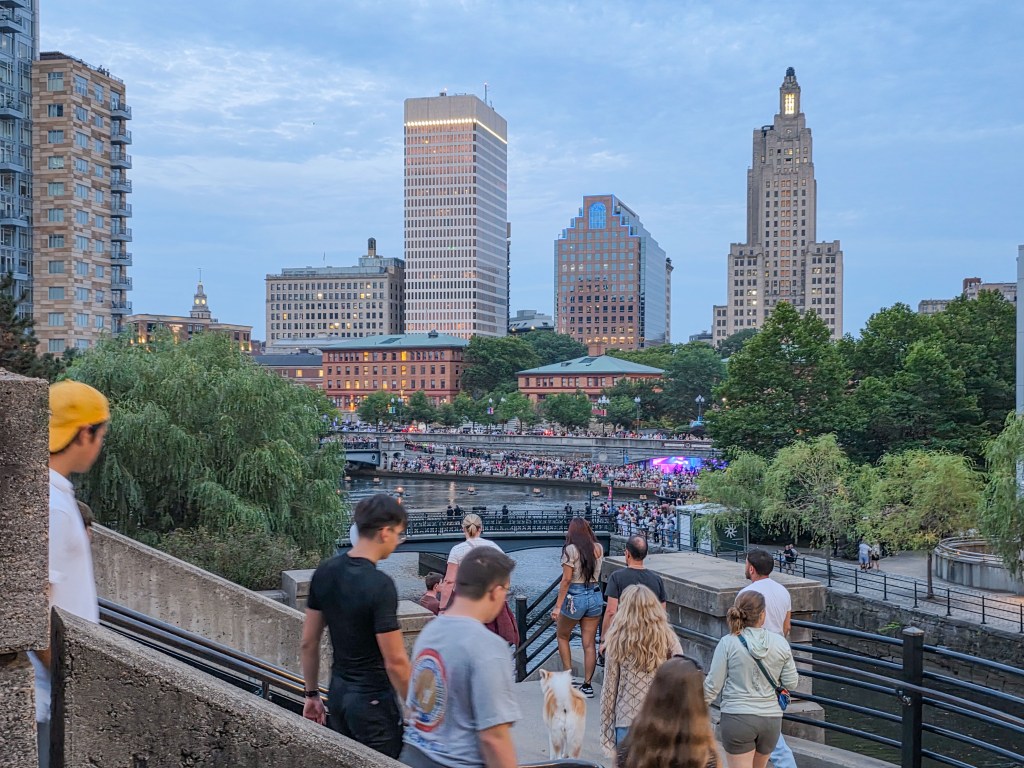

We’d heard the hype. Fire! Water! A magical evening spectacle on the river! What we got was a handful of modest bonfires floating in metal baskets, spaced out like someone was rationing enthusiasm. The “show” consists entirely of standing on a riverbank watching small, well-behaved flames do absolutely nothing dramatic while a crowd of people photograph it like it’s the Northern Lights.
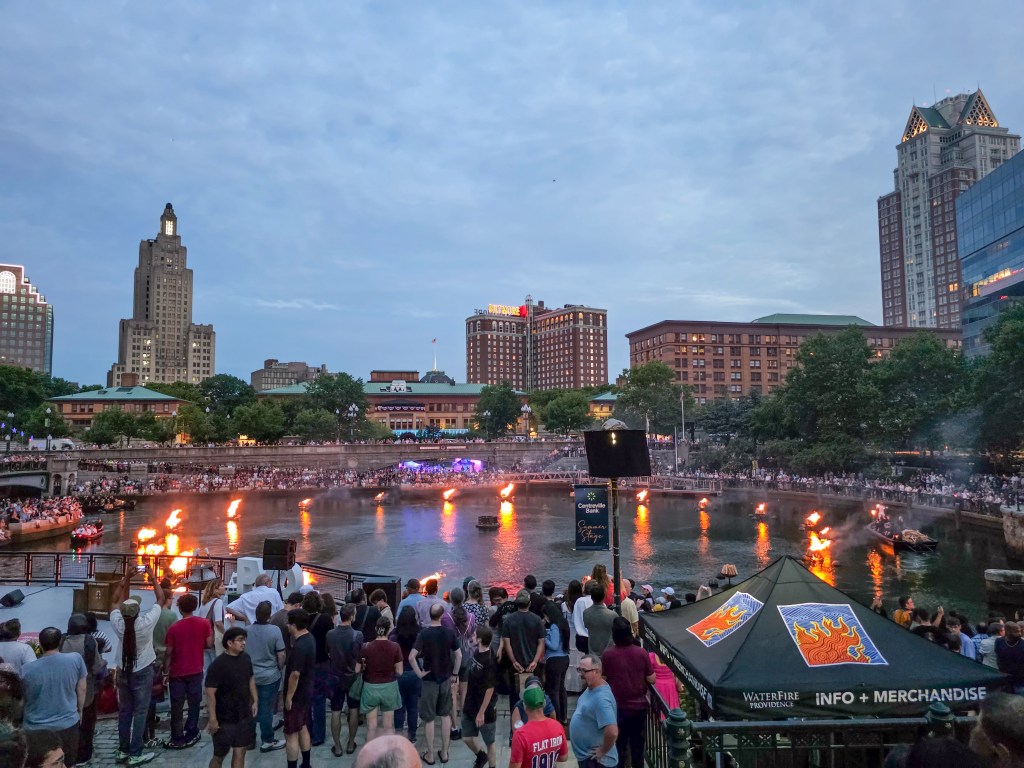
And then, gliding through this inferno-lite, came kayaks with fish-shaped lanterns mounted on them. It was less “enchanting river spectacle” and more “a school art project got funding and a permit.” The fish had more personality than the fire did, and the fire was supposedly the headliner.
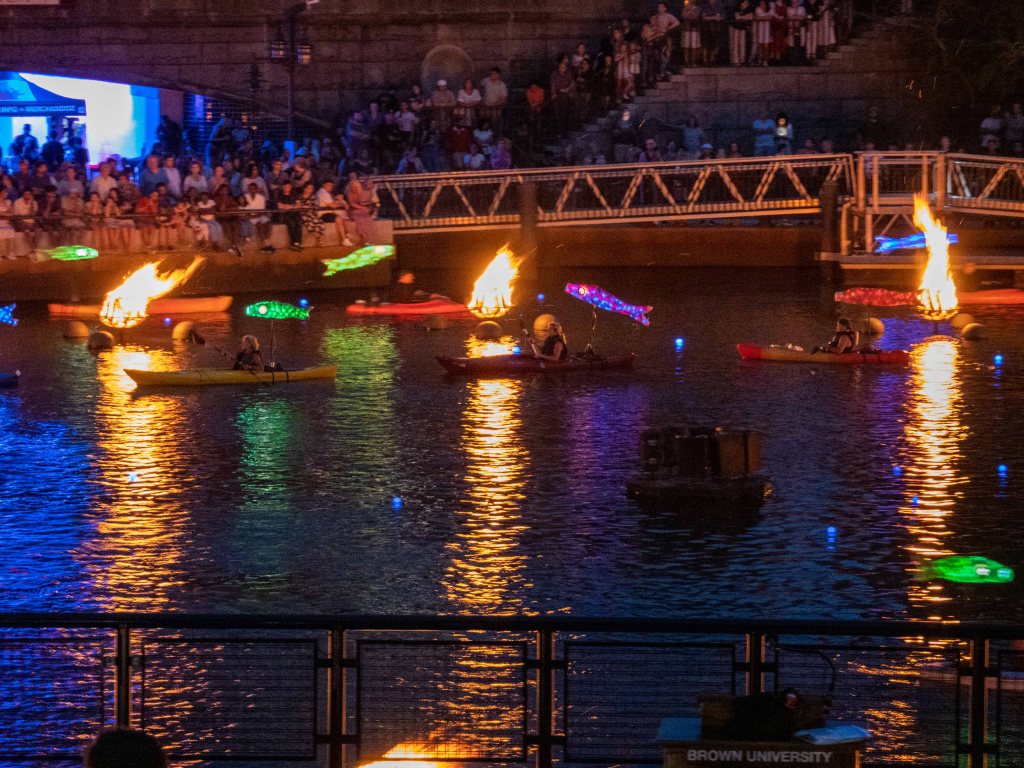

It’s less “fire and water show” and more “supervised campfire, but wet.” We stood there waiting for the moment it would ramp up into something spectacular, and that moment never came, because apparently the fire had already peaked at “gently smoldering.” Ten out of ten for ambiance if you enjoy the smell of woodsmoke and the sound of tourists trying to convince themselves they’re having a magical experience. Zero out of ten if you were hoping for, you know, a show.
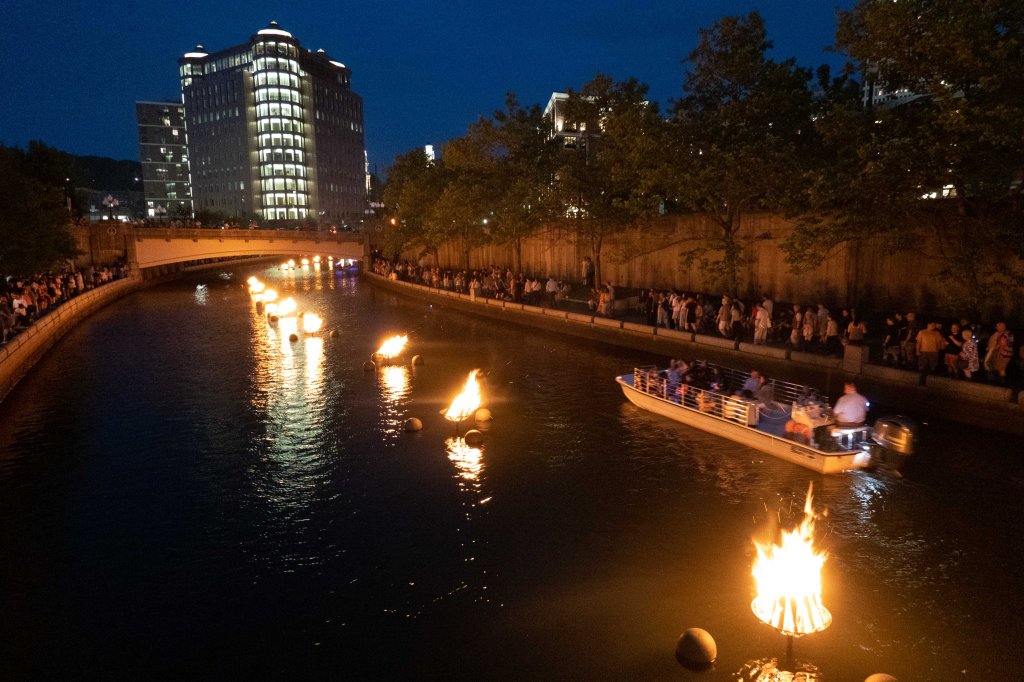

The had a couple vendors here and there, but nothing that was worth staying any longer. Then came the real climax of the evening: the walk back to the car and the subsequent attempt to actually exit the parking garage, which took, and I am not exaggerating even slightly, more than one full hour. It was brutal. We finally broke free and drove back for a well-earned night of sleep, thoroughly unimpressed by the evening’s headline event but at least well-fed and mansion-satisfied from earlier in the day.

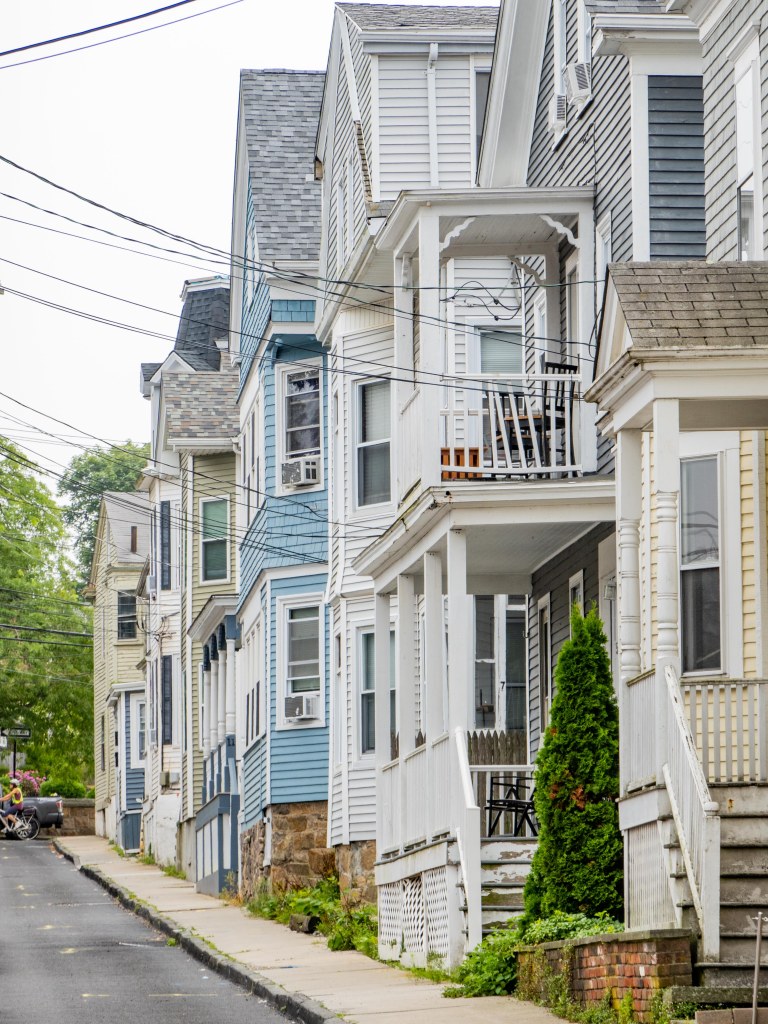
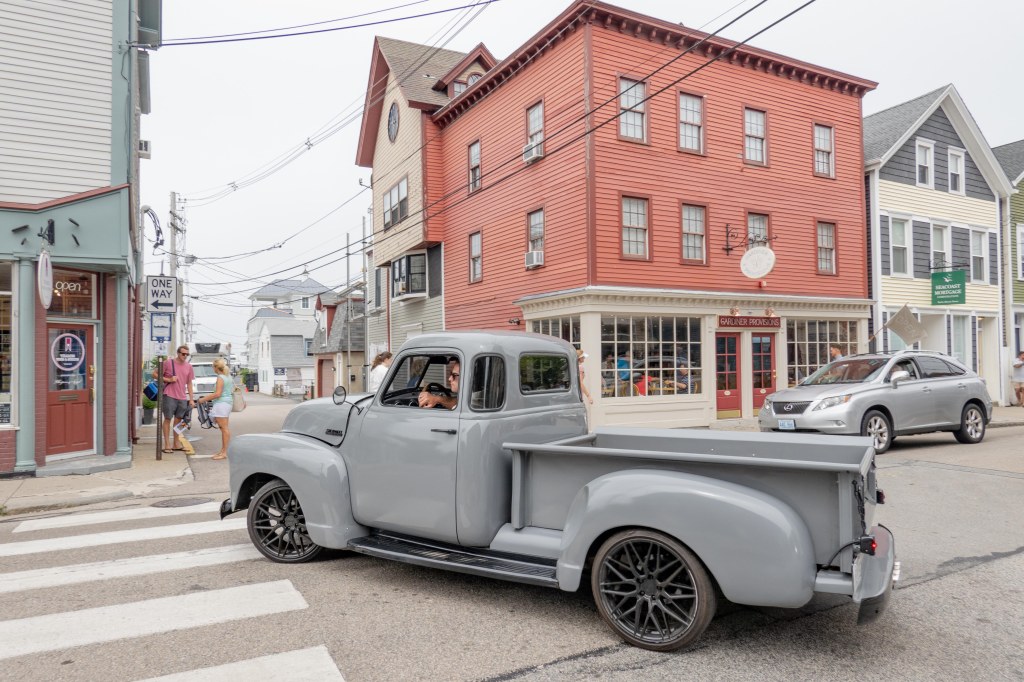
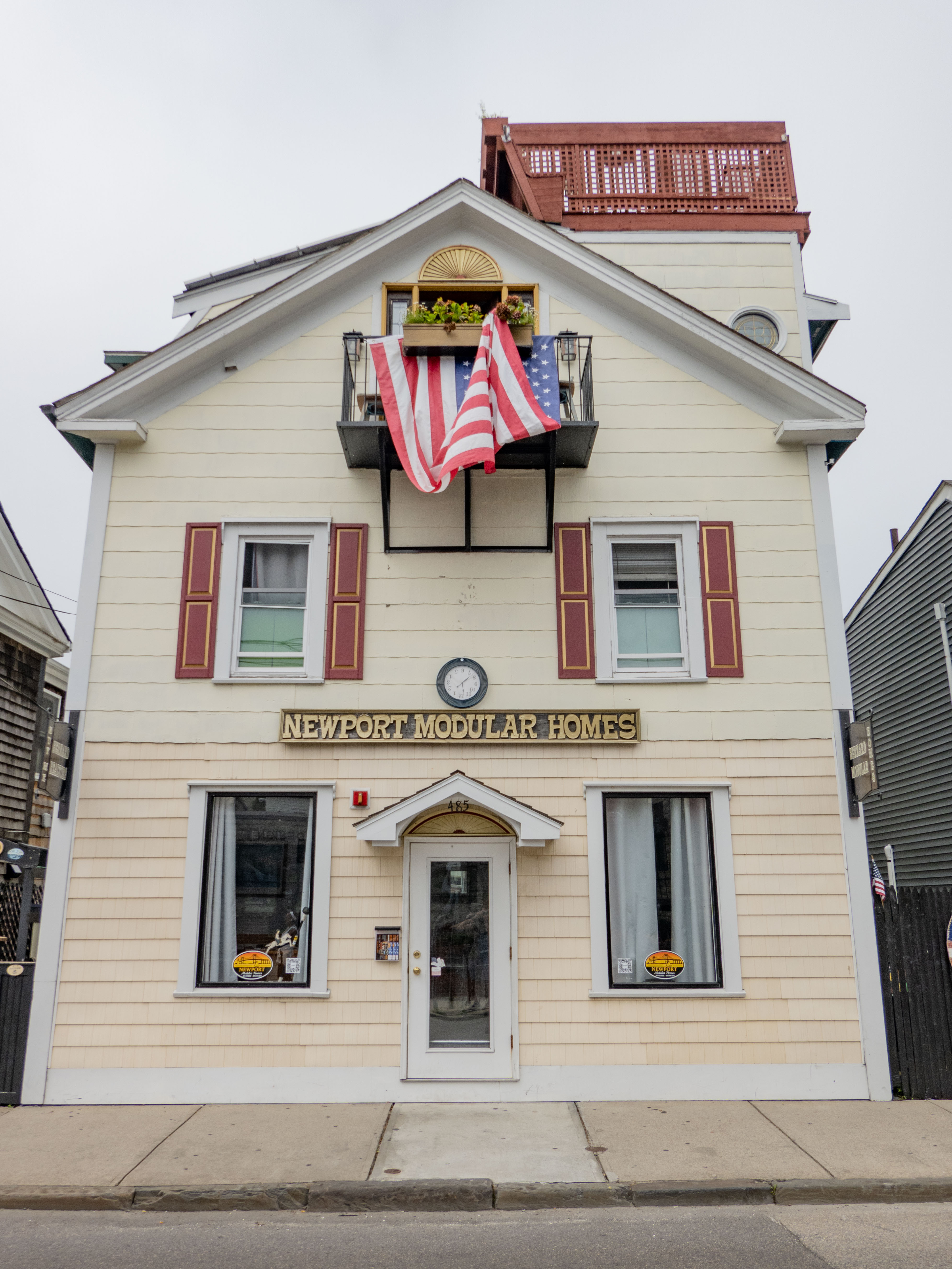
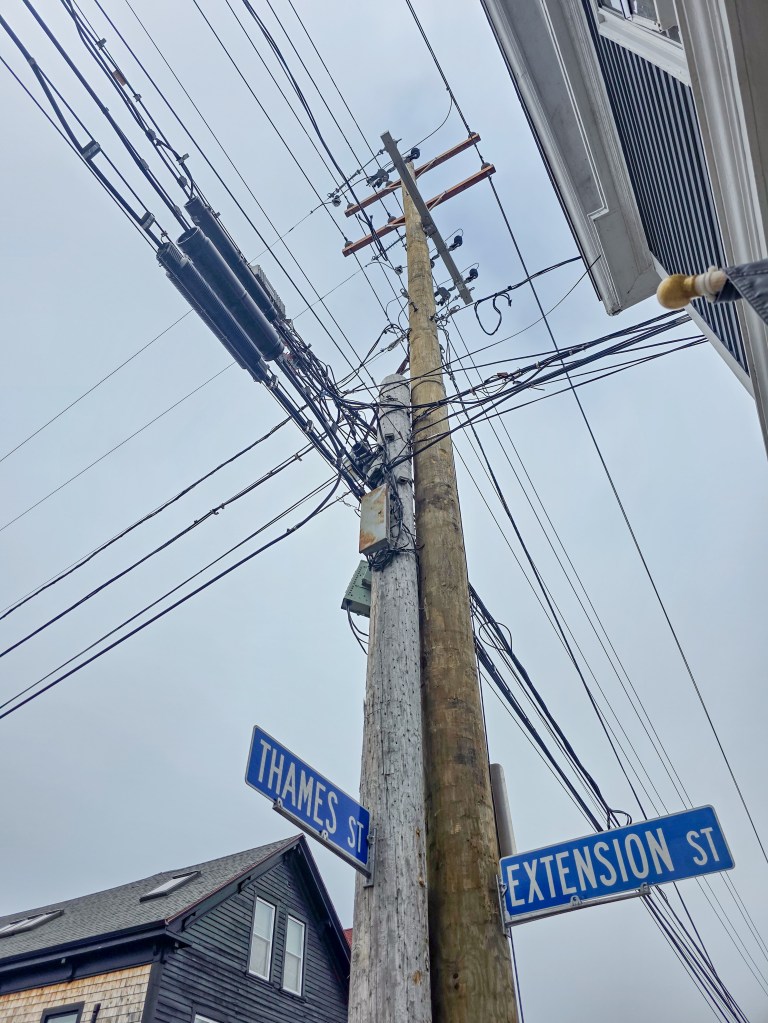
Bonus pic of the day: Newport is one of the oldest cities in the country, and its grid grew incrementally rather than by design. When electricity and streetcars were introduced to Newport in the late 1890s, utility poles were meant only for electric lines. Over the decades, new technologies emerged.Instead of building new systems, multiple private companies were legally granted the right to attach their equipment to existing poles.
Today, a single pole typically holds:
Top Tier: High-voltage transmission and primary distribution lines (Rhode Island Energy).
Middle Tier: Heavy transformers, voltage regulators, and residential service drops.
Bottom Tier: A chaotic bundle of communication lines owned by various phone, cable, internet, and fiber companies (such as Cox Communications).
Because these companies rarely coordinate when upgrading or abandoning old lines, cables end up sagging, overlapping, and looking incredibly disorganized.
If you have been to any third world country, this would give you a Deja Vu.

 WHERE IS NOODLE