Our second day in Boston was intense. Like, very intense. It was a full immersion in the history of the American Revolution, which, for all my non-American readers, is what the rest of the world calls the War of Independence. Same war, different marketing department.
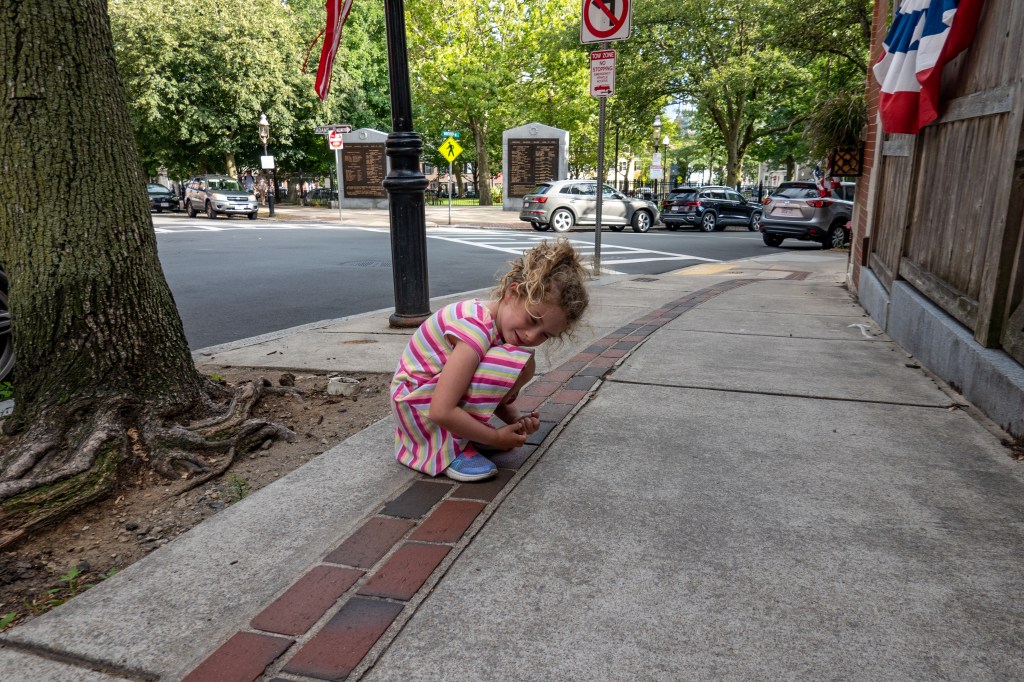
This is the day we walked the Freedom Trail, a 2.5-mile red-brick line painted right into the sidewalk that connects 16 of the most important sites in American Revolutionary history. The concept is genius: if you ever get lost, just find the red line on the ground and keep following it. It’s like a treasure hunt, except the treasure is the birth of a nation and occasionally clam chowder.
First, a Word About Public Transit
We had specifically booked our hotel near a metro station for easy access to the city. So of course, that exact line was closed for maintenance the entire week. Classic.
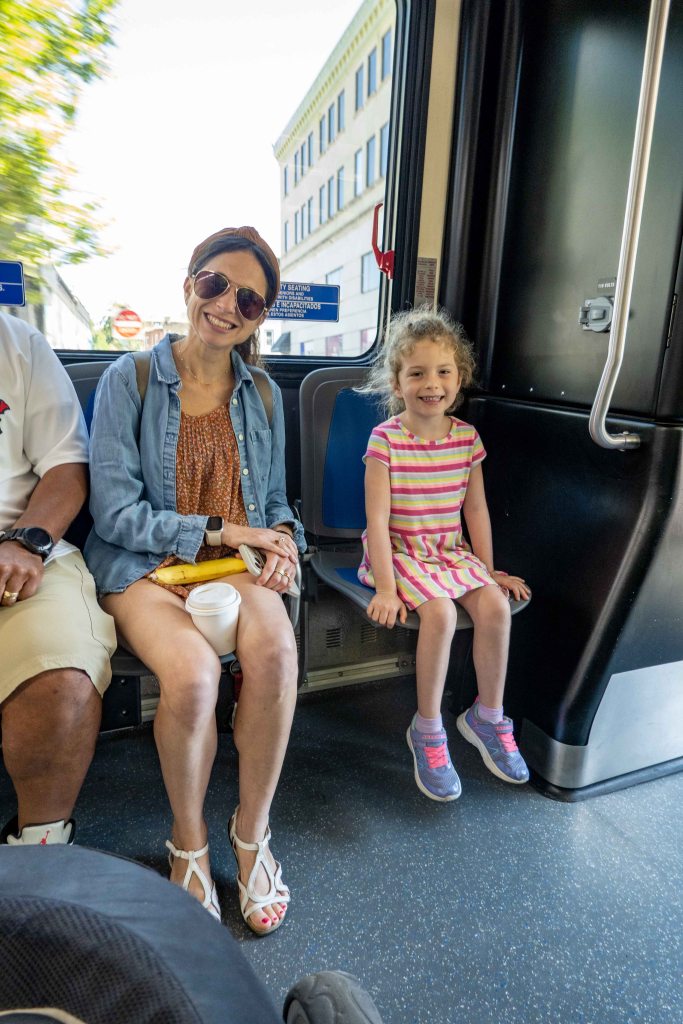
To their credit, the good city of Boston offered replacement buses. The catch is that a replacement bus takes roughly 15 times longer than the train, because, as you correctly guessed, buses get stuck in the same traffic as everyone else. We shuffled onto one anyway and rattled our way toward history at the blistering speed of Boston gridlock.
Granary Burying Ground: Where the Legends Rest
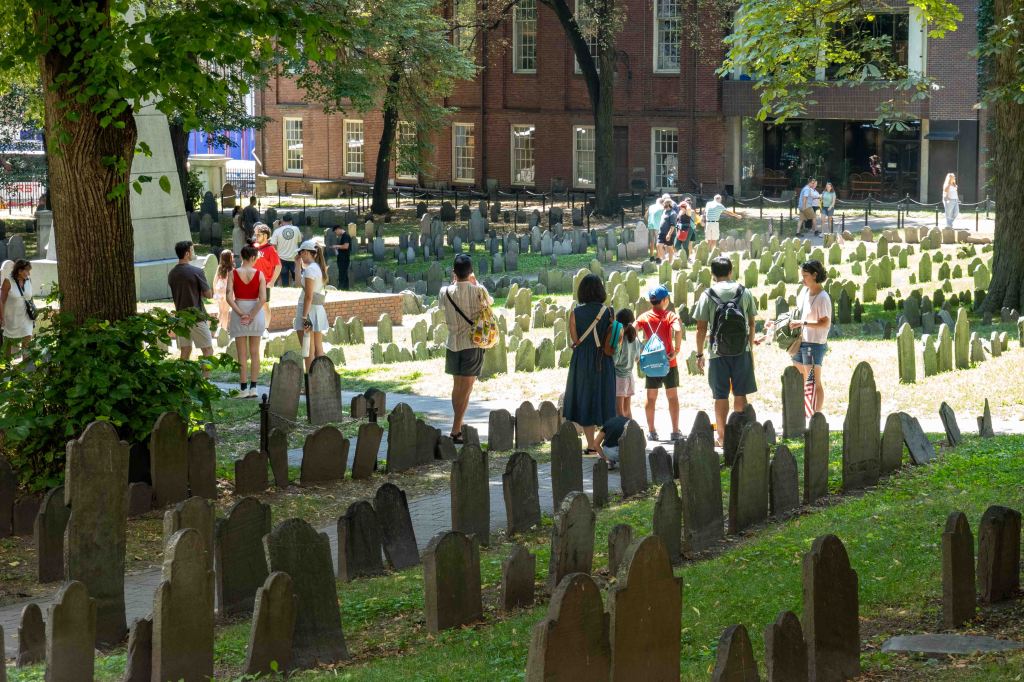
The bus dropped us at the start of our journey: the Granary Burying Ground, established in 1660 and Boston’s third-oldest cemetery. It’s small, but the guest list is staggering. Roughly 2,300 headstones stand here, though it’s estimated that over 5,000 people are actually buried beneath them. (Fun and slightly unsettling fact: in the 1800s, the headstones were rearranged into tidy rows to make room for the newfangled lawnmower, so the stones no longer necessarily line up with the bodies. So much for resting in peace precisely where you were put.)
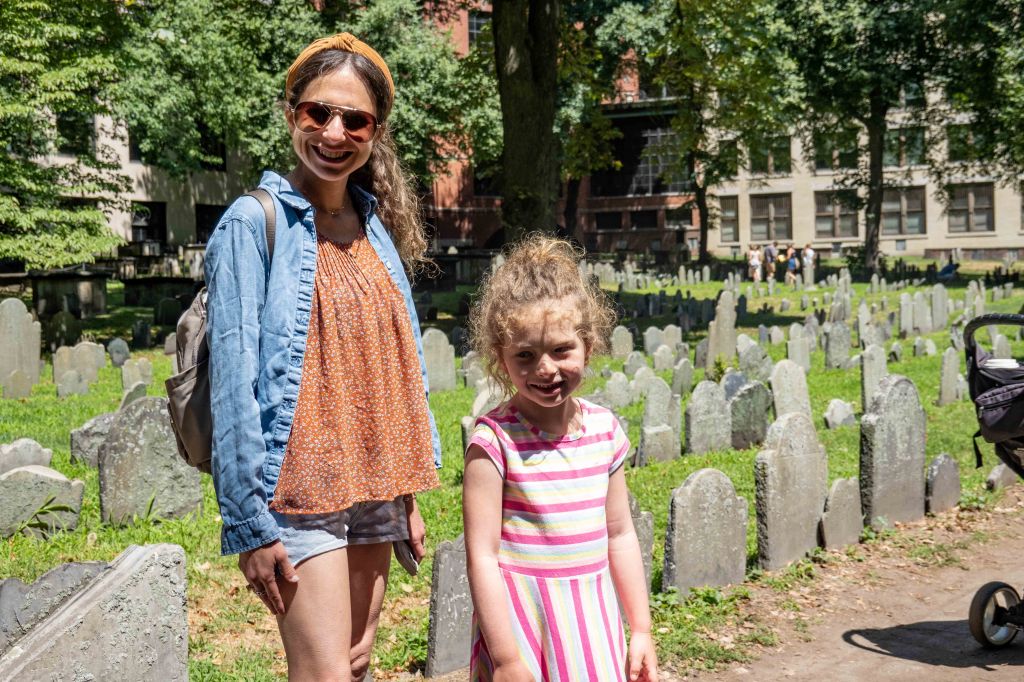
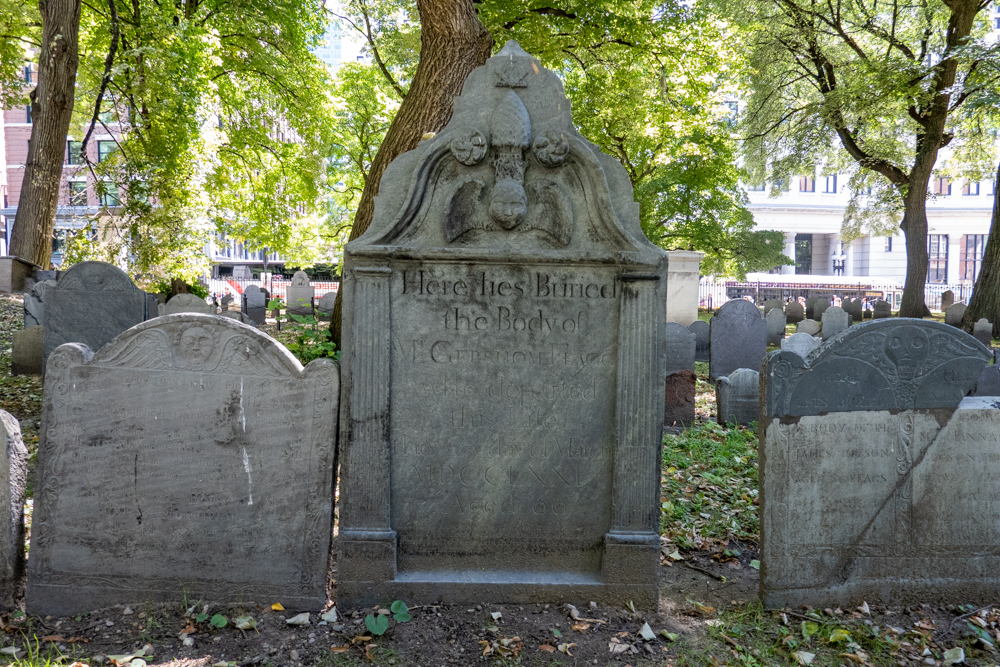
We visited the grave of Samuel Adams, best known today for the excellent beer bearing his name. Just kidding. He was actually one of the most influential Founding Fathers, a firebrand political organizer, a signer of the Declaration of Independence, and one of the key agitators behind a certain famous tea-related protest (more on that shortly). The beer is just a bonus.

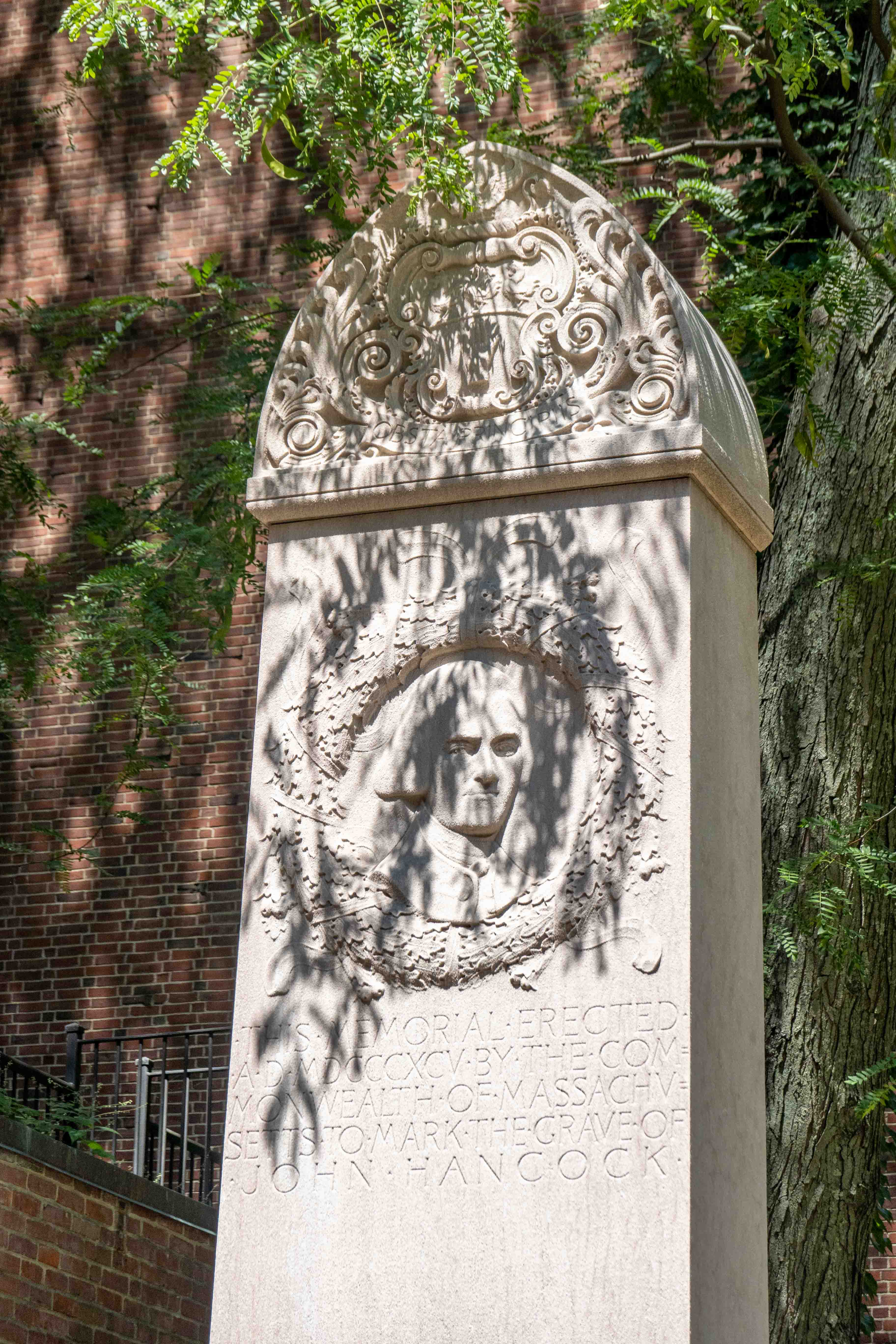
We also found the grave of John Hancock, the man whose flamboyantly enormous signature on the Declaration of Independence was so iconic that “John Hancock” became American slang for a signature. Legend says he signed so large so King George III could read it without his glasses. Whether that’s true or not, it’s the energy we should all aspire to.
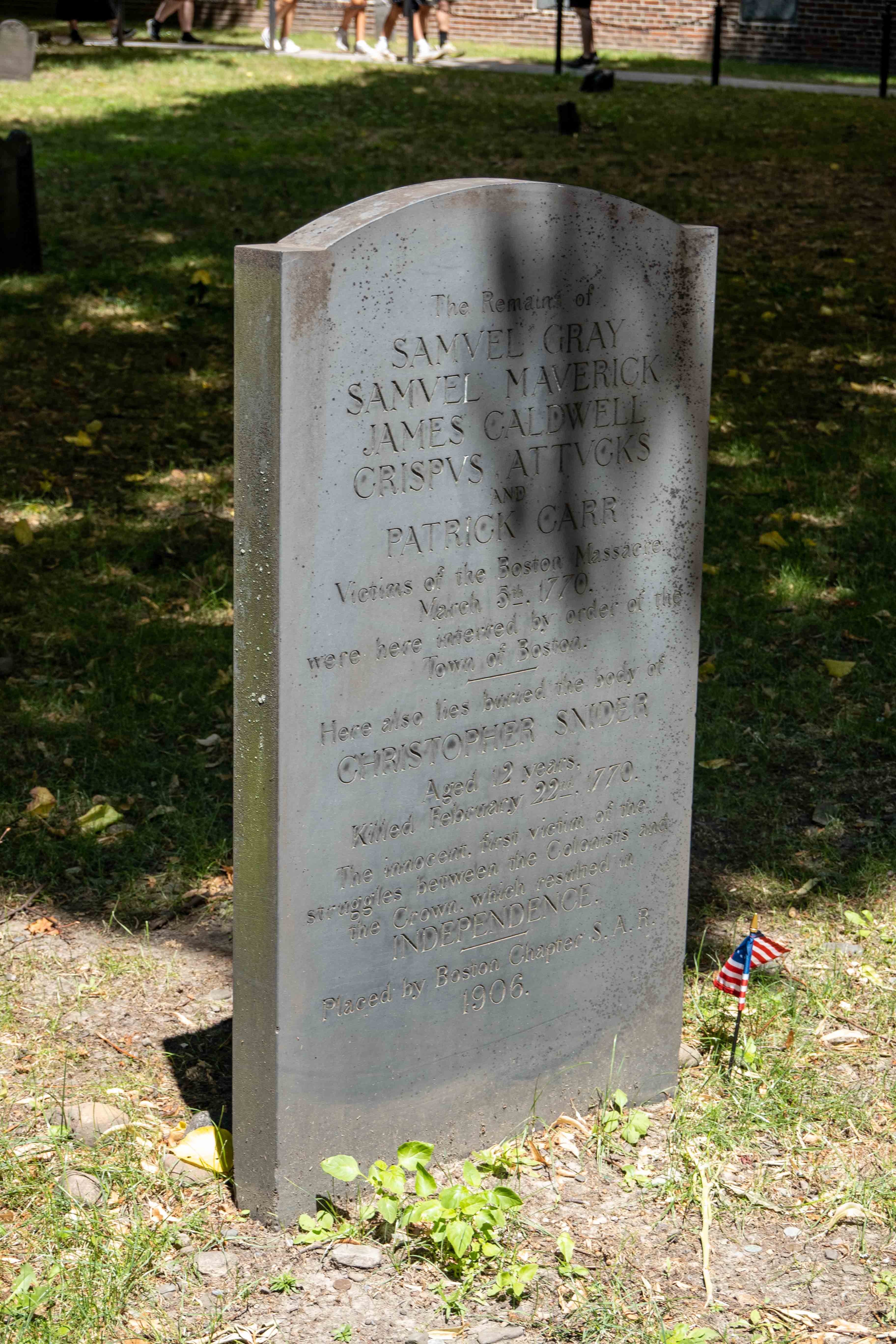
The cemetery is packed with other patriots who, I’ll be honest, you’ve probably never heard of unless you’re deep into American history. Also resting here are Paul Revere of midnight-ride fame, three signers of the Declaration, nine Massachusetts governors, and the five victims of the Boston Massacre.
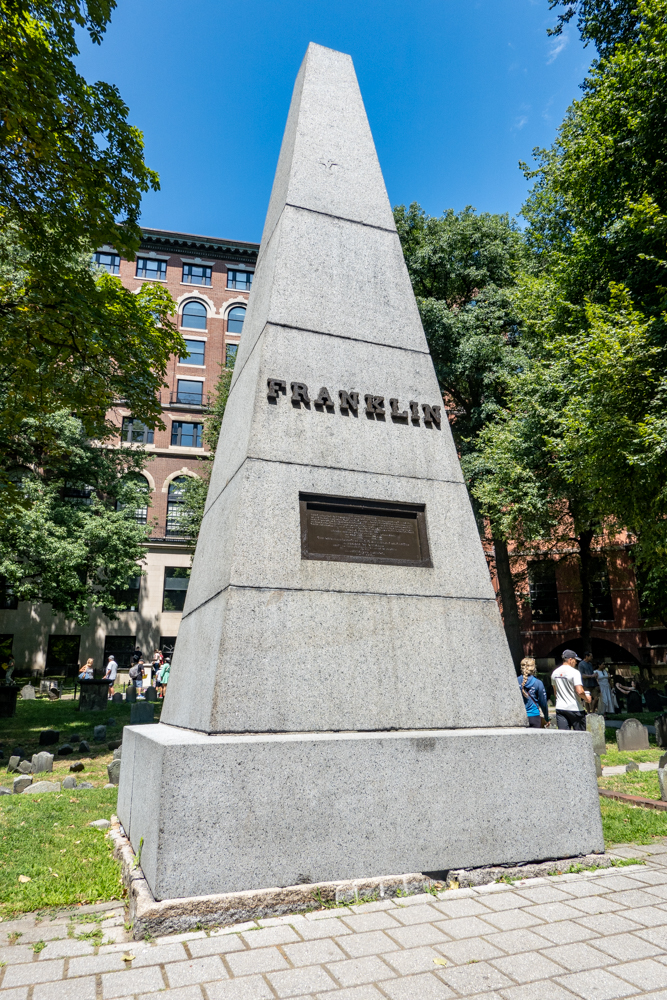
Near the center stands a tall granite obelisk that most people assume marks Benjamin Franklin’s grave. Plot twist: it’s actually the grave of his parents, Josiah and Abiah. Franklin himself is buried down in Philadelphia. The obelisk was erected in 1827 by proud locals who wanted to claim their famous native son, even though he’d chosen to be buried elsewhere. And here’s my favorite bit: also buried in this cemetery is Elizabeth Vergoose, who legend claims is the original “Mother Goose” of nursery rhyme fame. Revolutionaries and nursery rhymes, all in one plot of land.
A Quick Word on the Tea Party
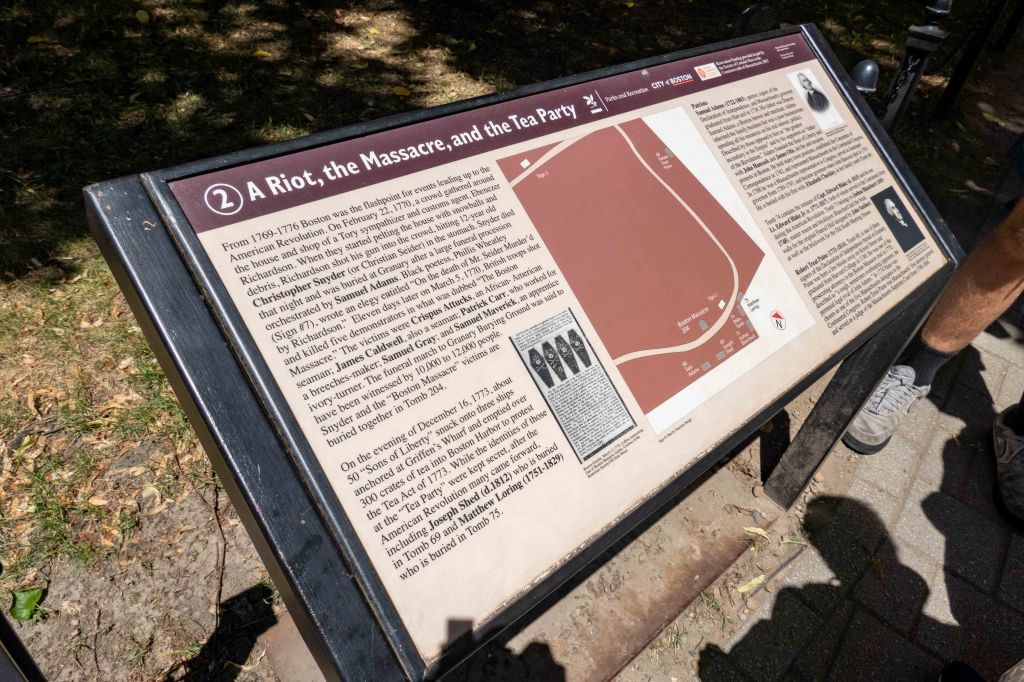
Since Sam Adams brought it up, let’s talk about the Boston Tea Party. In December 1773, furious over “taxation without representation,” a group of colonists (many disguised as Mohawk people) boarded three ships in Boston Harbor and dumped 342 chests of British tea into the water. That’s roughly 92,000 pounds of tea, worth close to a million dollars in today’s money, turned into the world’s largest and angriest cup of harbor tea. It was one of the sparks that lit the fuse of the Revolution, and proof that Bostonians have always taken their beverages seriously.
The Golden Dome and America’s Oldest Park
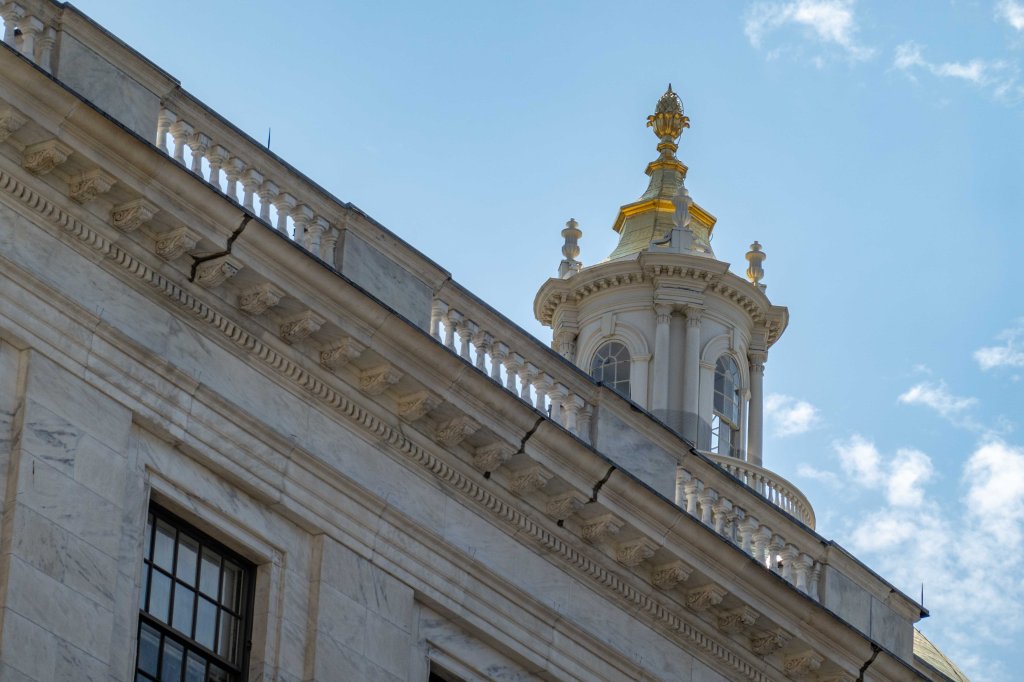
We continued past the Massachusetts State House, crowned with its gleaming golden dome. That dome was originally made of wood, then covered in copper by none other than Paul Revere’s company (the man was a busy guy), and is now coated in genuine 23-karat gold leaf.
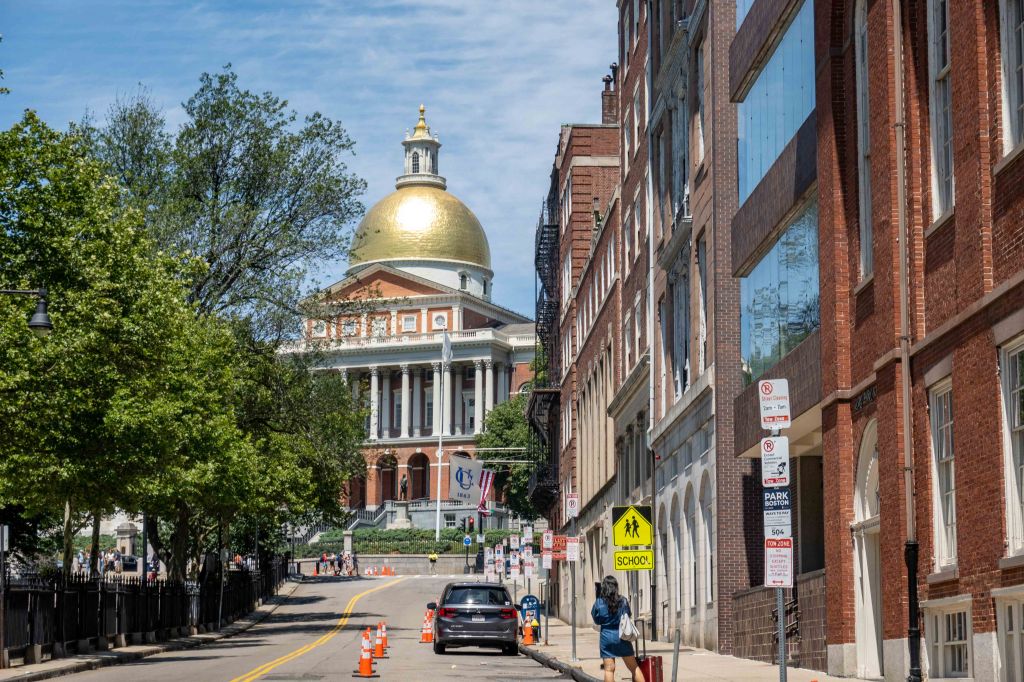
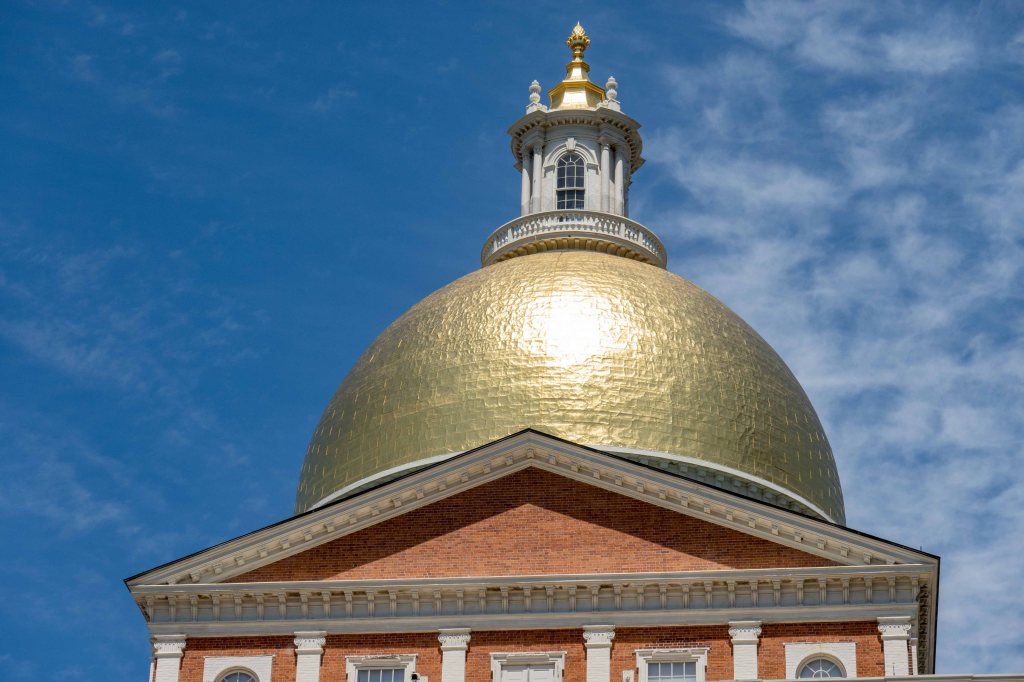
During World War II, it was painted gray so it wouldn’t reflect moonlight and give enemy bombers an easy target. These days it just gleams gloriously and slightly blinds passing tourists.
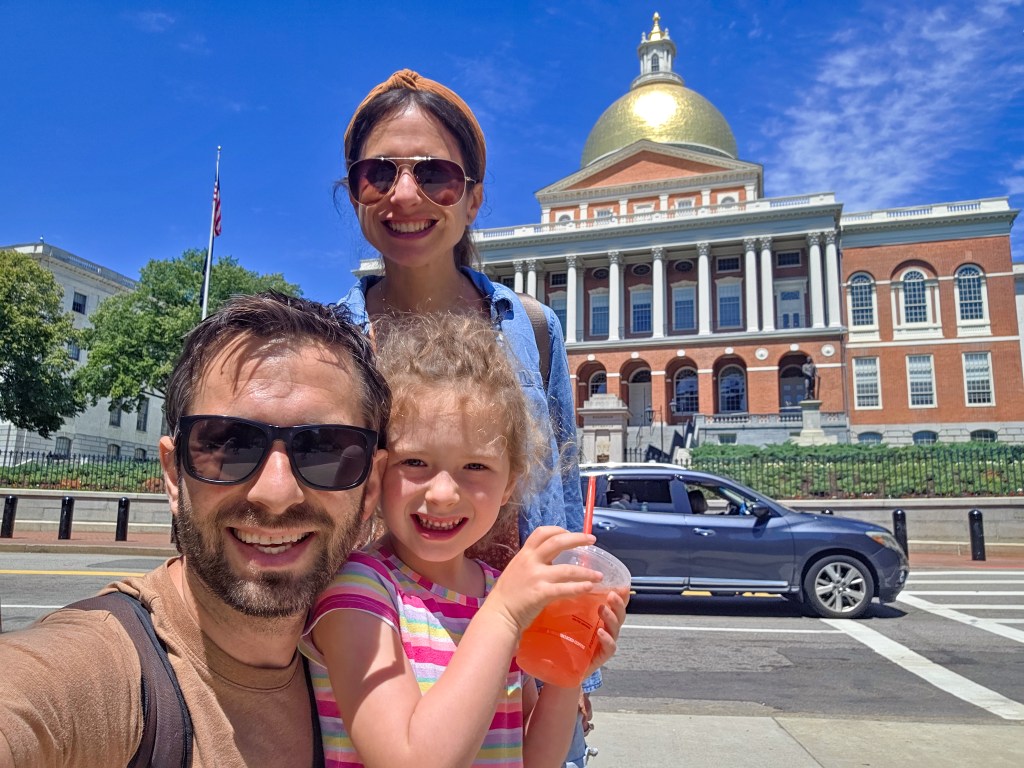
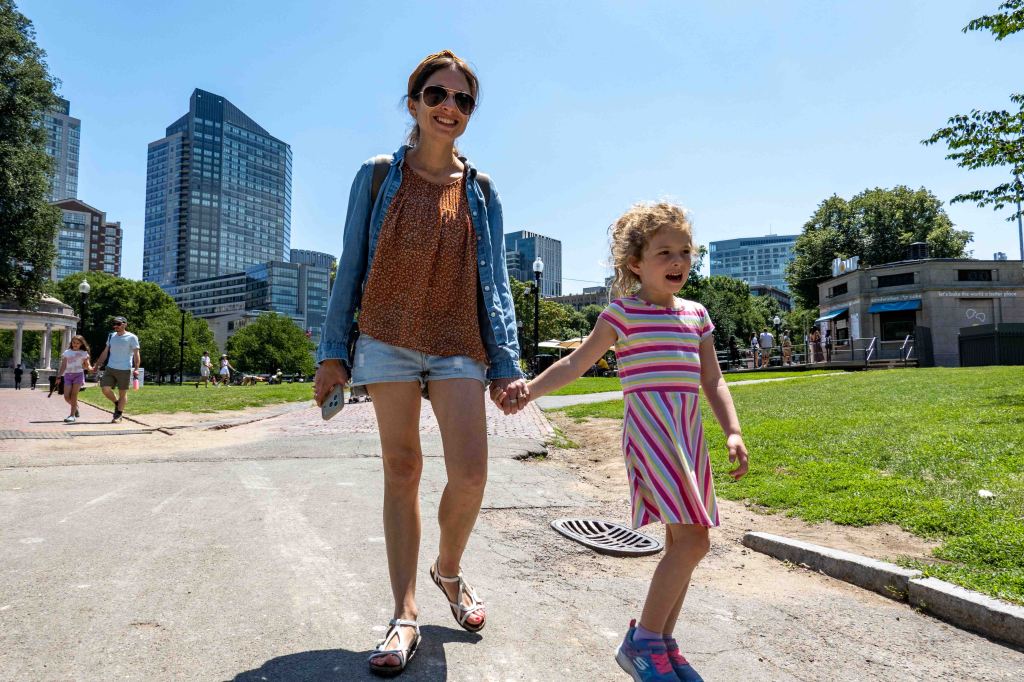
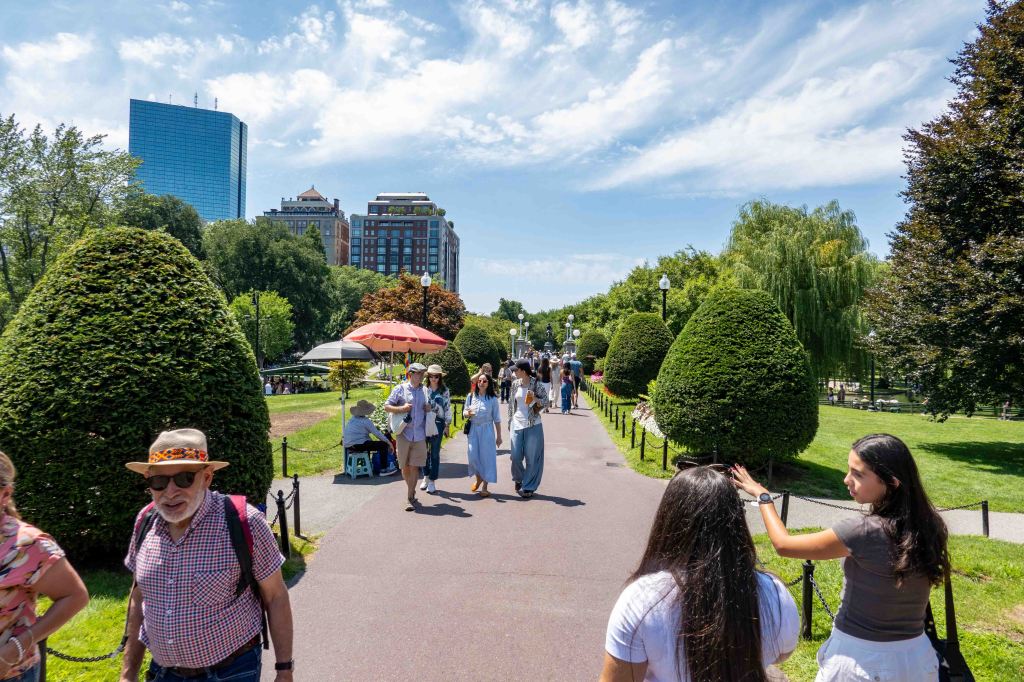
Next we reached Boston Common, established in 1634 and the oldest public park in America. This 50-acre green space has served as a cow pasture, a military camp for British Redcoats before the Revolution, a site of public hangings, and now a beloved spot for picnics and duck-related tourism. Speaking of which, we were on a mission: find the duck boats.
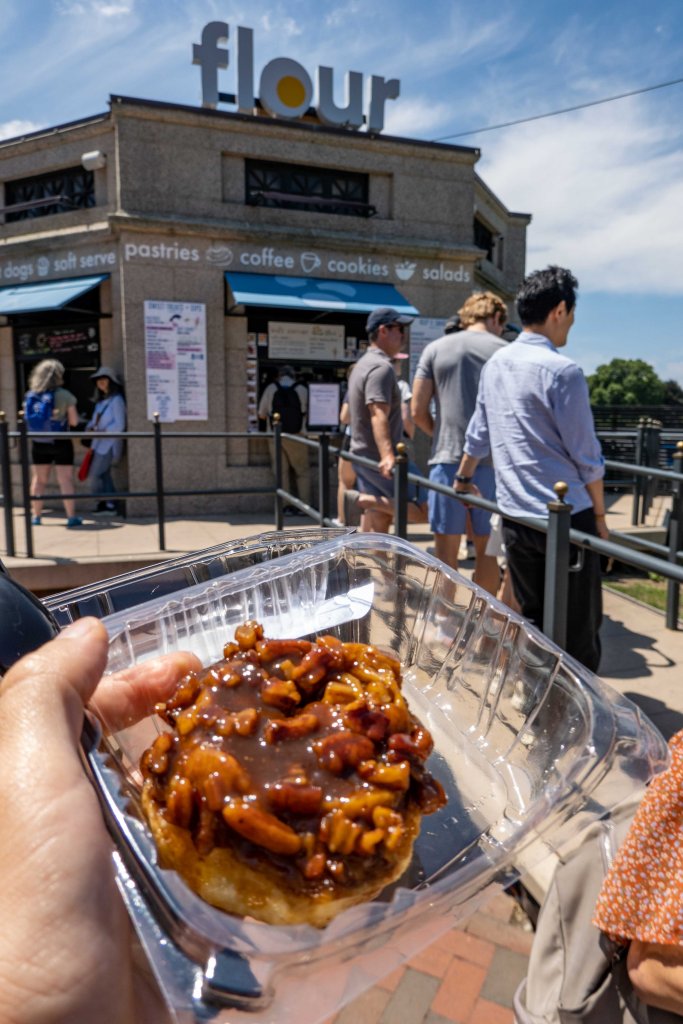
But first, snacks. We stopped at the famous Flour Bakery for their legendary sticky bun, a swirl of cinnamon sugar topped with caramelized honey and toasted pecans. It was good. It was also aggressively sweet, borderline diabetes-inducing, and we could not finish it. Some pastries are less a snack and more a dare.
The World-Famous Duck Boats (The Small Kind)
We finally reached the Swan Boats in the Public Garden, the beloved pedal-powered boats adorned with a graceful swan sculpture. For a couple of dollars, you get a relaxing 15-minute glide around the lagoon with lovely views of the city.
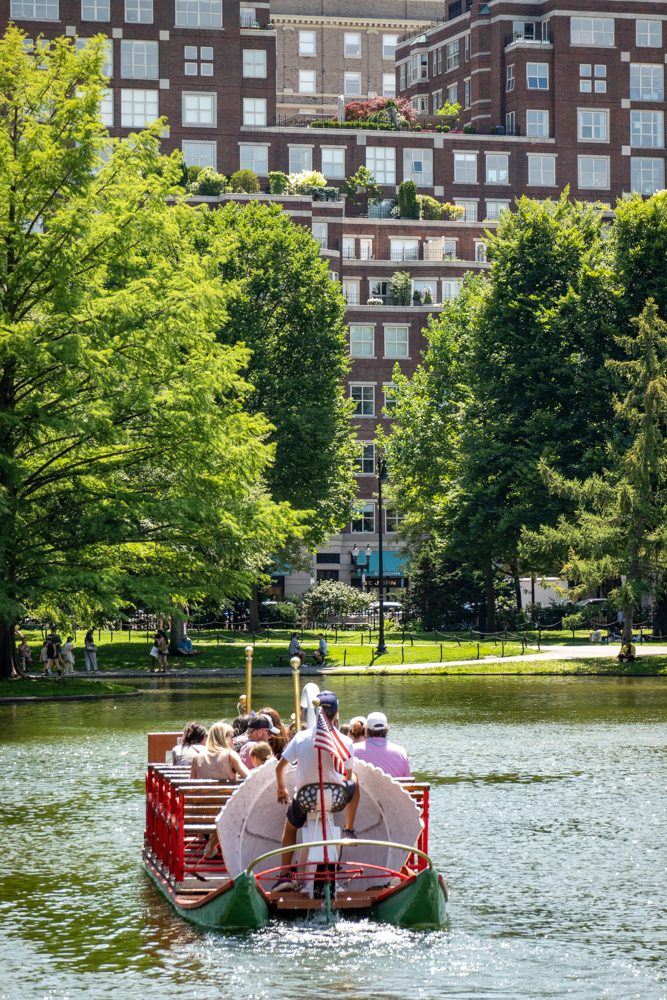
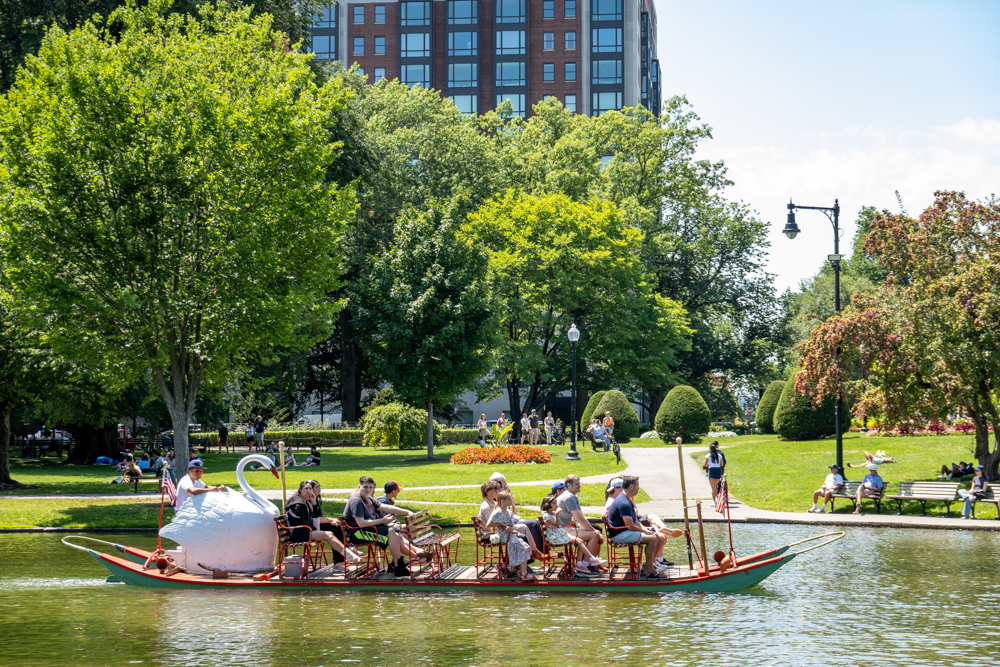
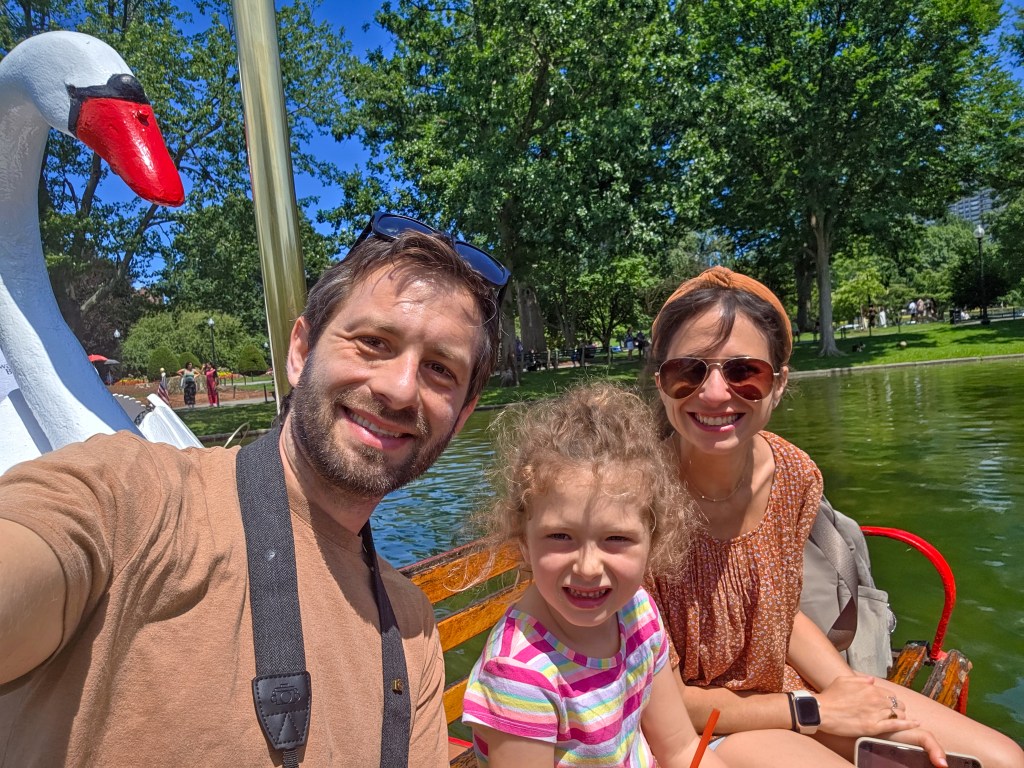
These boats have been operating since 1877, run by the same family for four generations, making them one of Boston’s oldest continuously running attractions. Ariela was delighted, and so were we. A rare moment of not walking.

The Prettiest Street You’ll Ever Take One Photo On
We strolled over to Acorn Street, frequently called one of the most photographed streets in the United States. It’s a narrow, cobblestoned lane on Beacon Hill, lined with charming brick row houses and gas lanterns, and it looks exactly like the postcard. It’s genuinely beautiful.
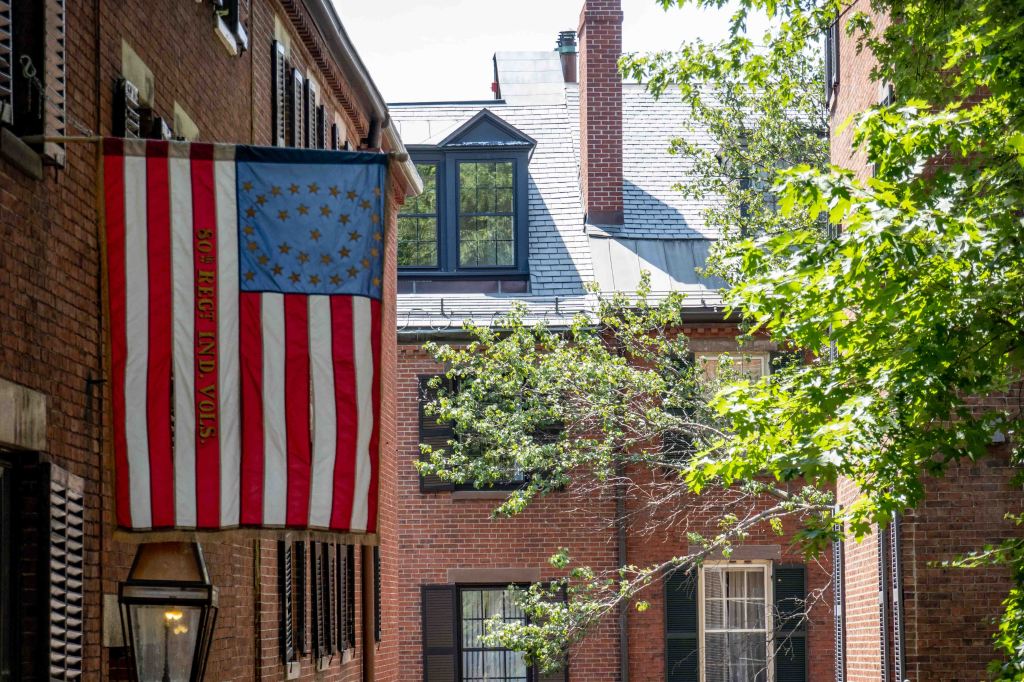
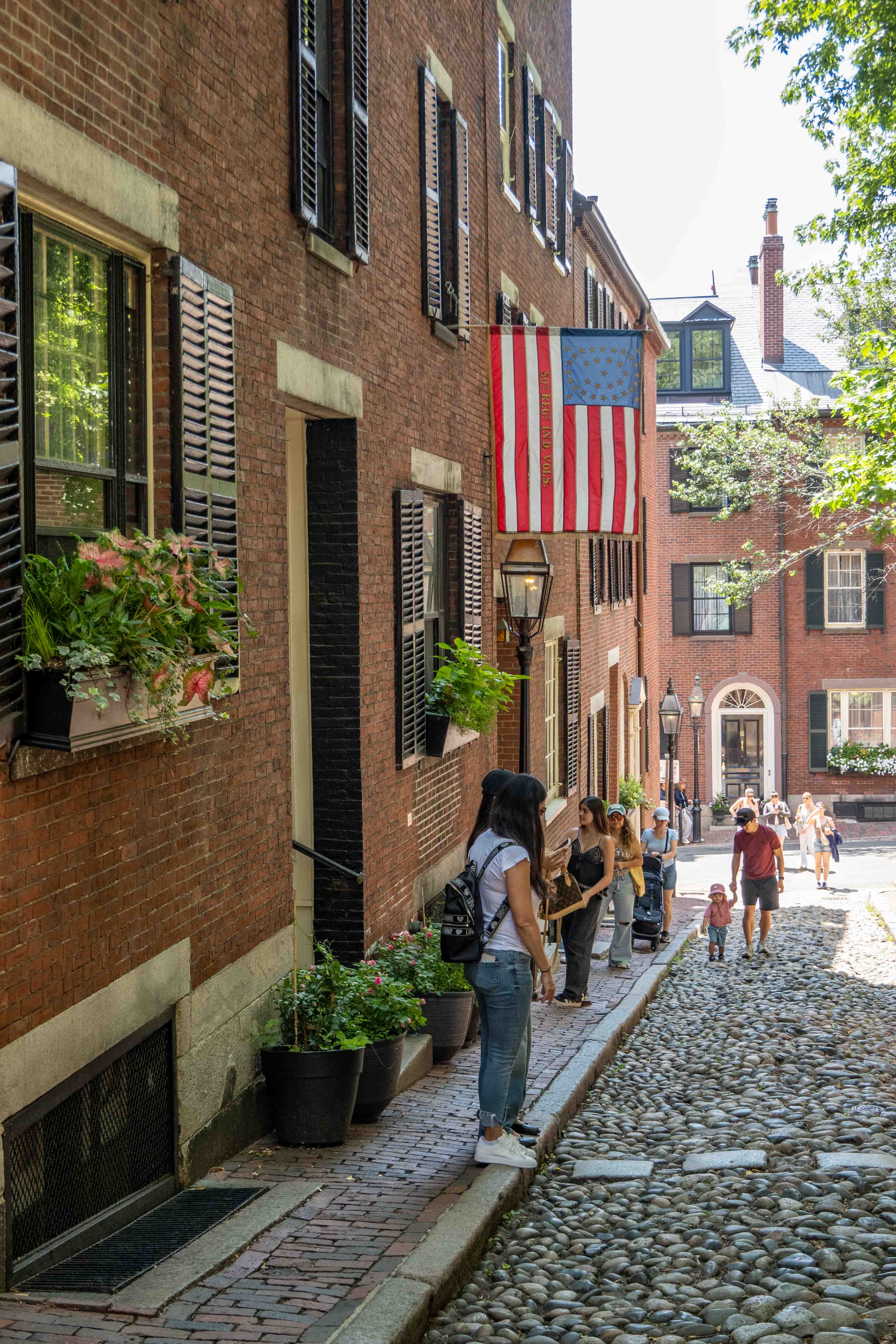
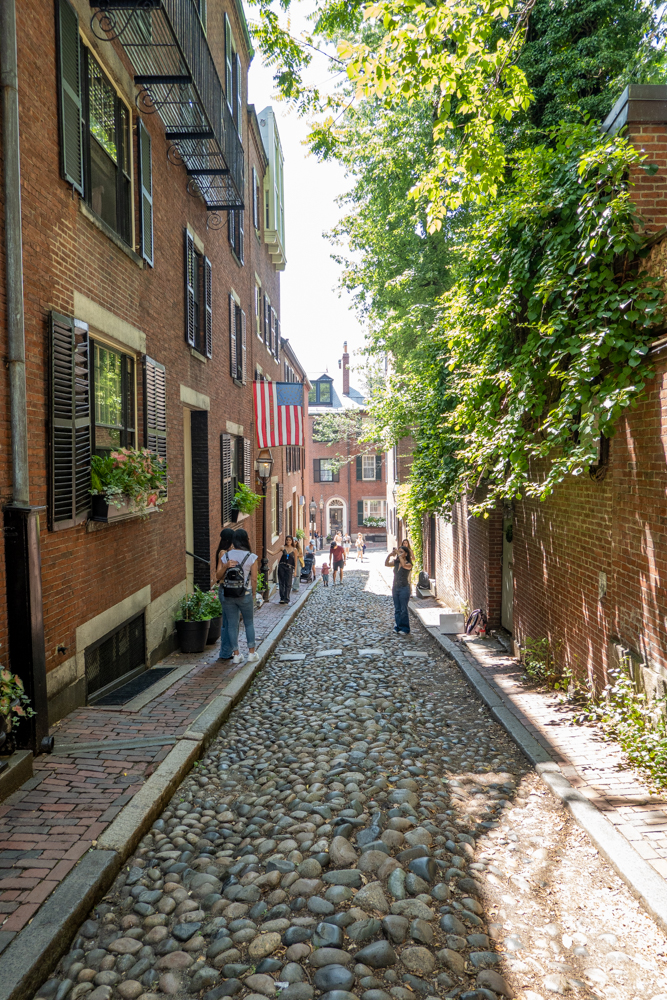
There is also, functionally, nothing to do there except take a couple of photos and marvel at how anyone drives a car over those cobblestones. Mission accomplished, on to the next.
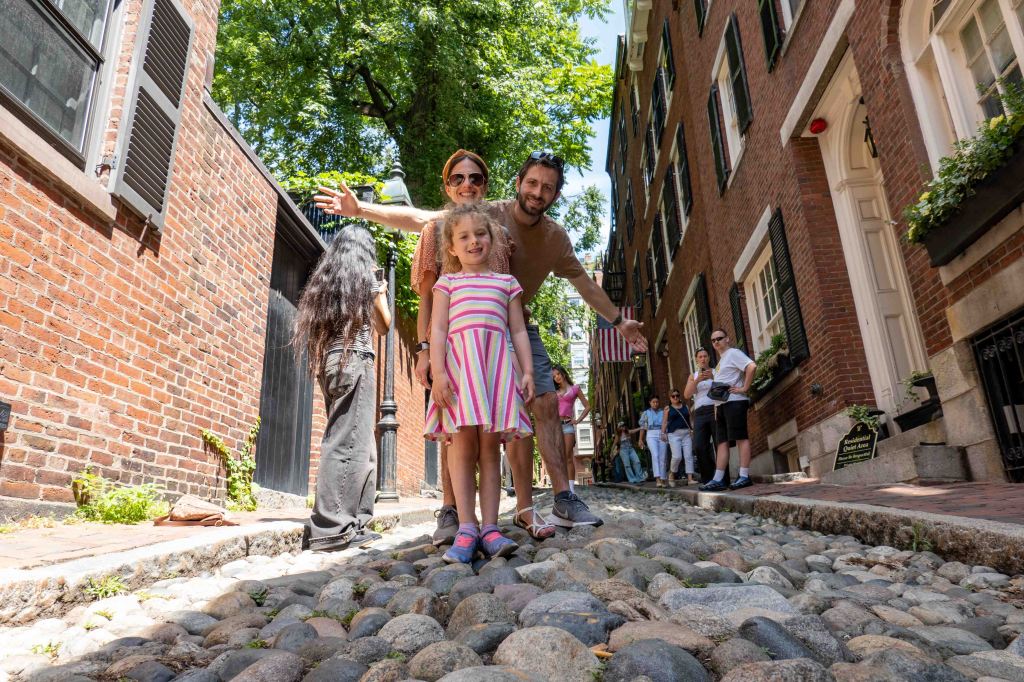
We continued walking towards the rest of the freedom trail.
Chowder, Chapels, and Donkey Footprints
We passed King’s Chapel, Boston’s first Anglican church, with the city’s oldest burying ground beside it, though we admired it from the outside and kept moving.
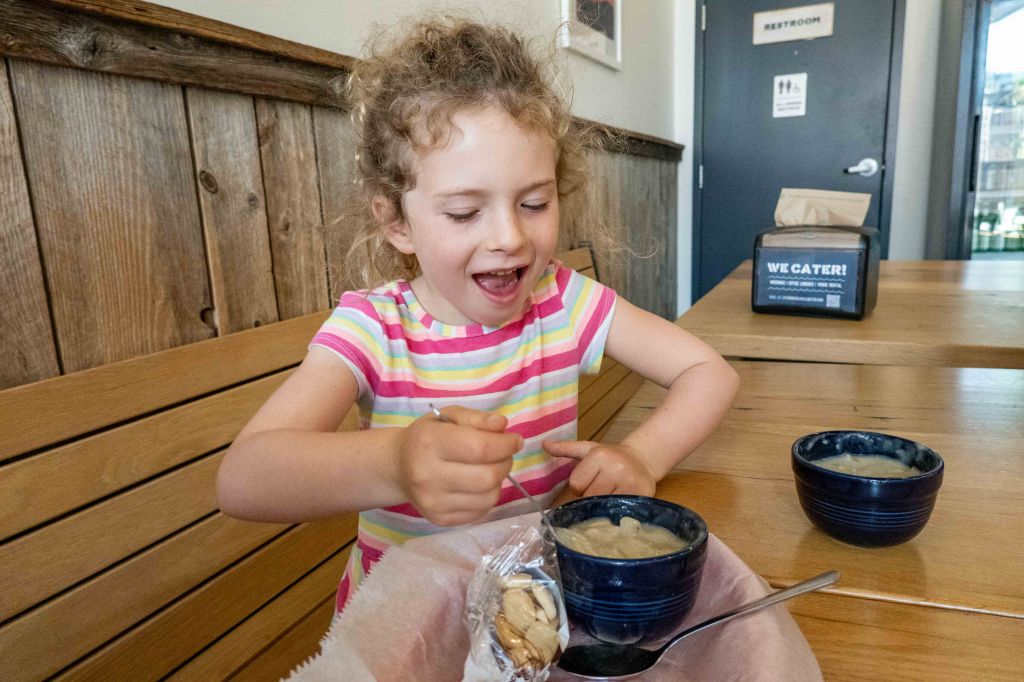
Then came a highlight for our smallest traveler: we stopped so Ariela could get some clam chowder, a dish she is absolutely obsessed with and kept demanding. She devoured the entire thing. The twist? Neither Sarah nor Eitan can stand clam chowder, so it was 100% Ariela’s feast. A toddler with more refined New England seafood tastes than both her parents combined.
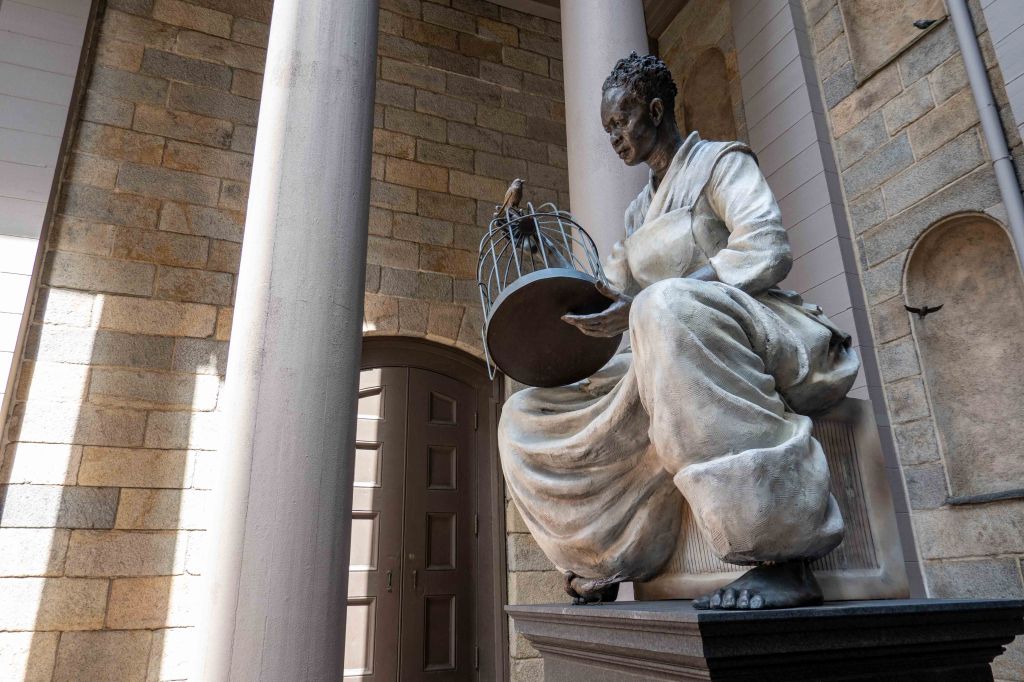
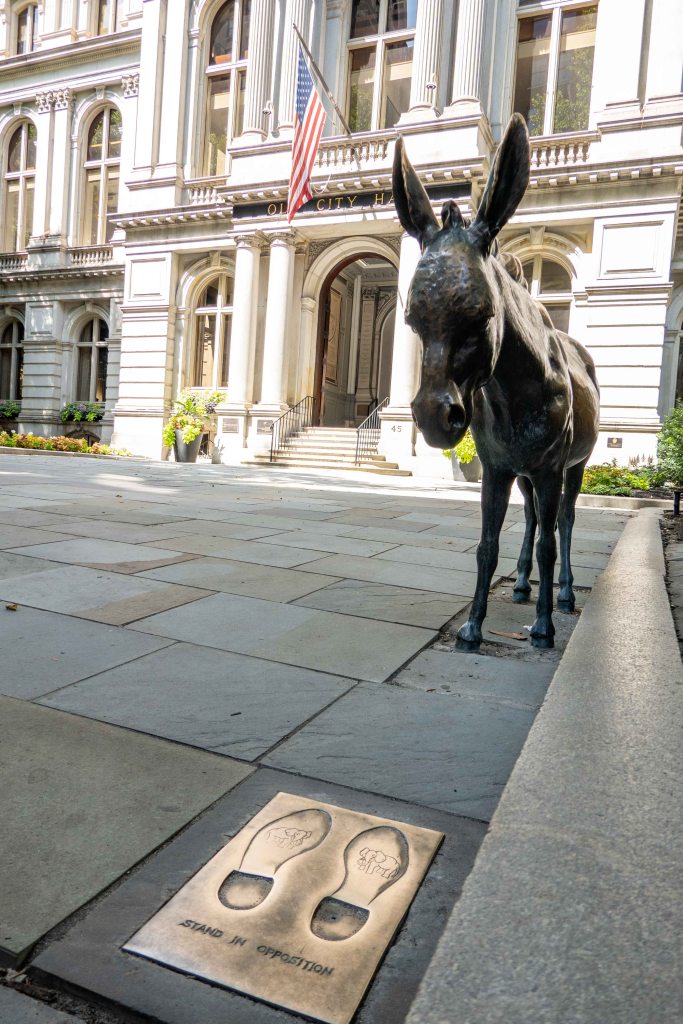
We made a quick stop at the Old City Hall, home to a fun little piece of political humor: In the 1990s, Boston preservationist Roger Webb brought home a small bronze donkey he bought in Florence for nearly $10,000, hoping to give it to the city as a playful distraction for children walking the Freedom Trail. City officials initially rejected the idea, so Webb stored the statue in his daughter’s garage until he came up with a new plan. Eventually, the donkey was installed in the courtyard of Old City Hall, a historic building Webb had helped save from demolition, in 1998. To justify its presence, Webb jokingly claimed the donkey represented the Democratic Party, while footprints placed in front of it offered a tongue-in-cheek nod to Republicans. What began as an unconventional idea quickly became a beloved Boston attraction
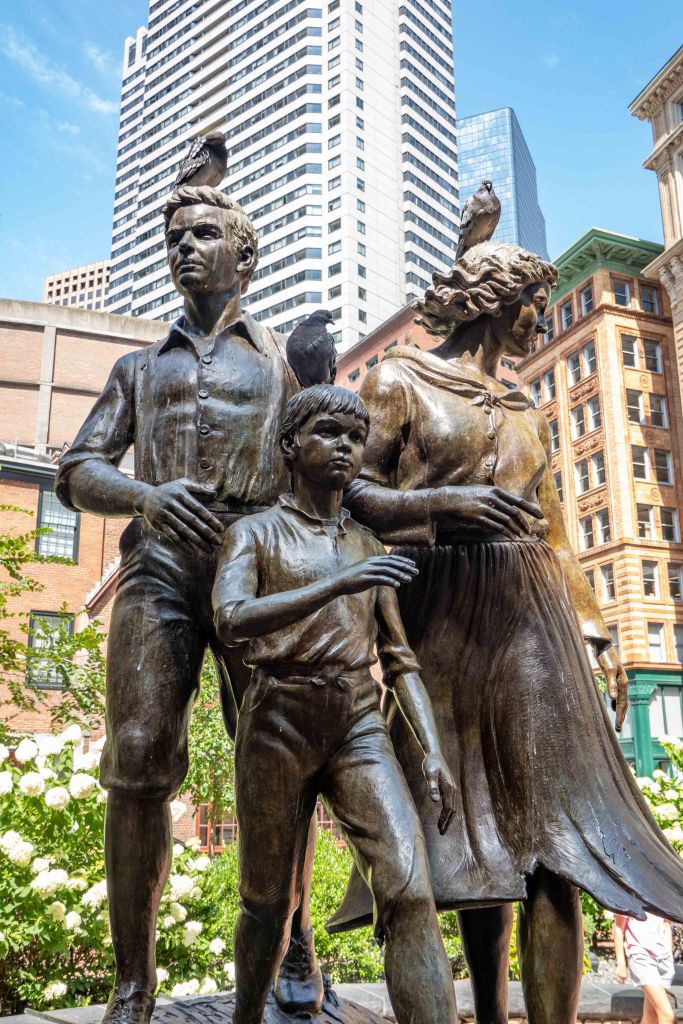
Nearby we found the moving Irish Famine Memorial, commemorating the Great Hunger of the 1840s that drove massive Irish immigration to Boston, forever shaping the city’s identity. (Boston’s Irish-American roots run so deep that the city is basically synonymous with them today.)
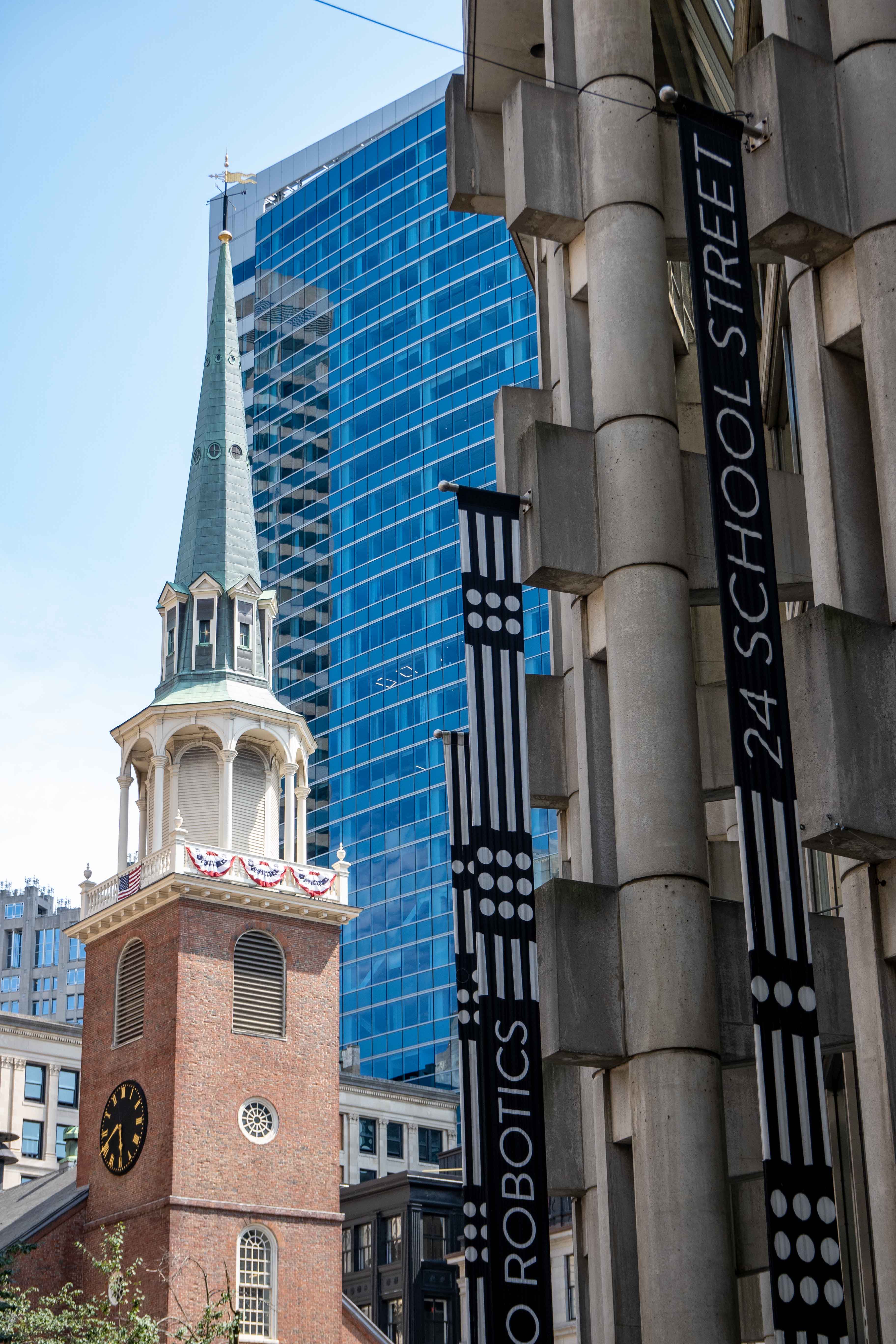
We passed the Old South Meeting House, the very building where thousands of colonists gathered before storming off to throw that famous tea into the harbor, but we didn’t go in, because we were on a tight schedule with a very important, very old ship.
The Boston Massacre and a Race Against Closing Time
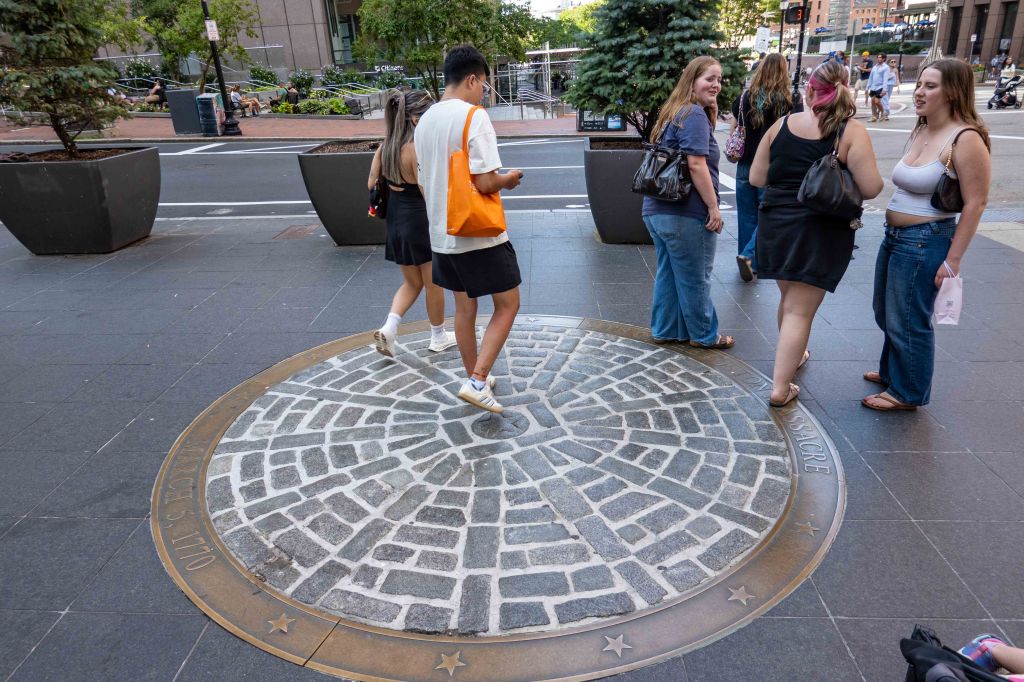
On our way, we crossed the site of the Boston Massacre, marked by a circular ring of cobblestones in the pavement. On March 5, 1770, British soldiers fired into an angry crowd, killing five colonists, including Crispus Attucks, a man of African and Native American descent widely regarded as the first casualty of the American Revolution. The event became a powerful piece of propaganda (Paul Revere made a famous engraving of it) that helped rally colonial anger toward independence.
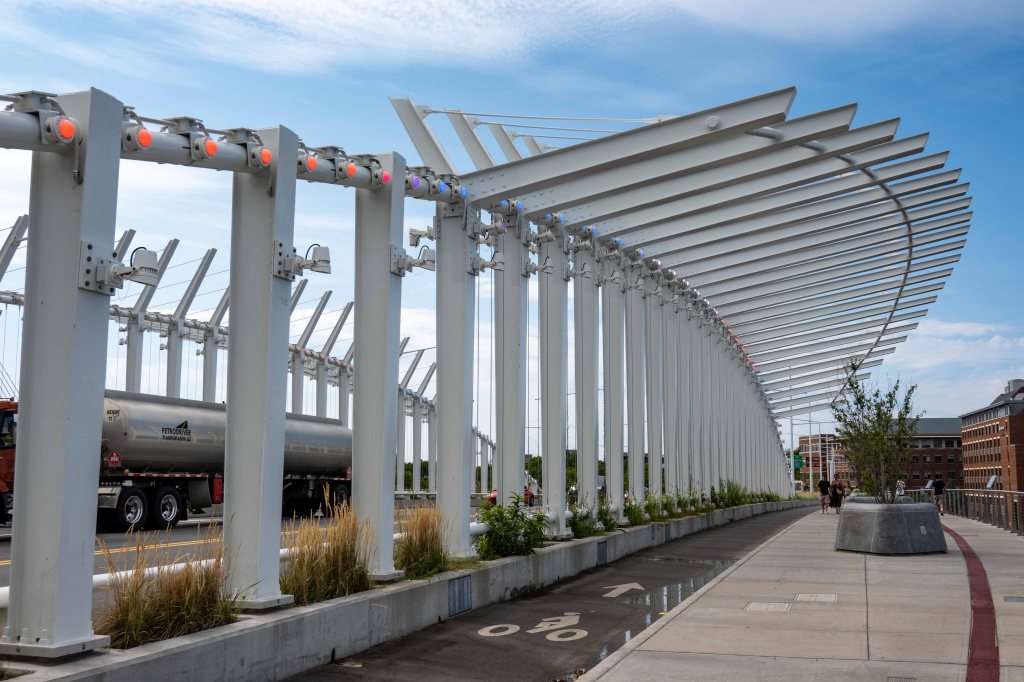
Then we picked up the pace, crossing the bridge into Charlestown, because the USS Constitution was about to close for the day and we were determined to make it.

USS Constitution: Old Ironsides Herself
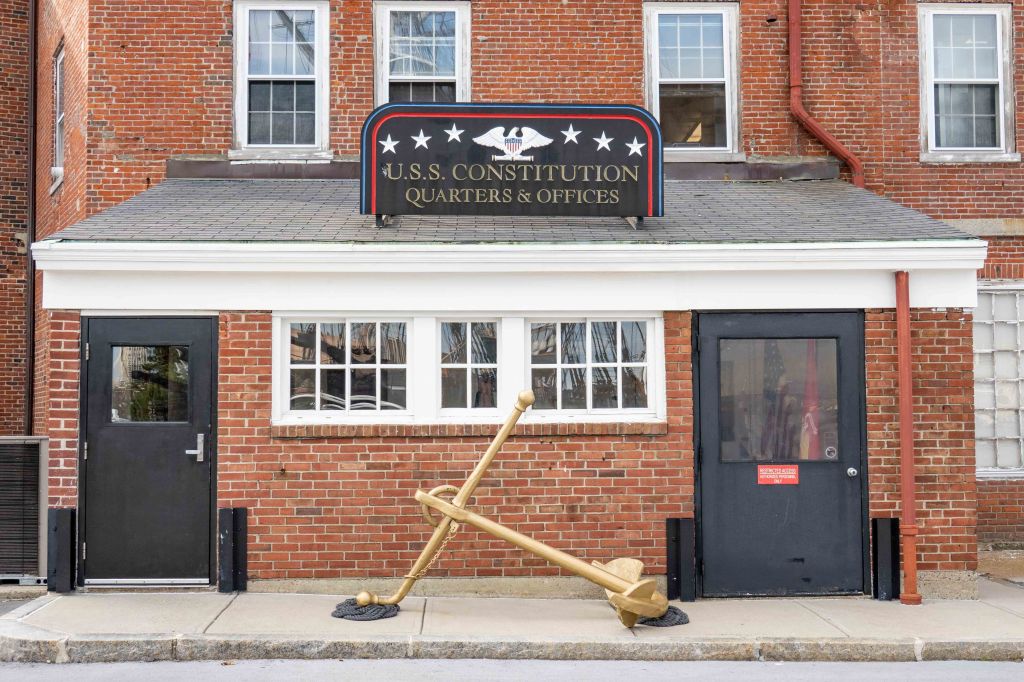
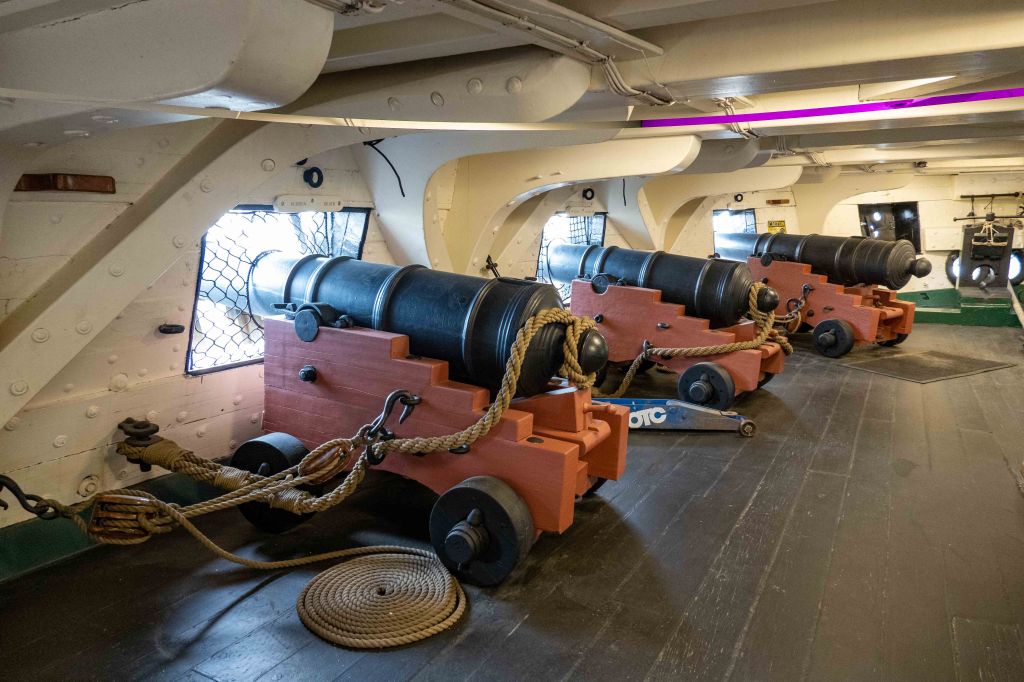
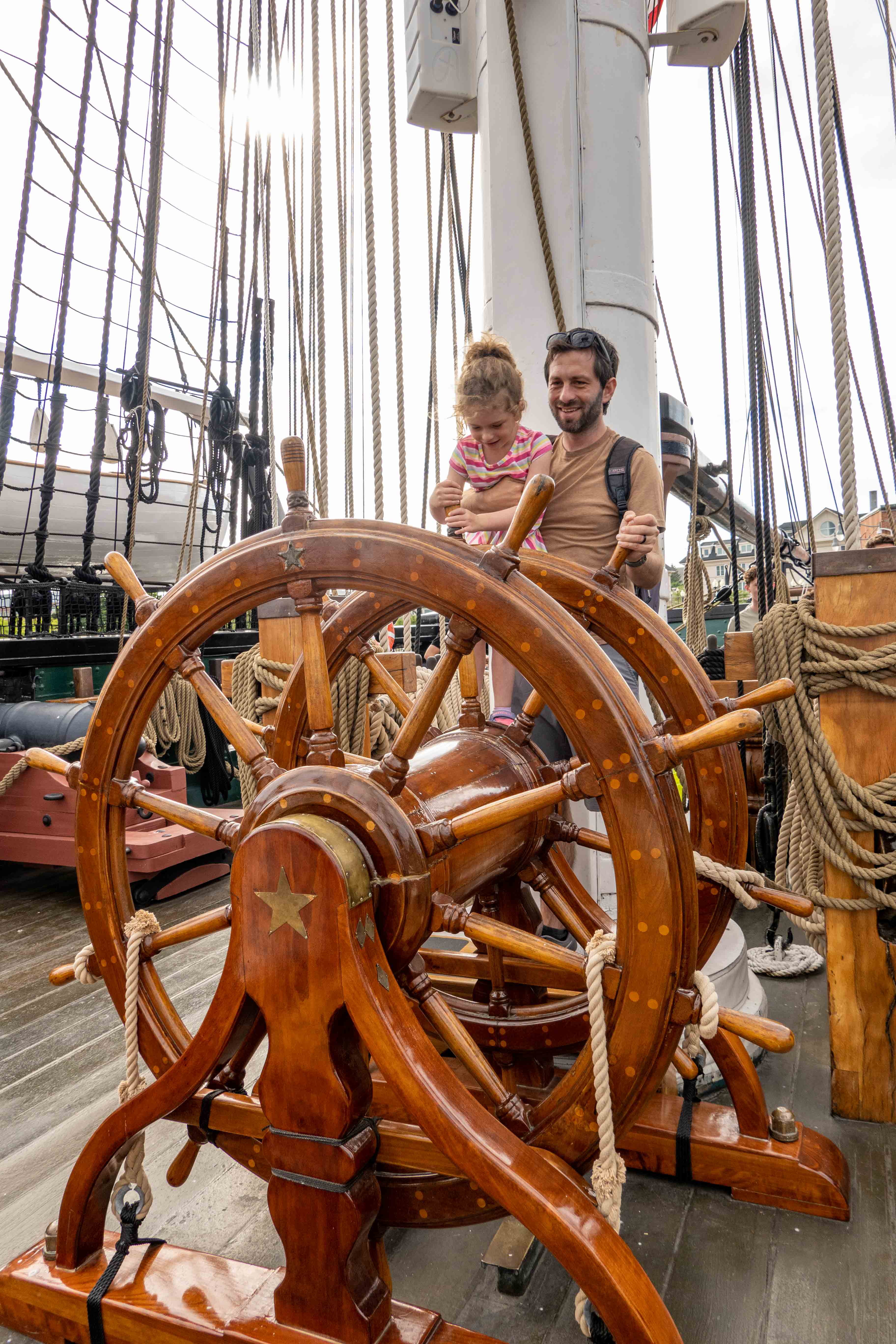
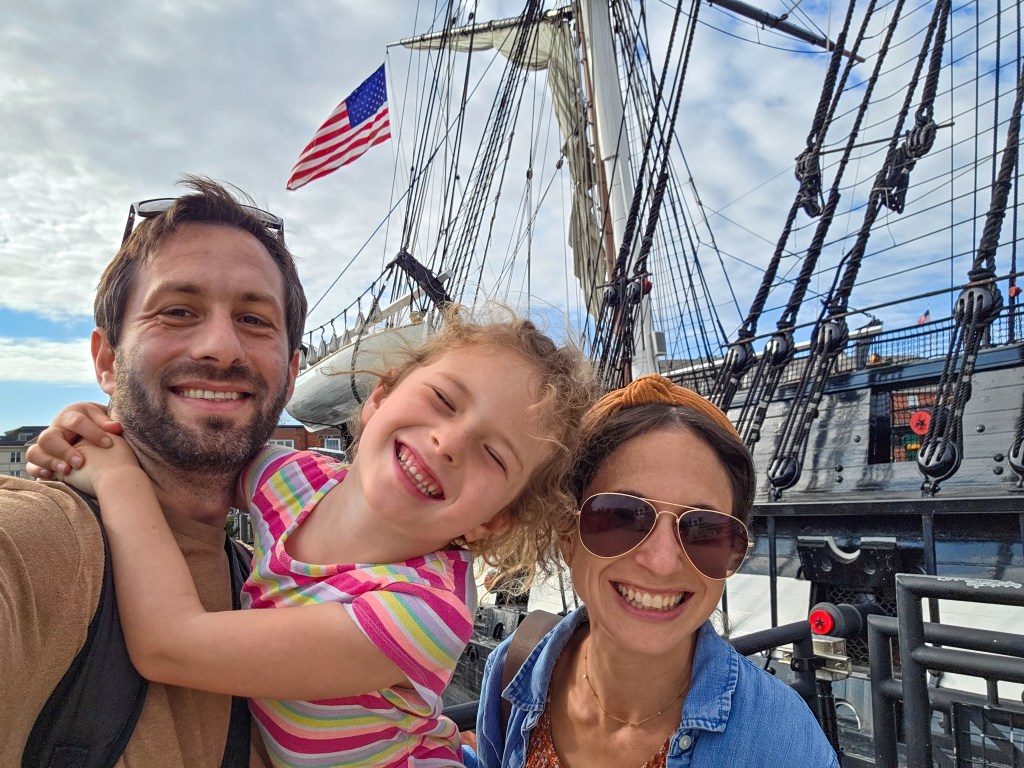
We made it, and this was one of our favorite stops of the entire day. The USS Constitution is the oldest commissioned warship still afloat anywhere in the world. Launched in Boston in 1797, she’s still technically an active-duty US Navy vessel, staffed by real sailors in period-style uniforms.
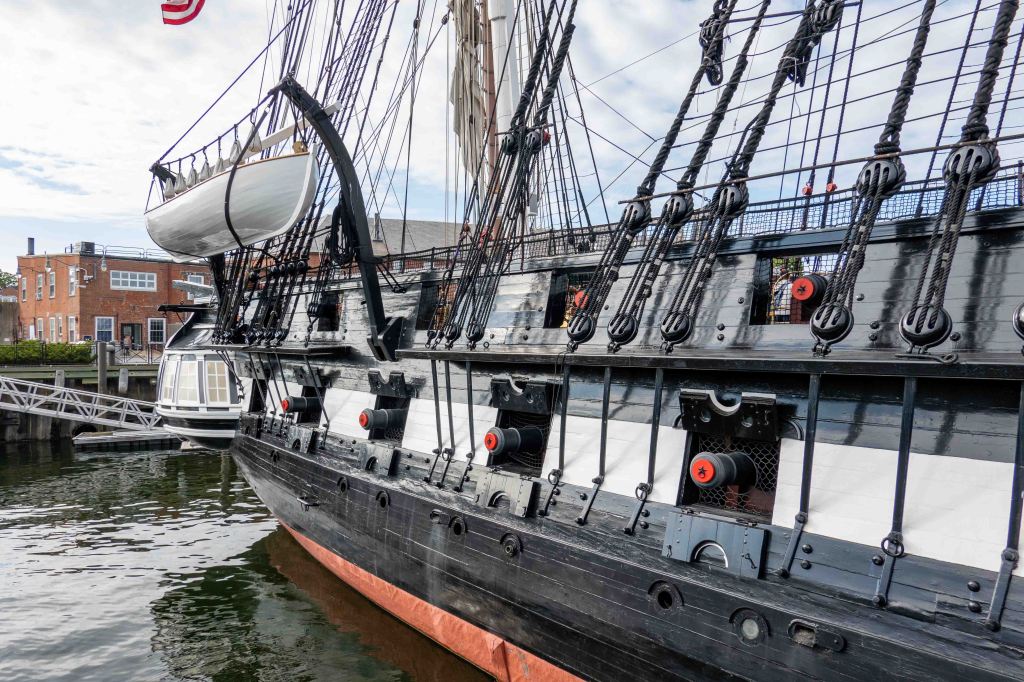
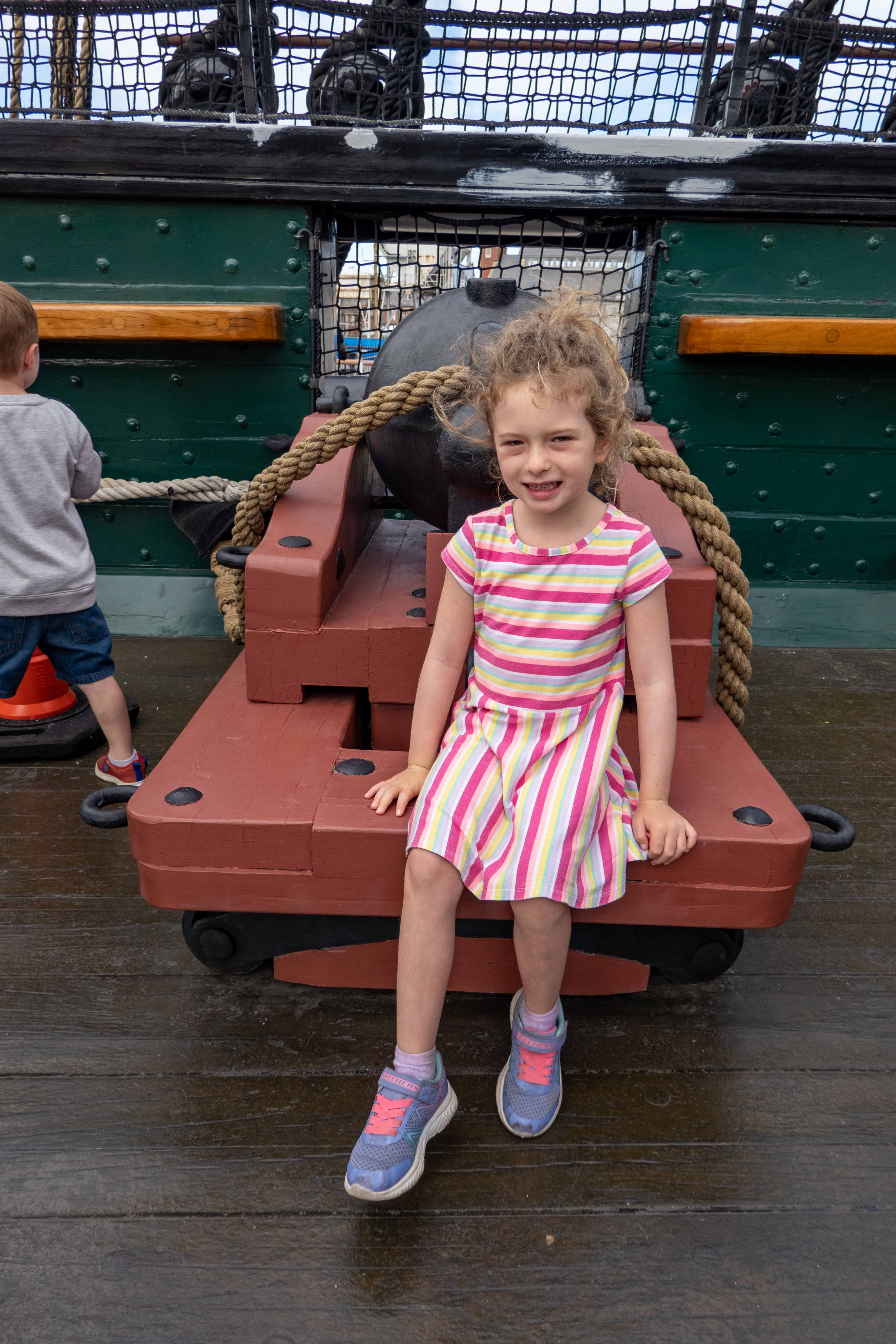
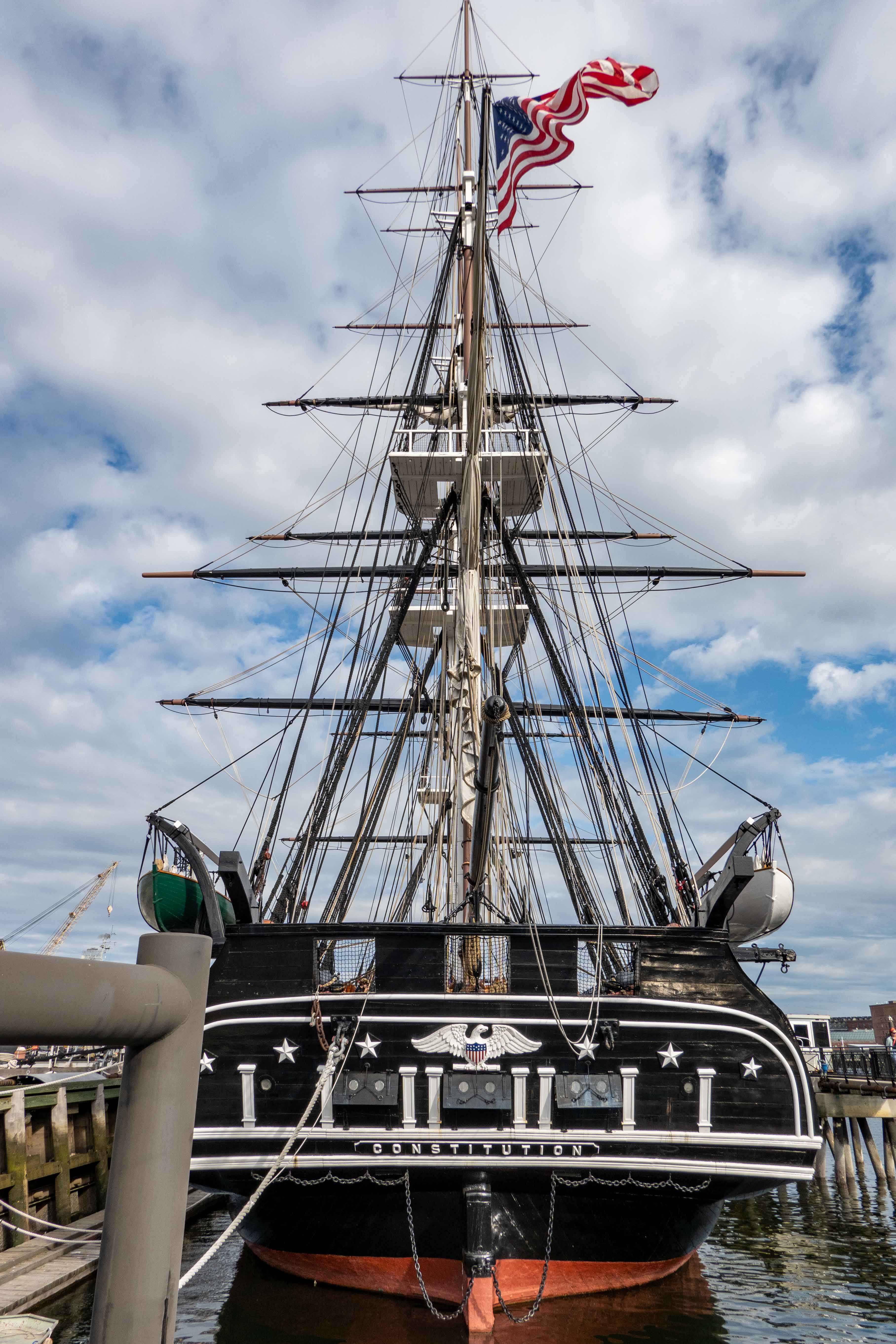
Her nickname, “Old Ironsides,” was earned during the War of 1812 in a battle against the British frigate HMS Guerriere. When British cannonballs were seen bouncing off her thick oak hull, an astonished sailor reportedly shouted, “Huzzah! Her sides are made of iron!” They weren’t, of course. They were made of a dense triple layer of live oak, but the legend stuck.
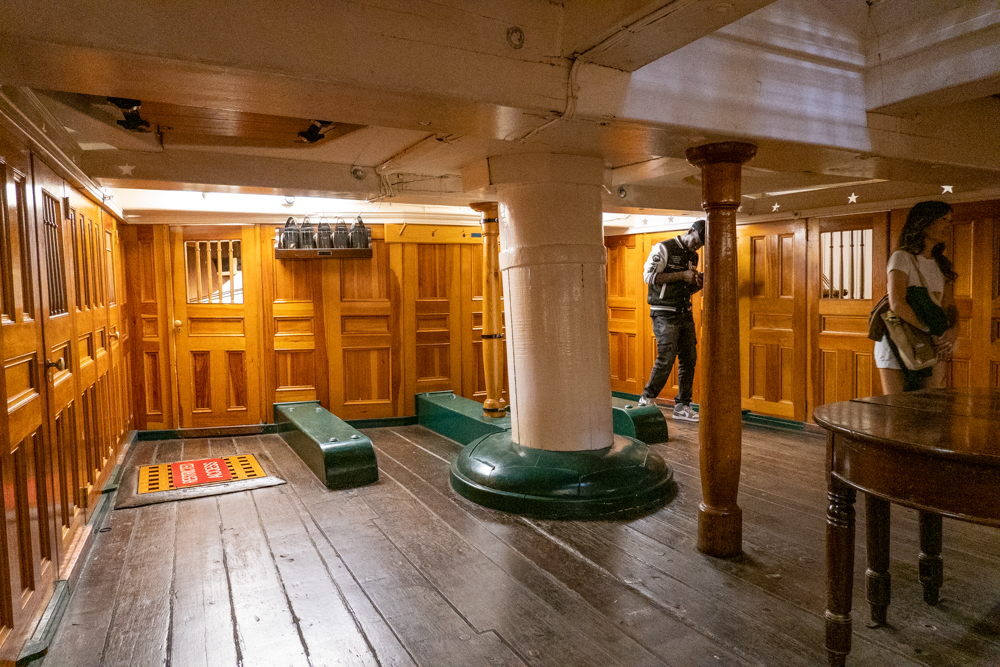
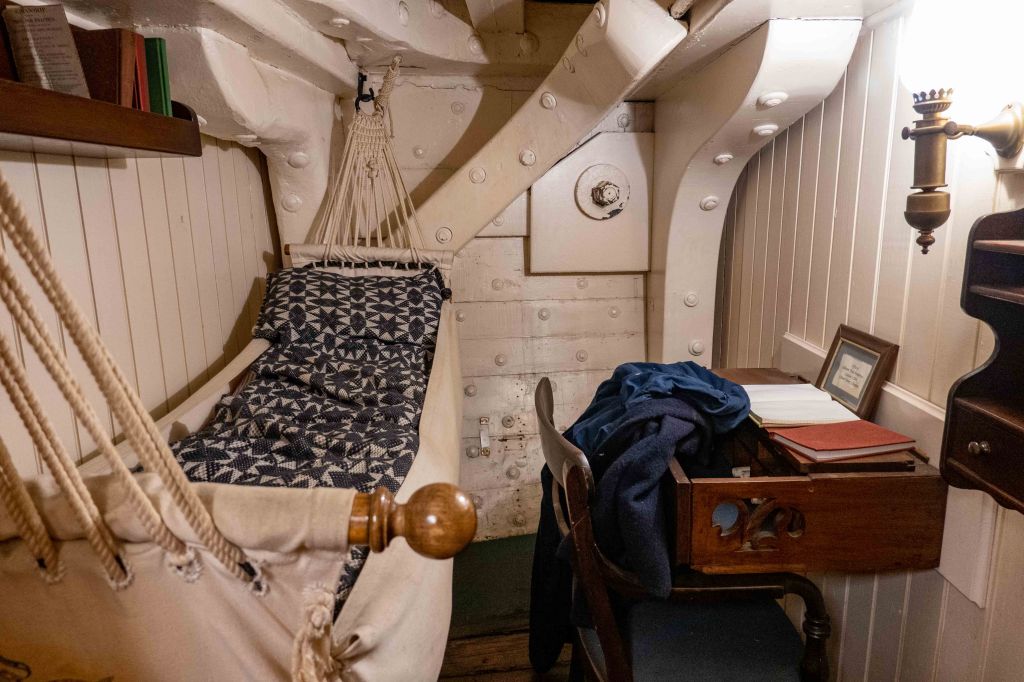
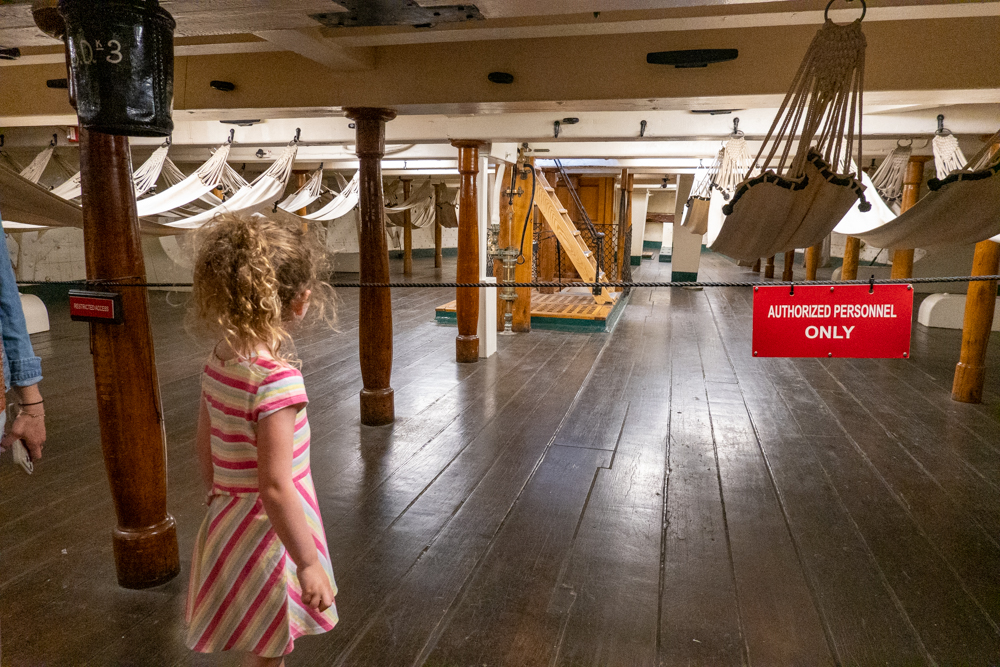
Over her career she captured or defeated dozens of enemy vessels and was never once beaten in battle. Oh, and those copper bolts holding her together? Made by Paul Revere. That man is everywhere in this city.
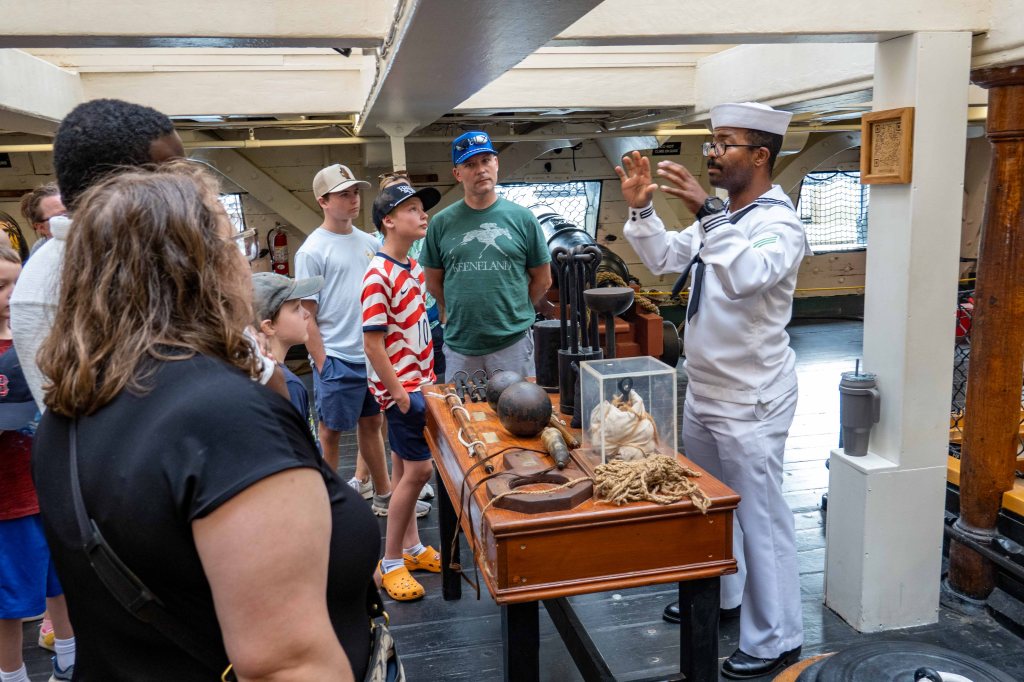
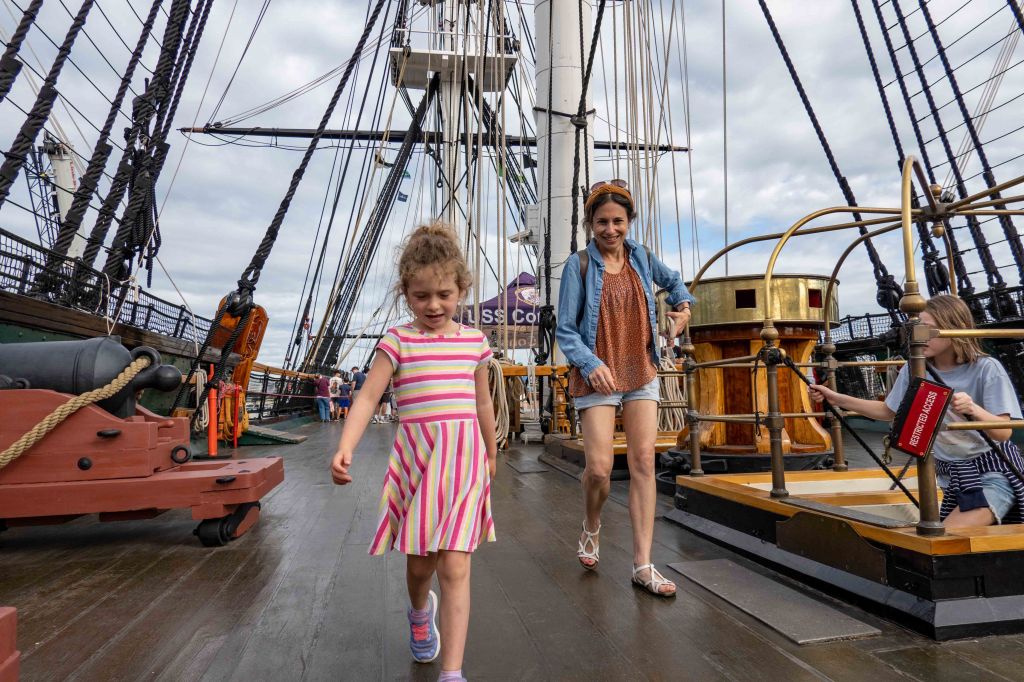
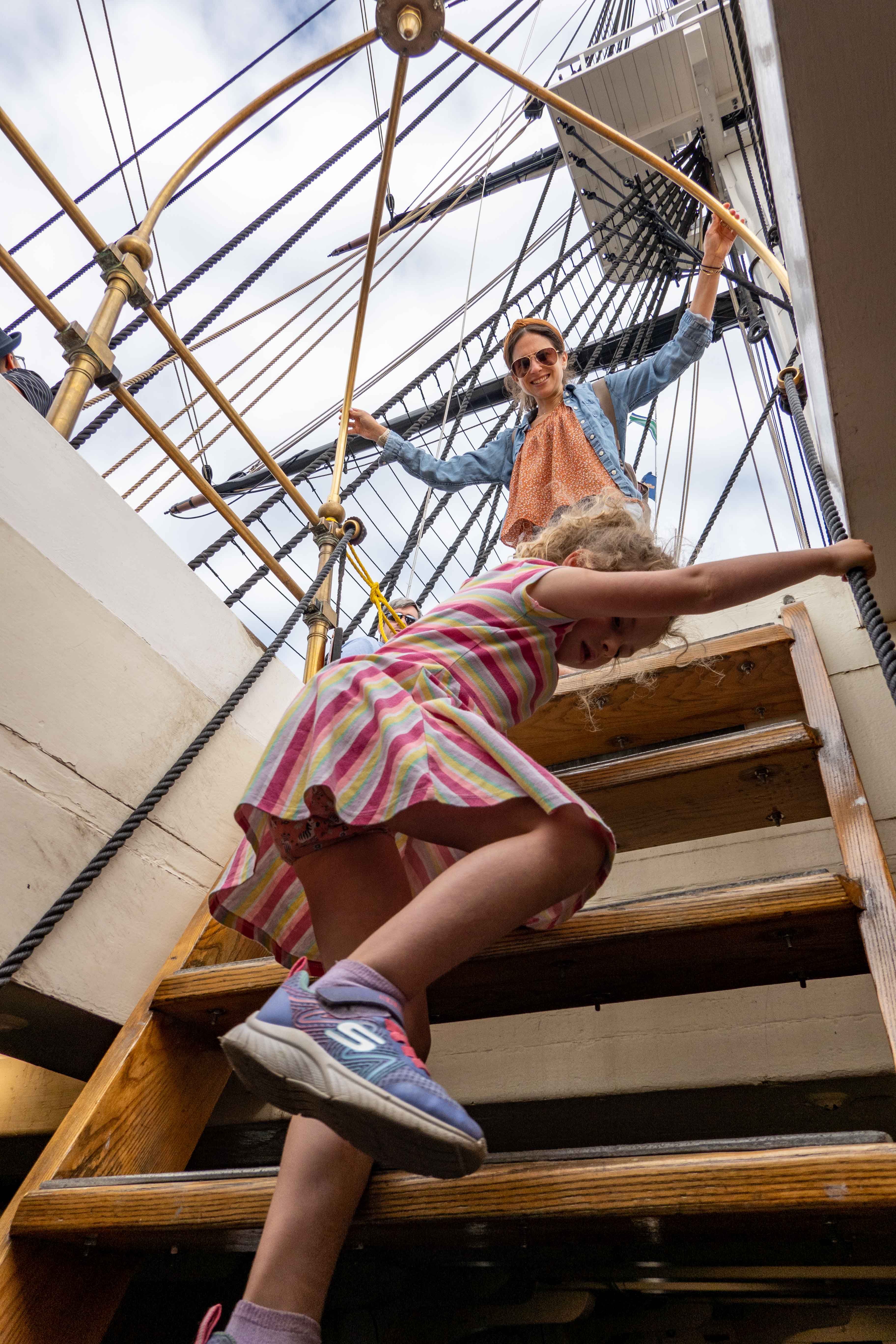
Ariela had a blast running around the decks while Eitan soaked up the genuinely excellent explanations from the sailors giving the tour. Standing on the deck of a ship that’s been floating since George Washington was alive is a special kind of goosebumps.
Following the Red Line to Bunker Hill
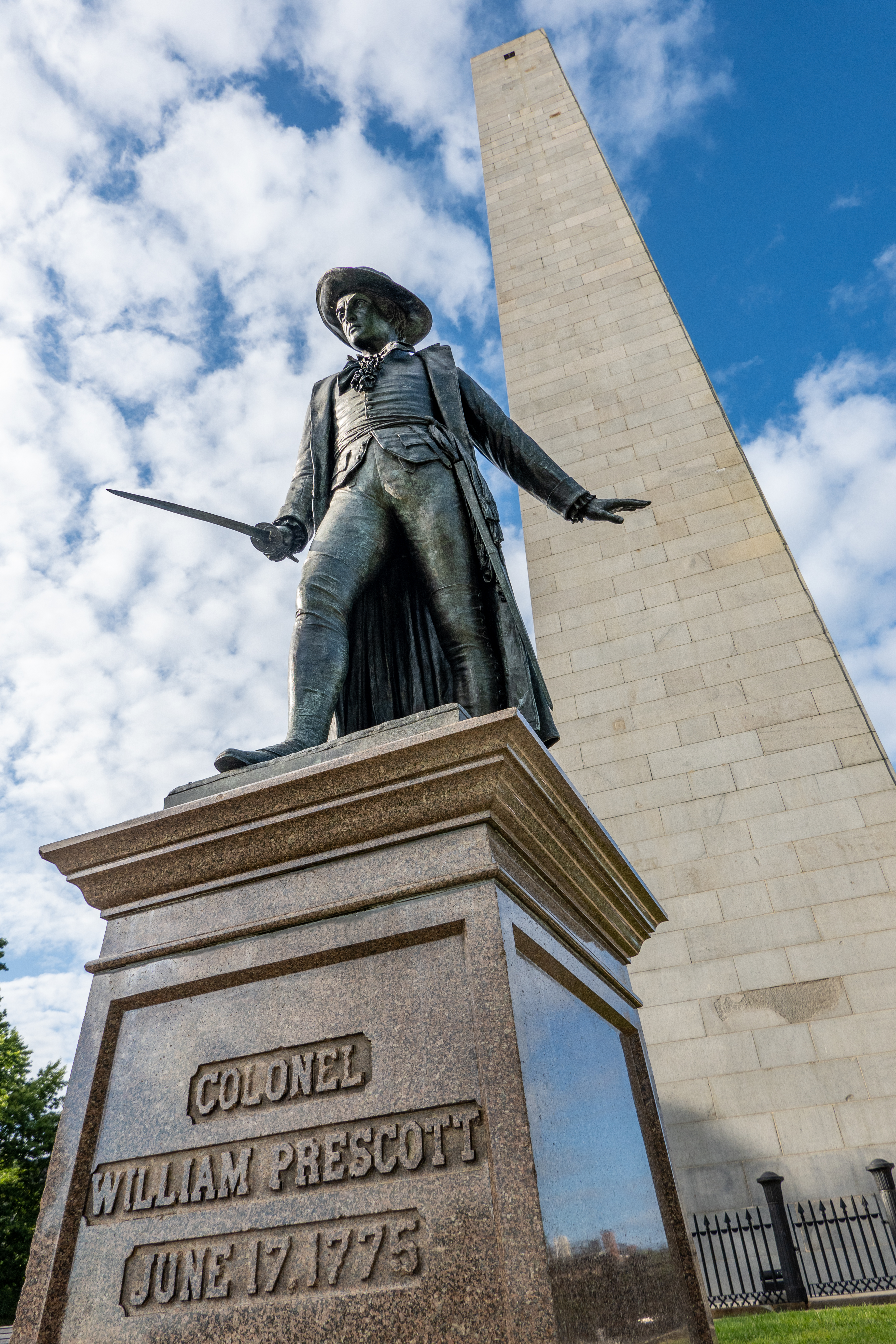
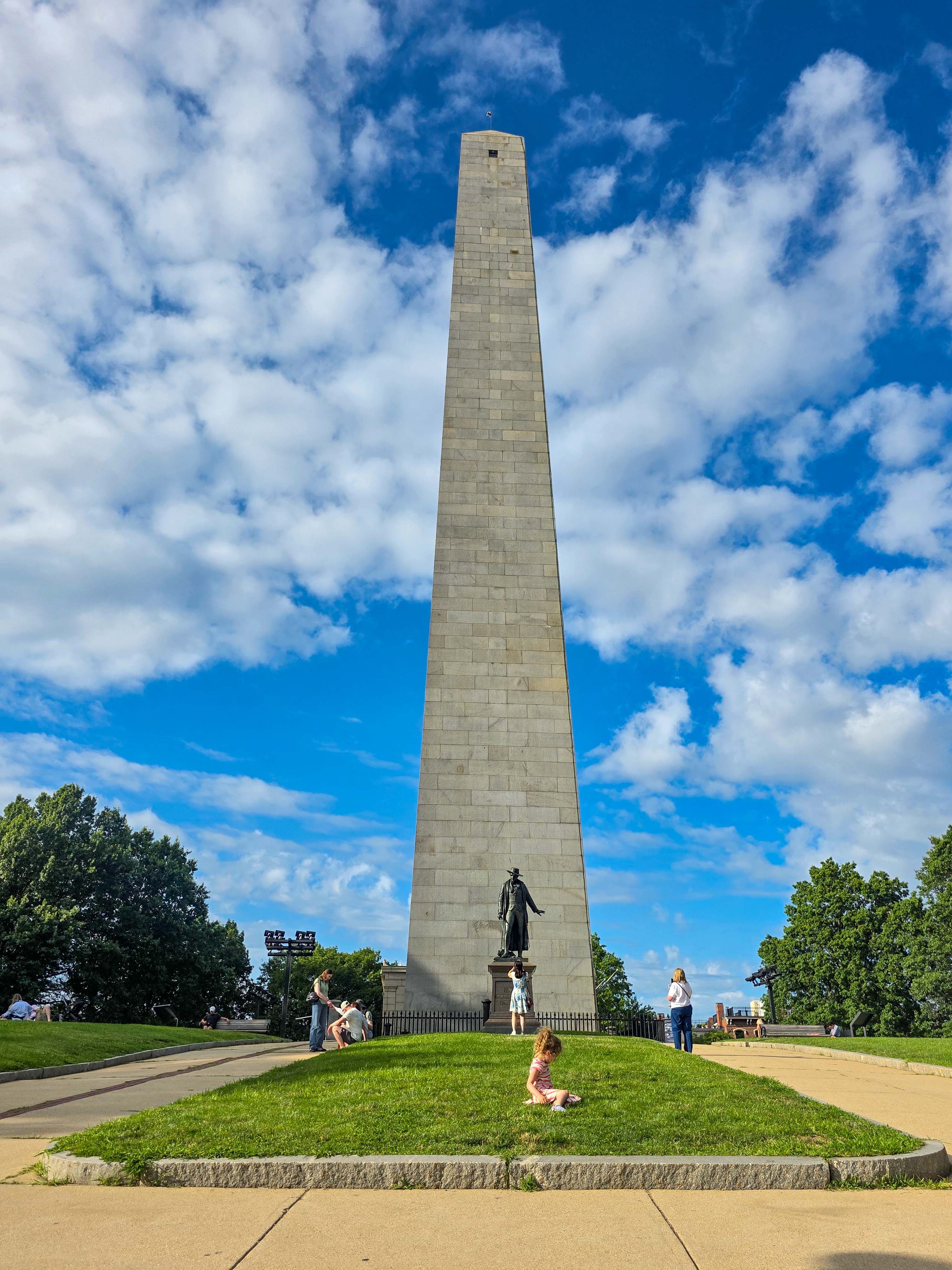
We rejoined the red-brick line and followed it (again, get lost, find the line, keep walking) up to the Bunker Hill Monument, a 221-foot granite obelisk commemorating the Battle of Bunker Hill in June 1775, one of the earliest major battles of the Revolution.
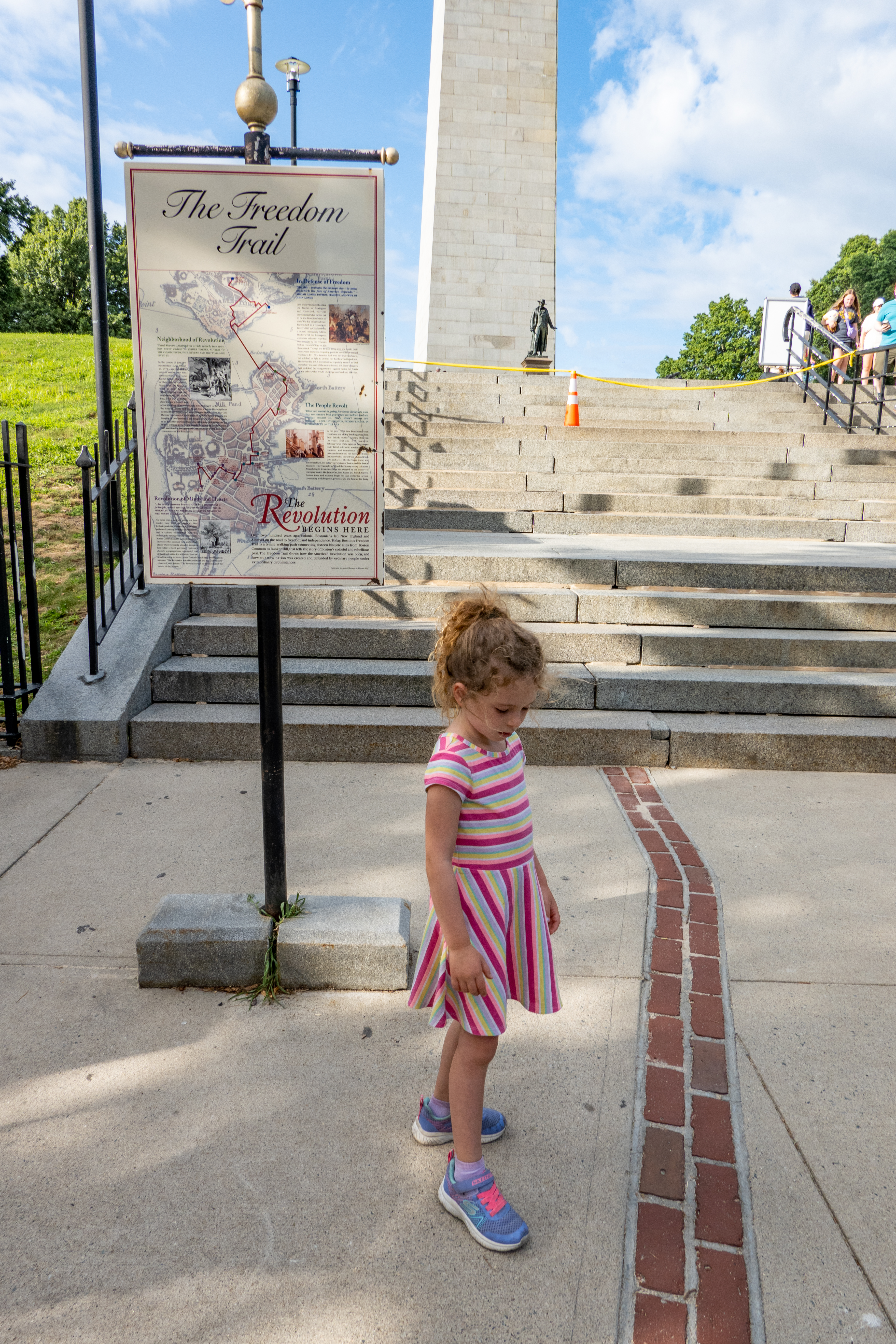
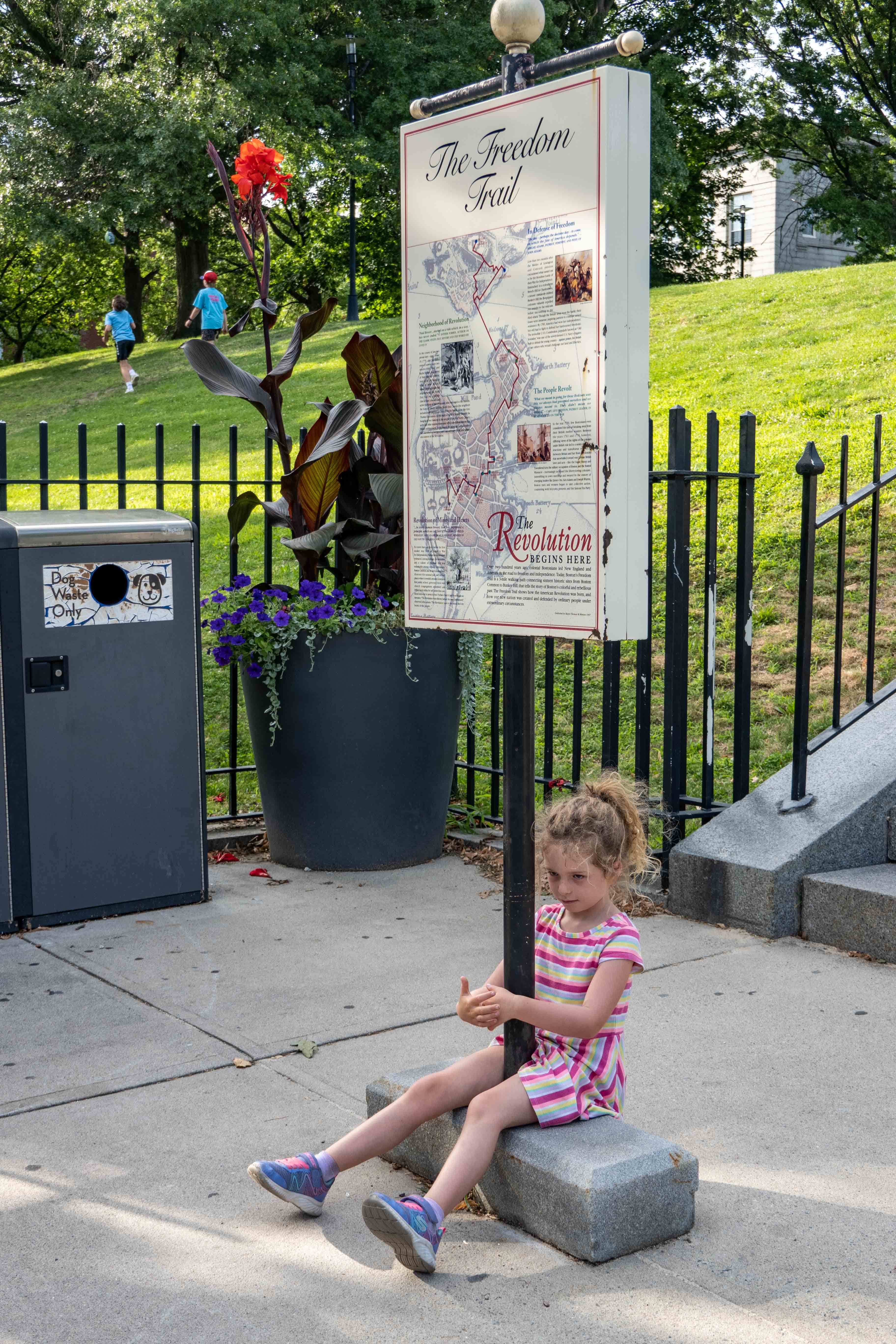
Here’s the delicious historical irony: the battle was mostly fought on neighboring Breed’s Hill, not Bunker Hill, so the monument is arguably in the wrong spot. And technically the British won the battle, but they suffered such staggering losses taking the position that it proved the untrained colonial militia could stand toe-to-toe with the mightiest army in the world. It was the moral victory that convinced the colonists they actually had a shot. It’s also the battle tied to the legendary order, “Don’t fire until you see the whites of their eyes.”
Little Italy, a Saint’s Festival, and an Angry Waitress
Heading back down, hunger struck hard, and we’d heard the North End, Boston’s Little Italy, has phenomenal Italian food. As one would hope from a neighborhood called Little Italy.
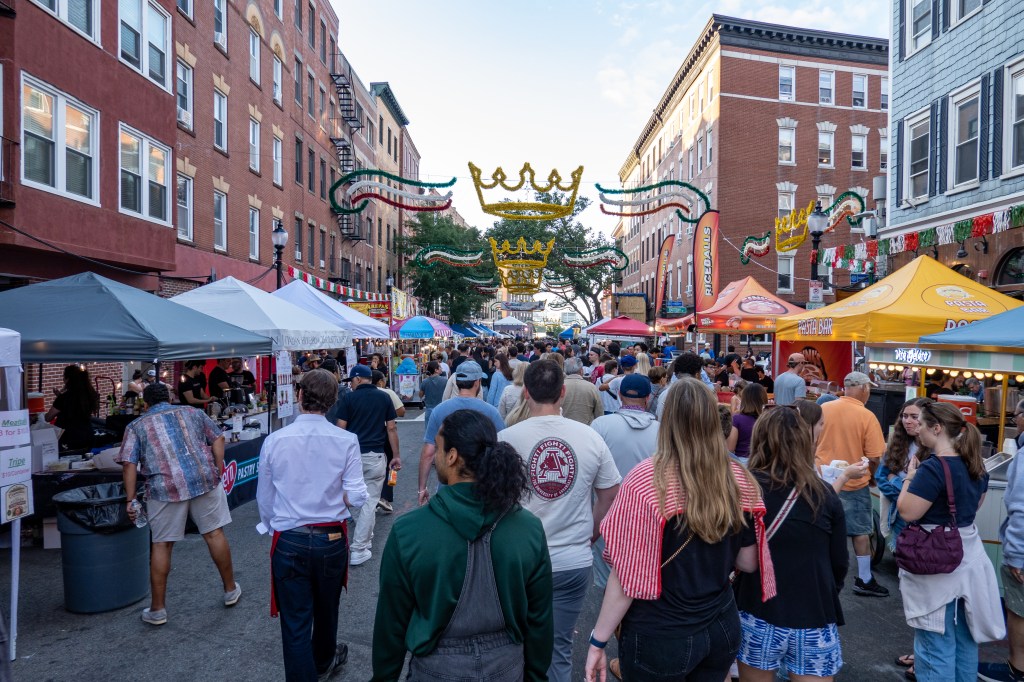
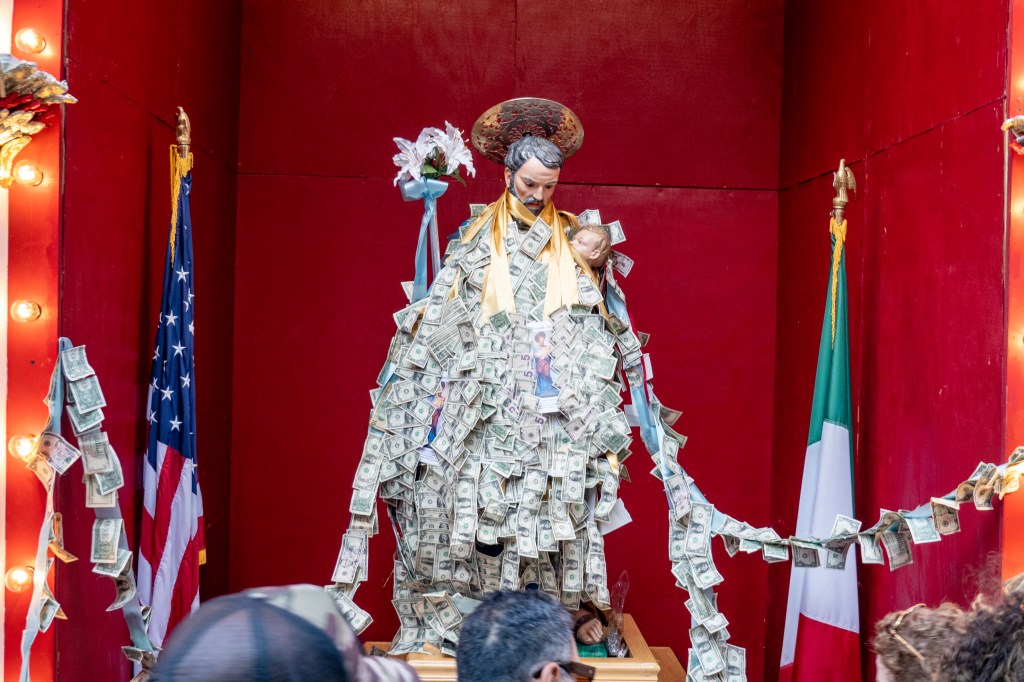
We arrived to find the streets alive with a Feast of Saint Joseph festival, one of the traditional Italian religious feasts that kick off the North End’s famous summer feast season, complete with live music, religious processions, and glorious street food. Devotees pin money onto the saint’s statue for good luck. I couldn’t help thinking I’d happily accept the same treatment, but nobody offered.
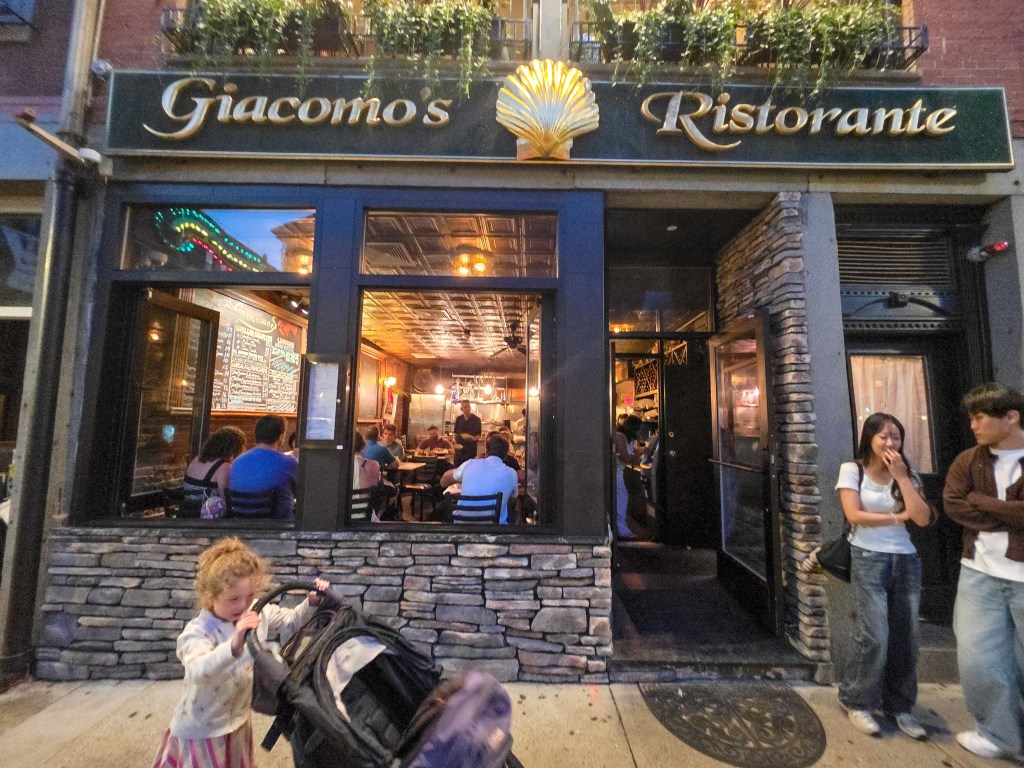
We tracked down the restaurant everyone kept raving about: Giacomo’s, a legendary North End spot that is famously cash only (for reasons that are surely purely logistical and definitely, absolutely not tax-related, wink wink).
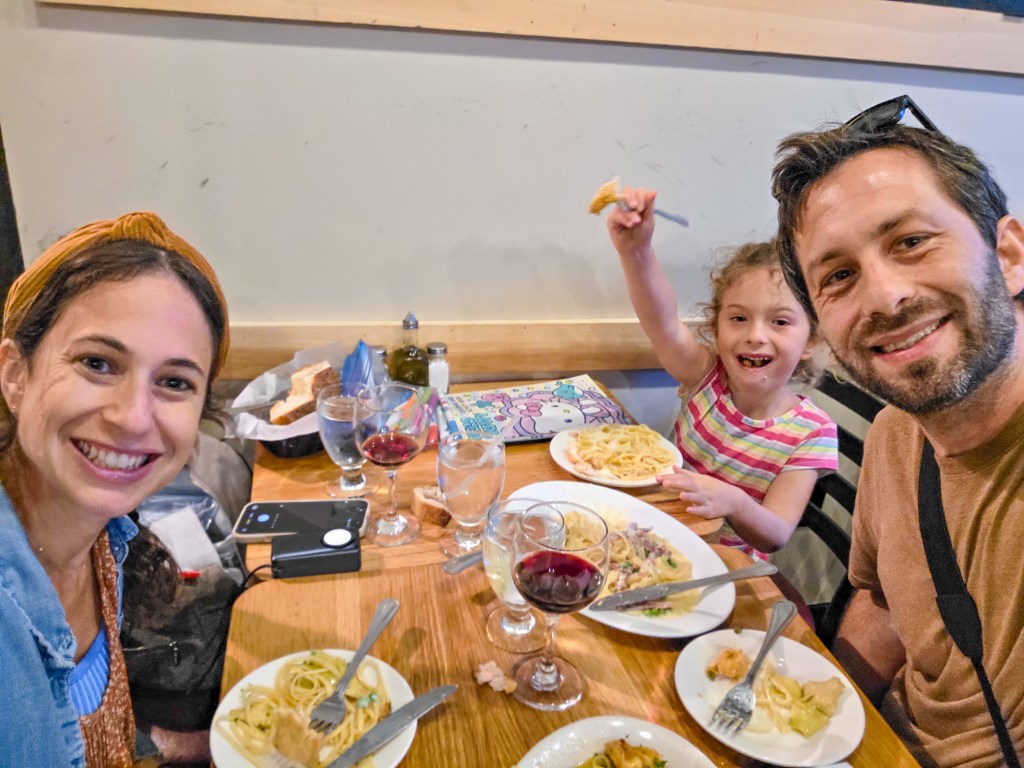
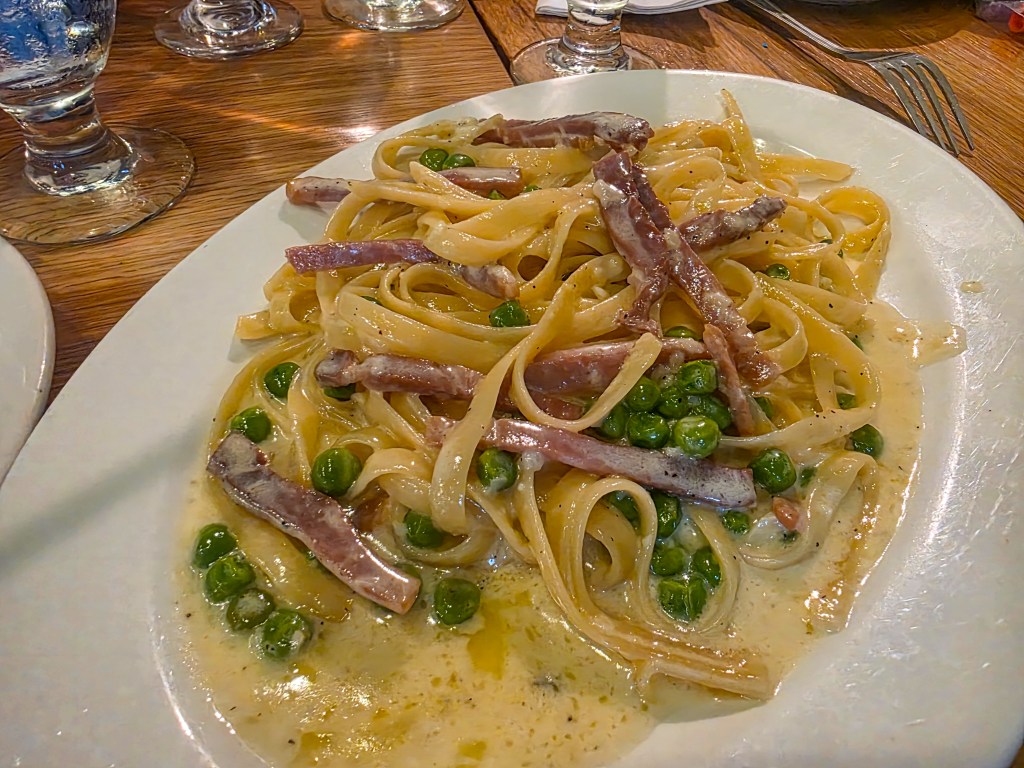
The food was outstanding. We got chicken piccata and fettuccine alfredo, and both were superb. The restaurant has character, and by character I mean: a perpetually stern Italian waitress who appeared to be personally disappointed in us, a line out the door, a single bathroom serving what felt like 200 people, and tables packed so tightly together that squeezing to your seat counts as a contact sport. It was perfect. This is exactly what you want from a hole-in-the-wall Italian institution.
The Long Walk Home
We finally wrapped up our marathon day by heading to the bus station, but not before letting Ariela loose on a playground to burn off her last remaining molecule of energy before bed. A wise investment.
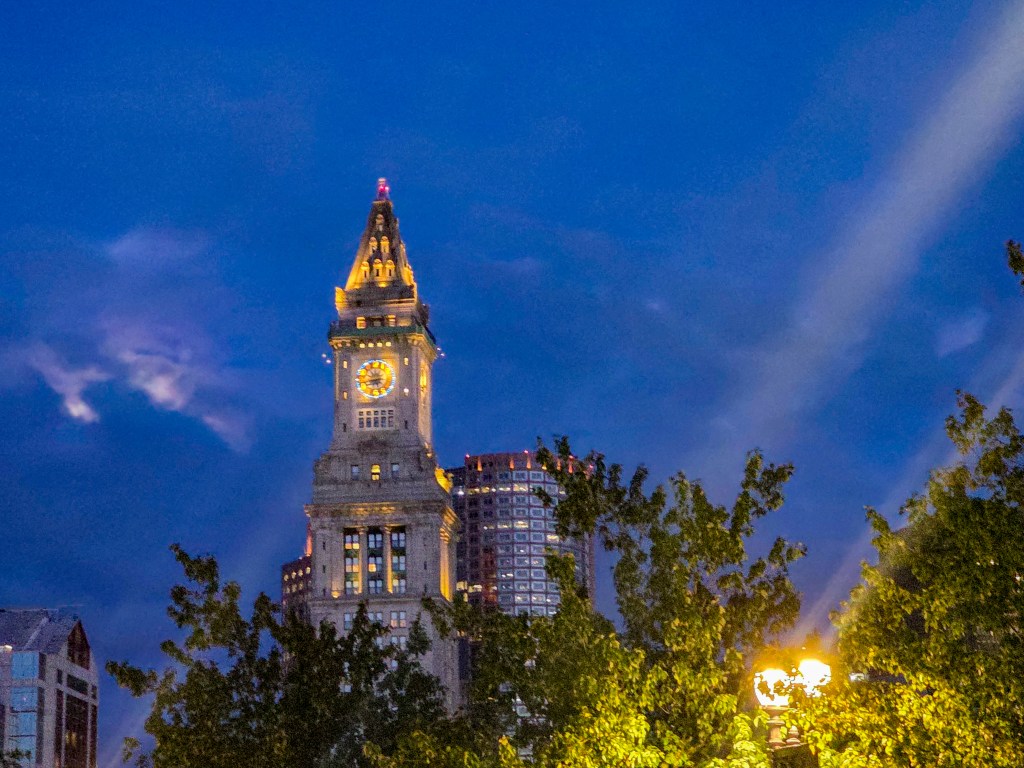
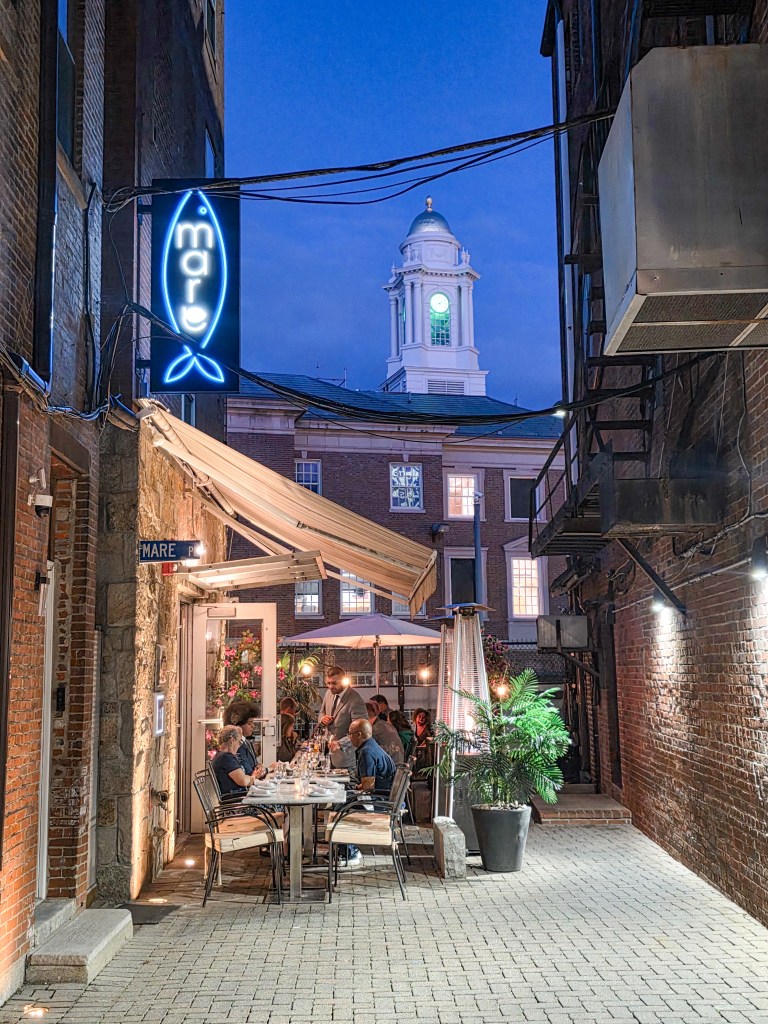
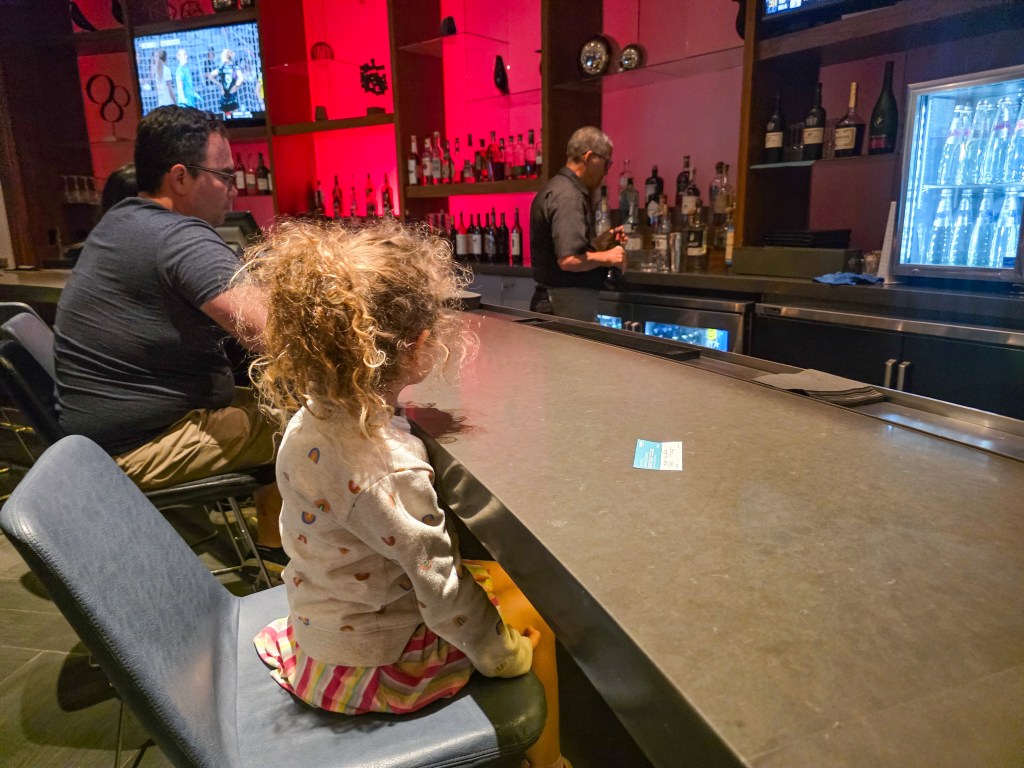
Back at the hotel, we redeemed our free daily included drink, which one night was a margarita and the other night was simply a beer, because the bartender apparently decided that mixing an actual cocktail was more effort than the moment required. Honestly? After walking across roughly 300 years of American history in a single day, we were in no position to judge. We raised our lazy beer, toasted the revolution, and called it a very well-deserved night.
Good night from the birthplace of American independence.
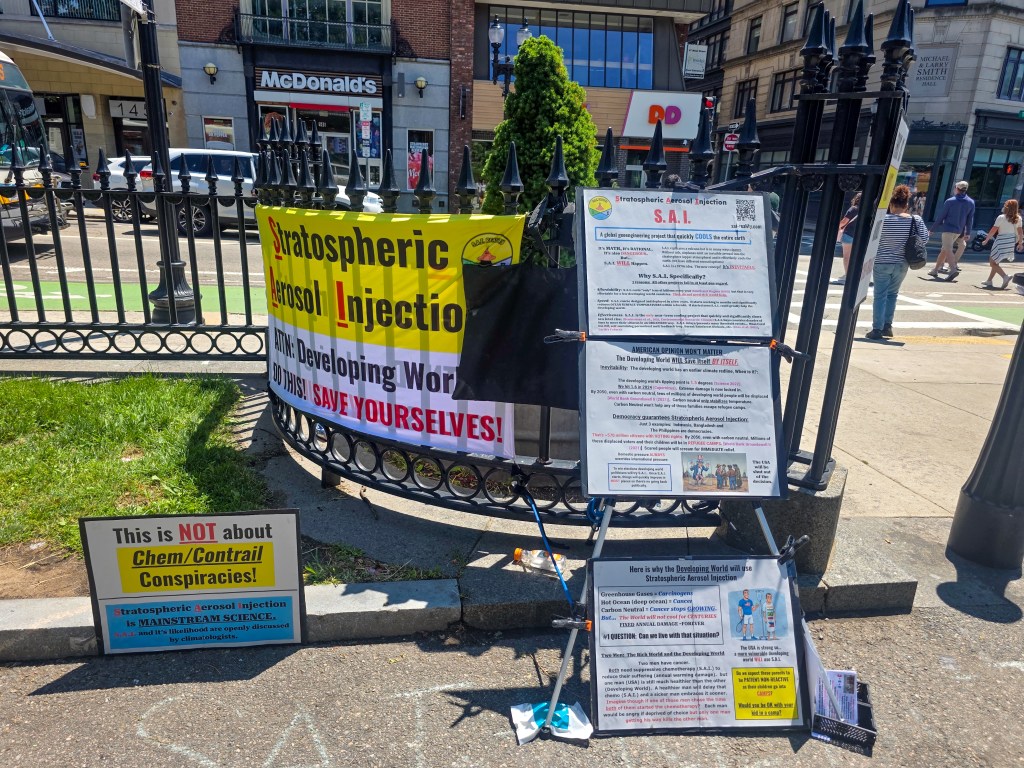
Bonus pic of the day: There are crazy people everywhere… enough said:

 WHERE IS NOODLE
what a great day and trip. I wonder how much she will remember?? She is a lucky little girl.
LikeLike