We took a fun family vacation to Florida, including Disney World, and hopped on a Caribbean cruise with stops in Curaçao, Aruba, Cabo Rojo (Dominican Republic), and Coco Cay (Royal Caribbean’s private island in the Bahamas).
We had an awesome time, but let’s be honest—the trip wasn’t exactly rich in culture… unless you count Mickey Mouse and buffet lines as cultural touchpoints. So, the only stop that truly deserves a blog post is Curaçao.
We disembarked just minutes after the gangway opened but had to wait a short while for our tour bus. We signed up for a 4-hour city tour to explore Curaçao’s historic highlights.
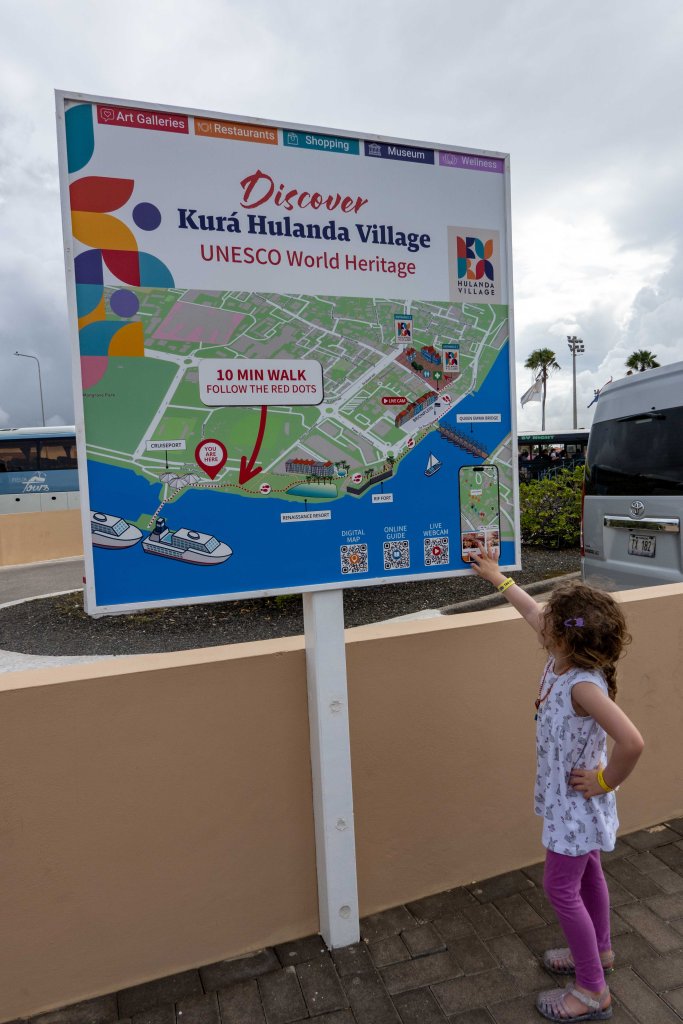
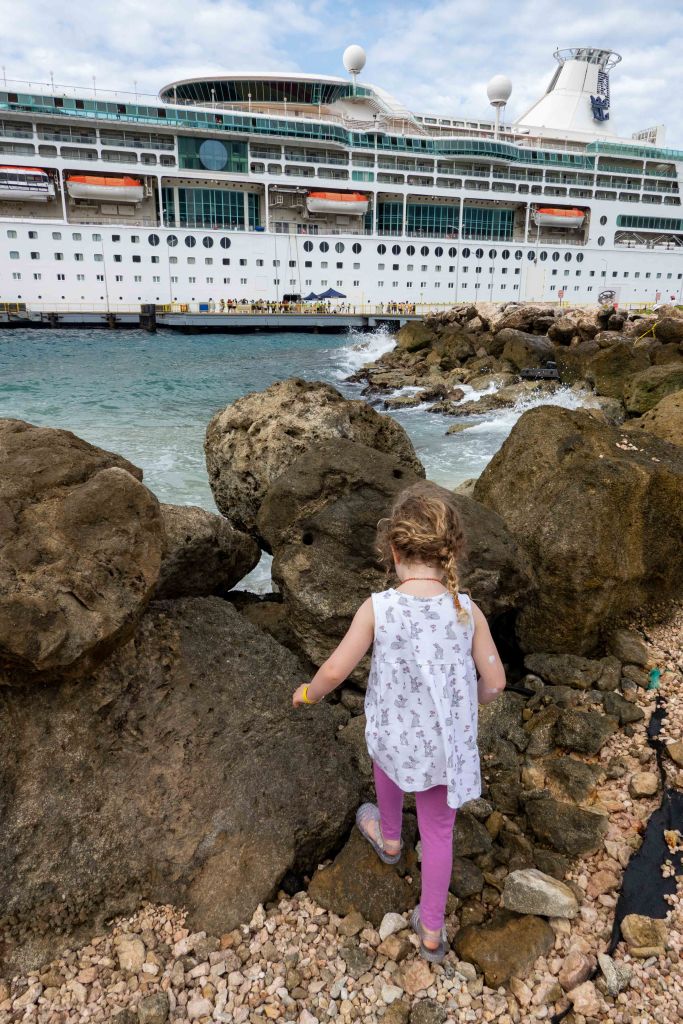
Curaçao is an island nation in the southern Caribbean Sea, part of the Lesser Antilles, located just north of Venezuela. It was originally inhabited by the indigenous Arawak people.
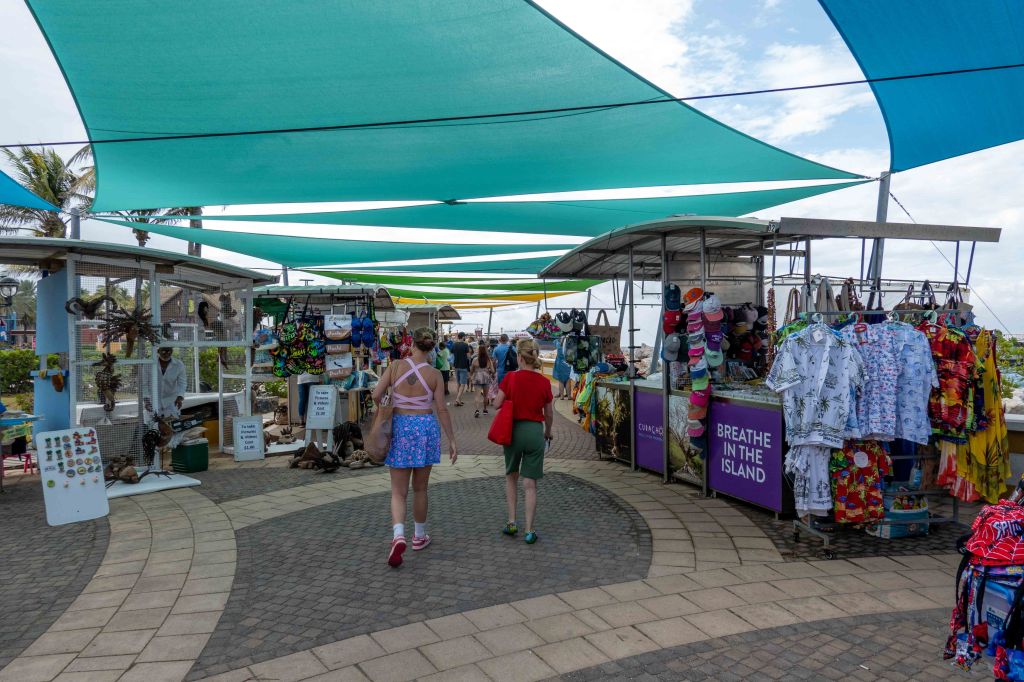
We were welcomed by thousands of souvenir shops with Made-In-China items for high prices.
Europeans first landed here during a Spanish expedition led by Alonso de Ojeda. The Spanish weren’t impressed—no gold, no fresh water—so they used it mainly for cattle grazing. There’s a legend that sick sailors were healed by local fruits, leading to the nickname “island of healing” (from the Spanish word curación).
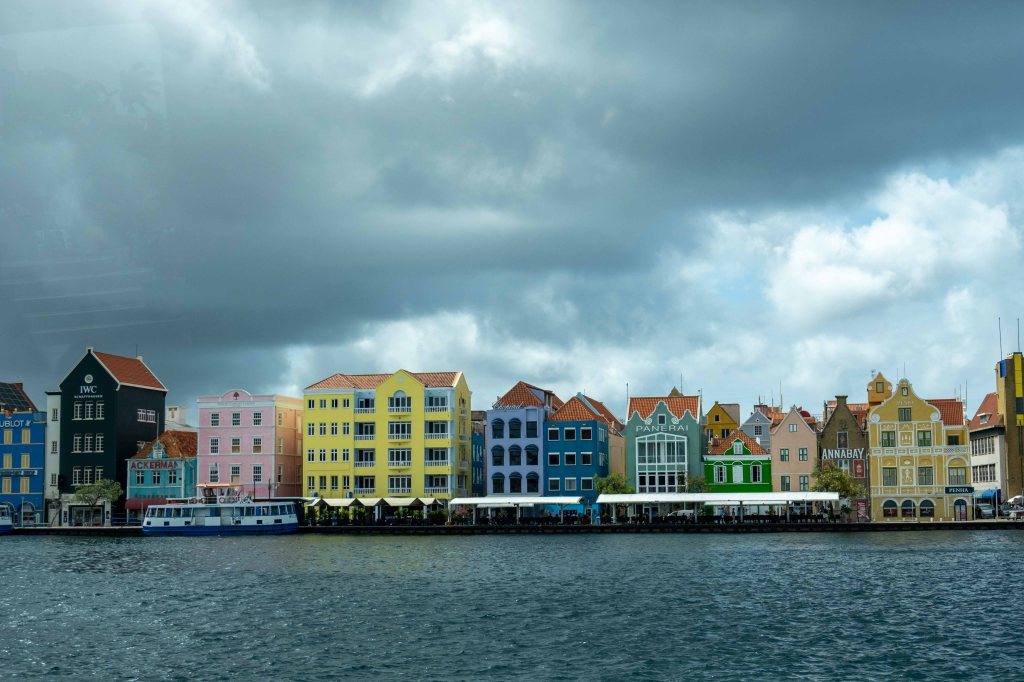
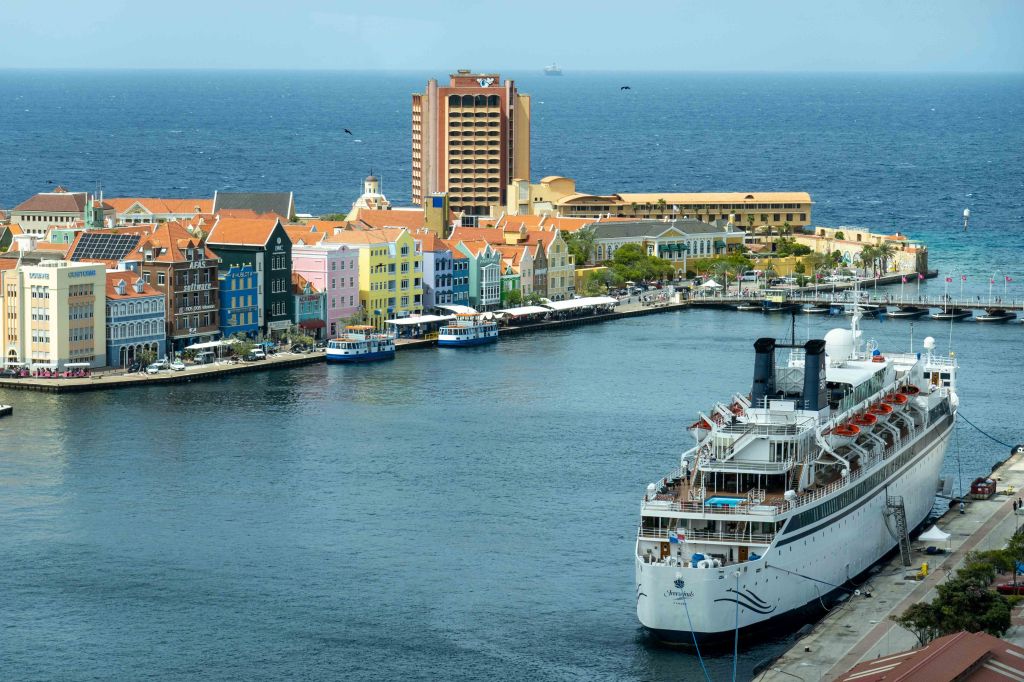
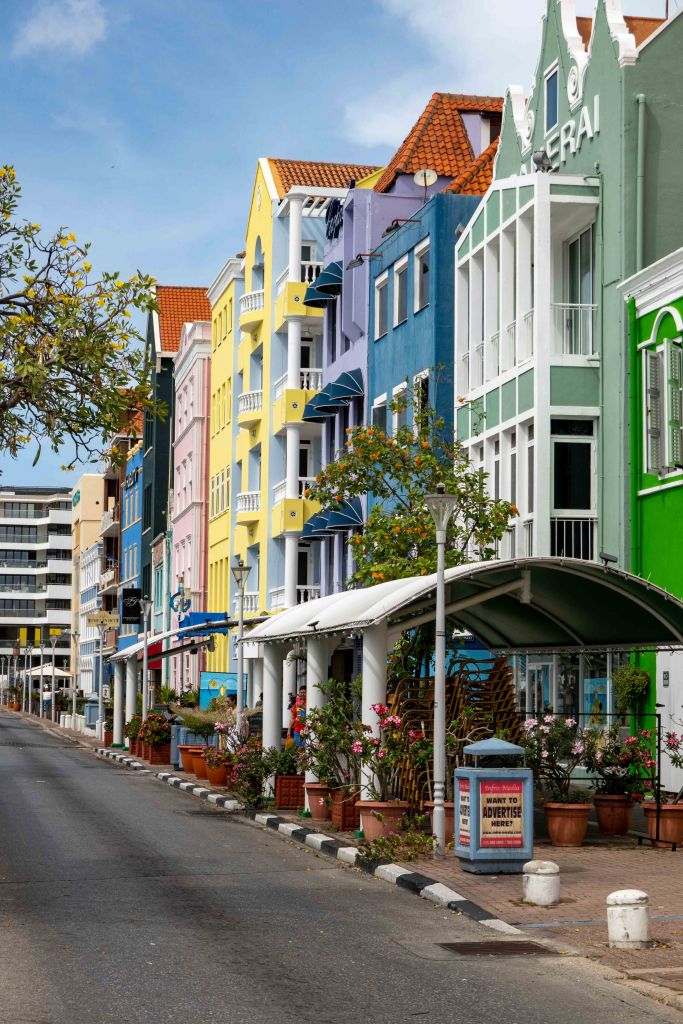
Our first drive-by stop was along the beautiful marina, where the famous colorful colonial buildings are still perfectly preserved.
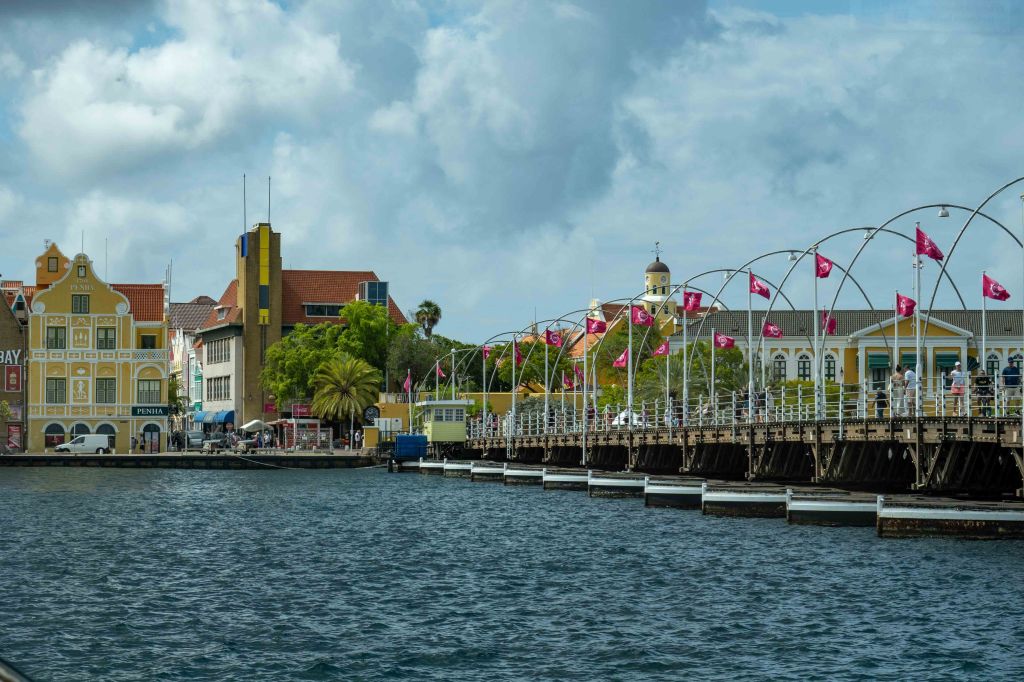
The Dutch West India Company seized Curaçao in 1634, turning Willemstad into a bustling port. The island became a major player in the transatlantic slave trade, with enslaved Africans shipped through here to the Americas.
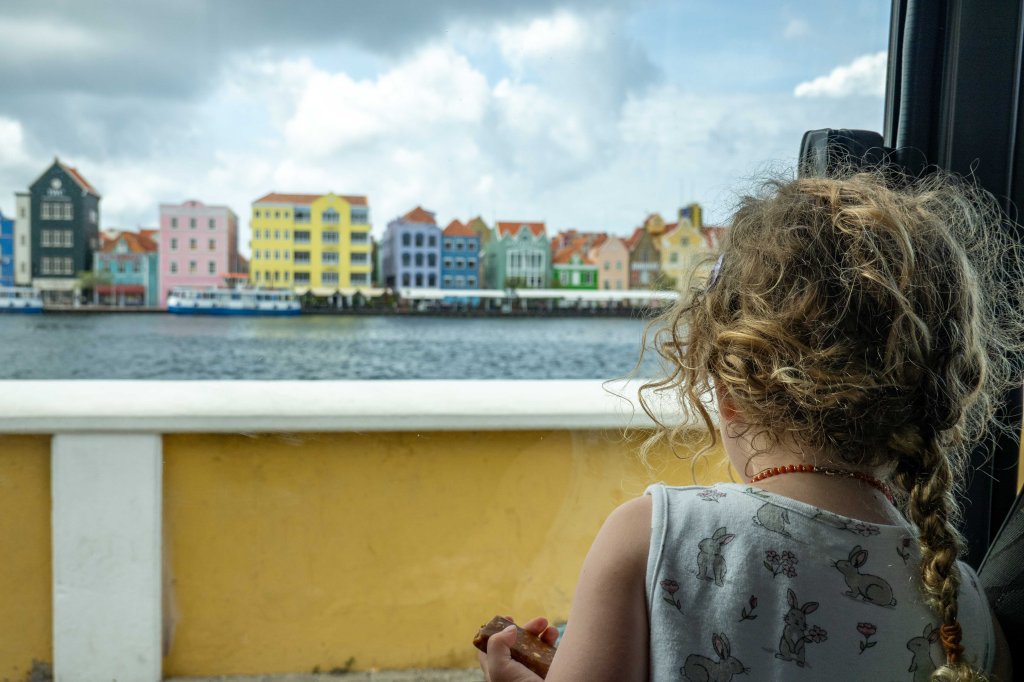
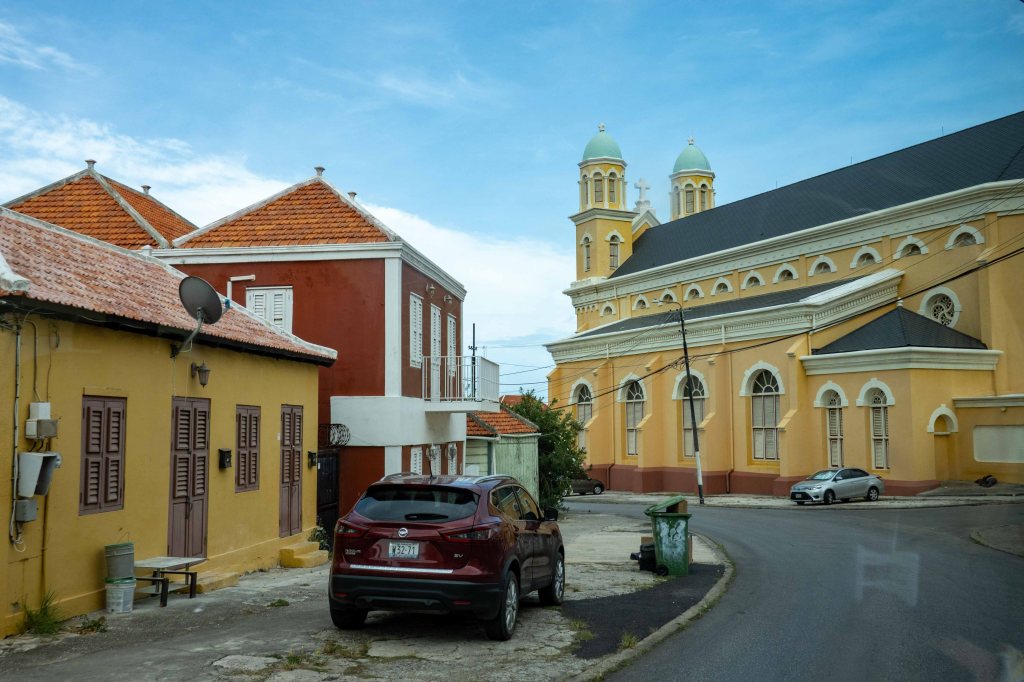
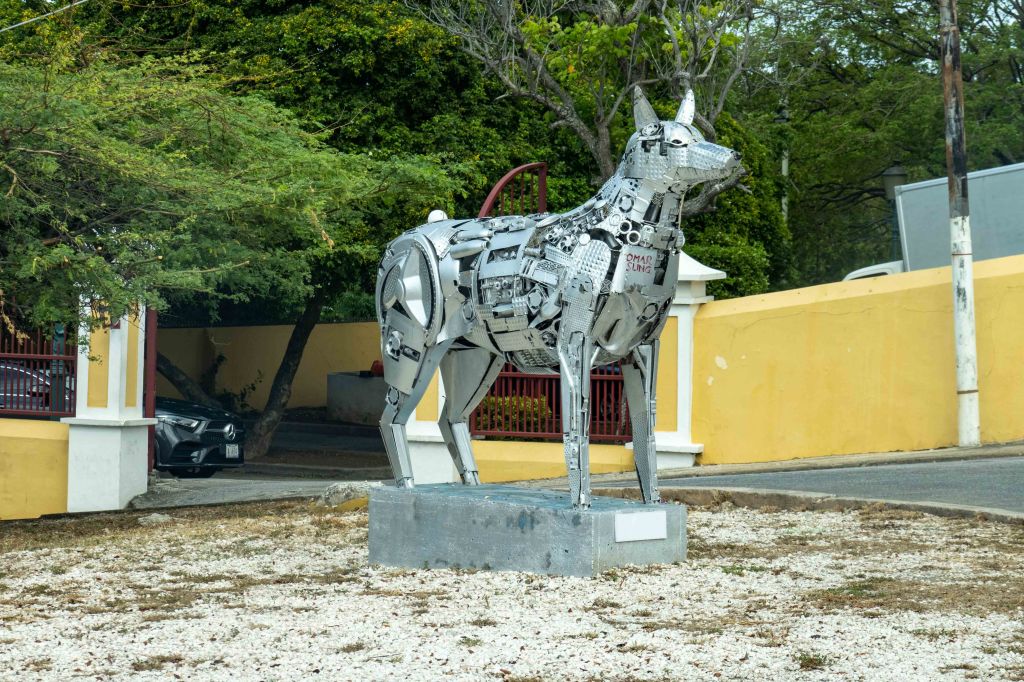
Then we arrived at Frederikstraat, a charming part of Otrobanda that blends the island’s colonial past with its vibrant present. The 18th–19th century buildings, now part of a UNESCO World Heritage Site, showcase classic Curaçaoan architecture. With murals and restored facades, the area is a living museum of culture.
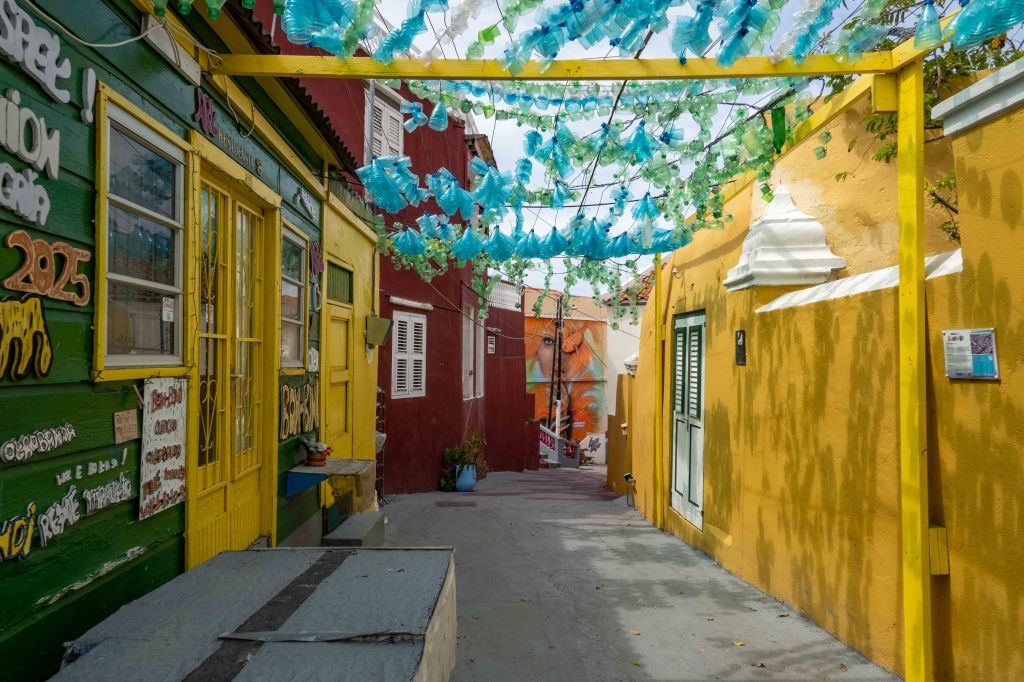
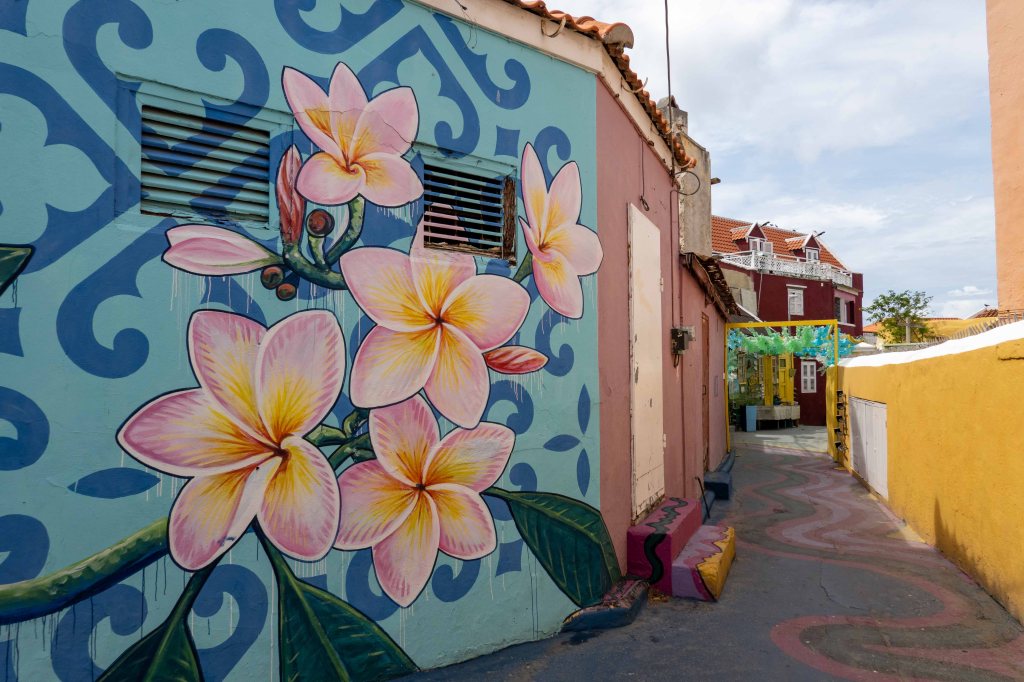
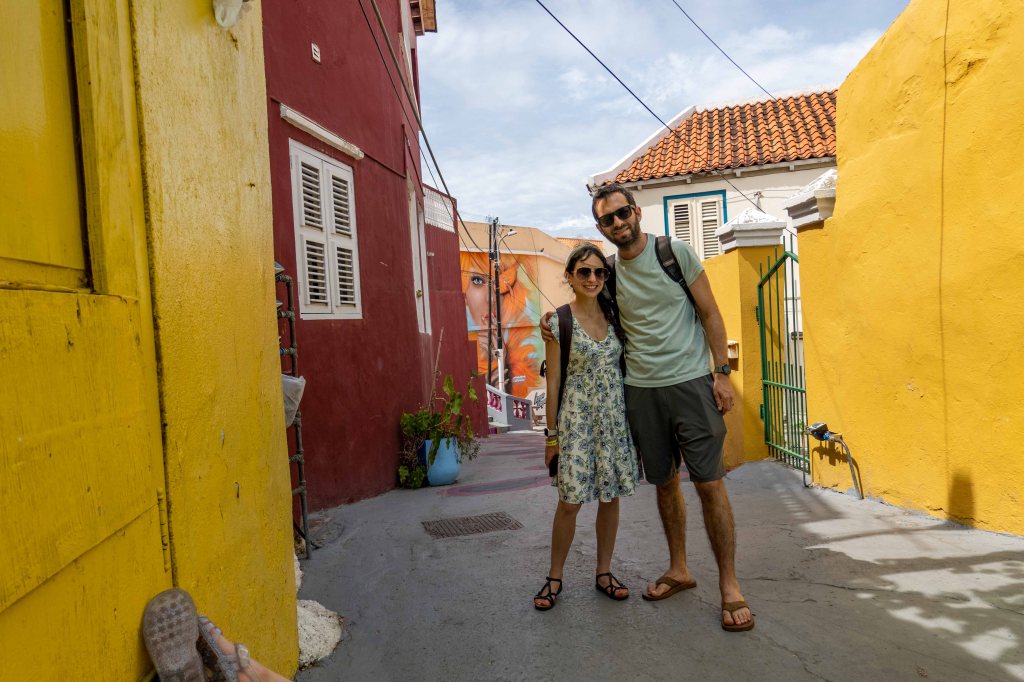
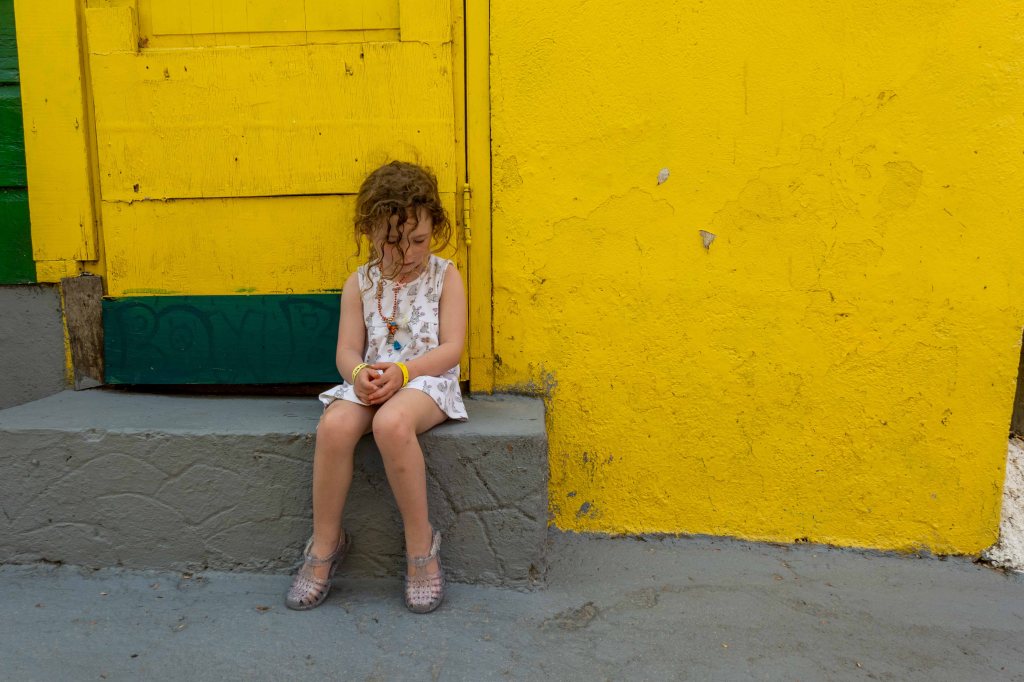
It was hot as hell, and Ariela was definitely not thrilled—she missed the cruise ship comforts. But we powered through and kept soaking up the history.
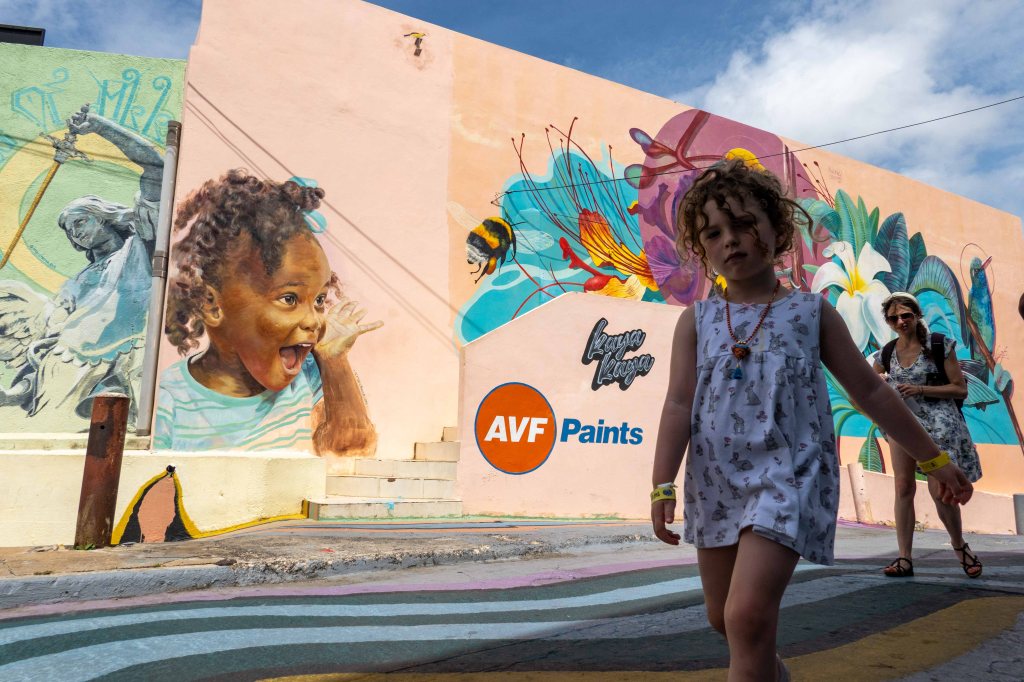
We crossed the impressive Queen Juliana Bridge, named after the former Dutch queen. Locals are especially proud of this modern architectural highlight. The views were spectacular!

Back in the 17th and 18th centuries, Curaçao’s economy flourished thanks to its central position in trade, especially in slaves, sugar, salt, tobacco, and later, oil refining. Slavery was abolished in 1863, which led to economic downturns and waves of emigration.
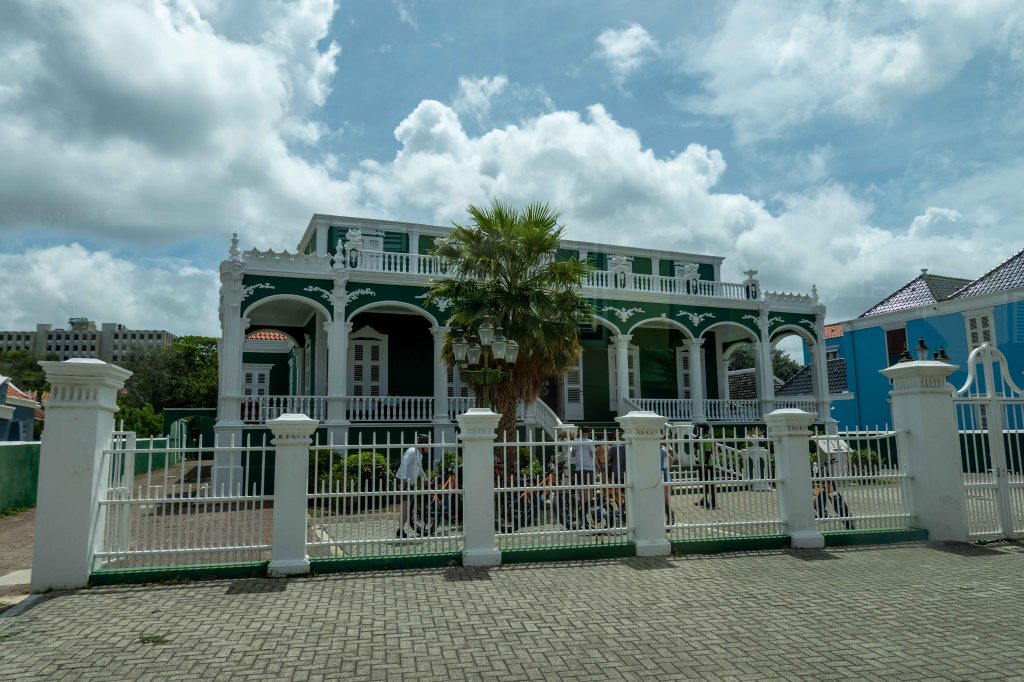
We passed several buildings, like the “wedding cake” house that a rich guy built to gift one of his daughters as a wedding gift.
Next, we passed through the island’s historic Jewish neighborhood. We were surprised to learn that Curaçao once had a large, well-integrated Jewish community, deeply respected by other locals.
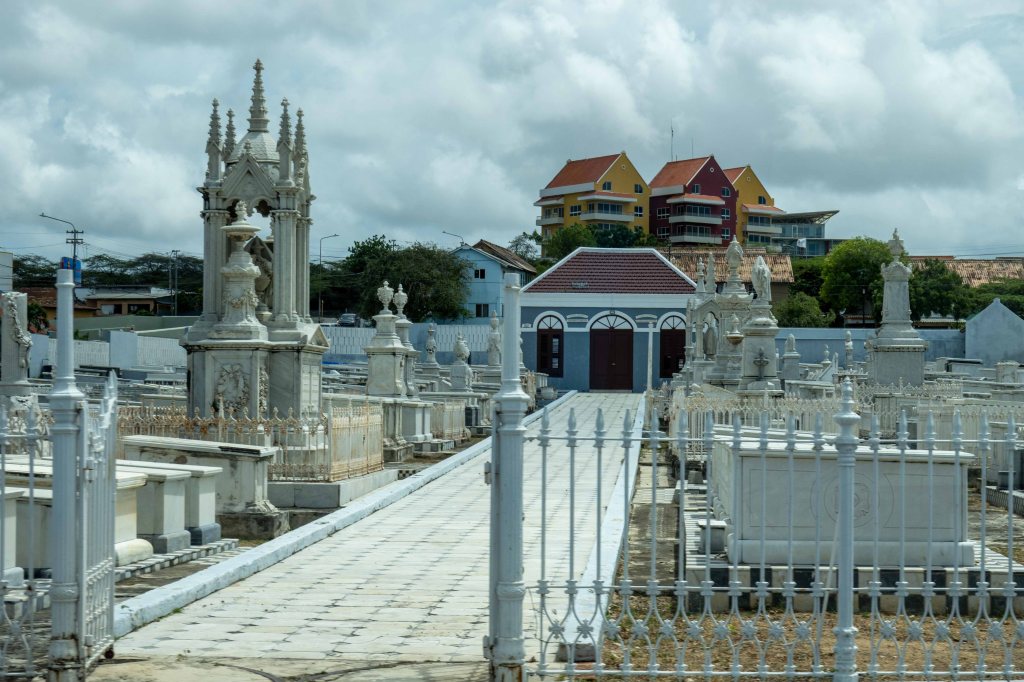
The houses are just normal houses, but if you look closely, they have Star of David decorations (look at the door).
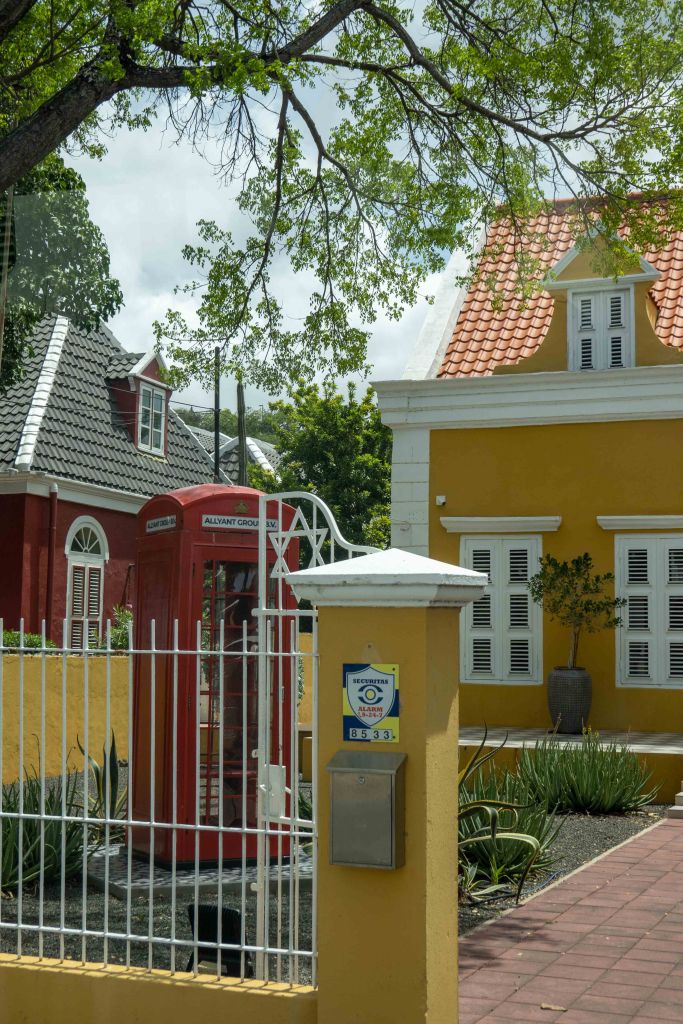
The first Jews arrived in 1651, mostly Sephardic Jews fleeing persecution in Spain and Portugal. Many came via Amsterdam and Brazil, seeking religious freedom under tolerant Dutch rule. Curaçao became a key hub for Jewish merchants and settlers in the region.
Other houses had a very interesting symbol. Look at the black symbol on top of the house, we will talk about it later…
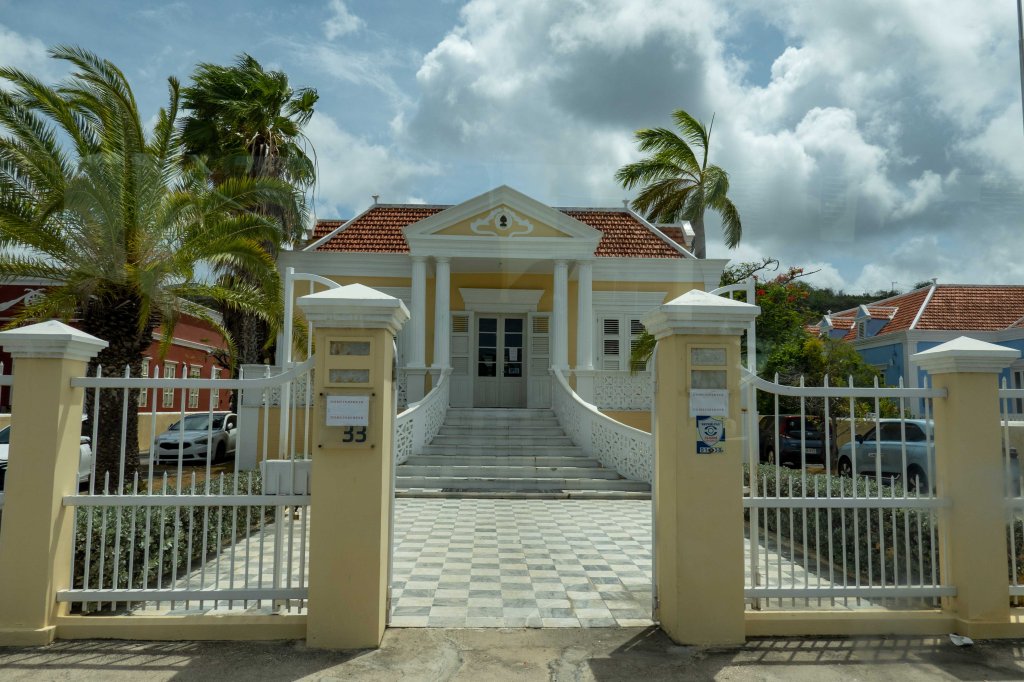
Our next stop was the Blue Curaçao Distillery. This iconic liqueur is made from the peels of the Laraha orange, a bitter fruit that evolved from Valencia oranges brought by the Spanish in the 1500s. The island’s climate made them inedible, but the peels turned out to be fragrant and perfect for flavoring.
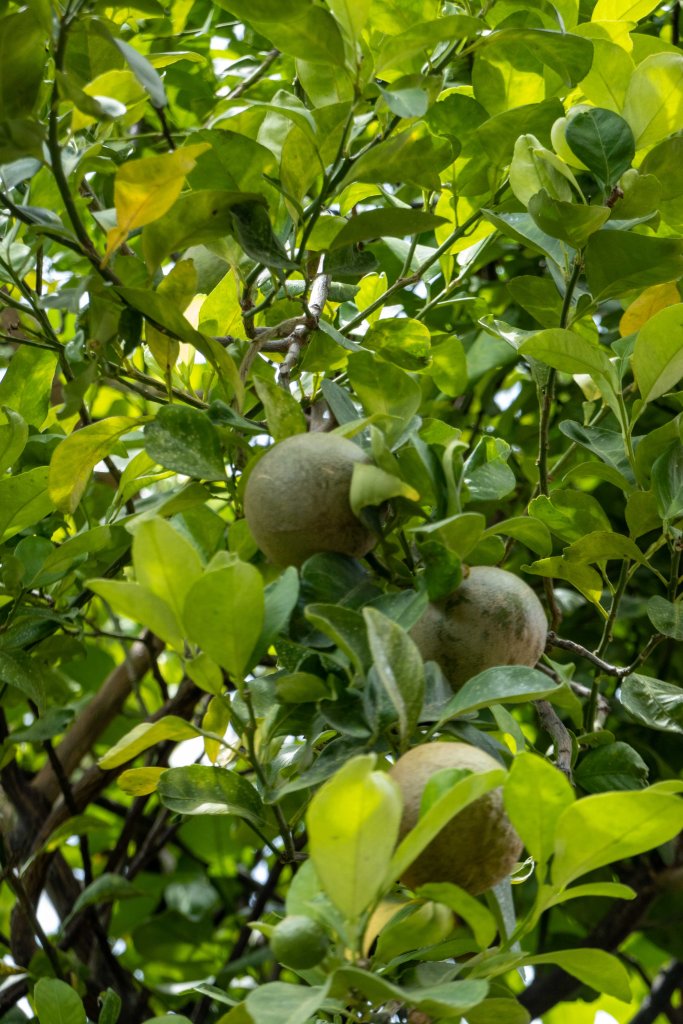
In the late 19th century, the Senior family, Jewish merchants, began producing the liqueur commercially. They founded Senior & Co., which still makes the original version today at Landhuis Chobolobo in Willemstad.
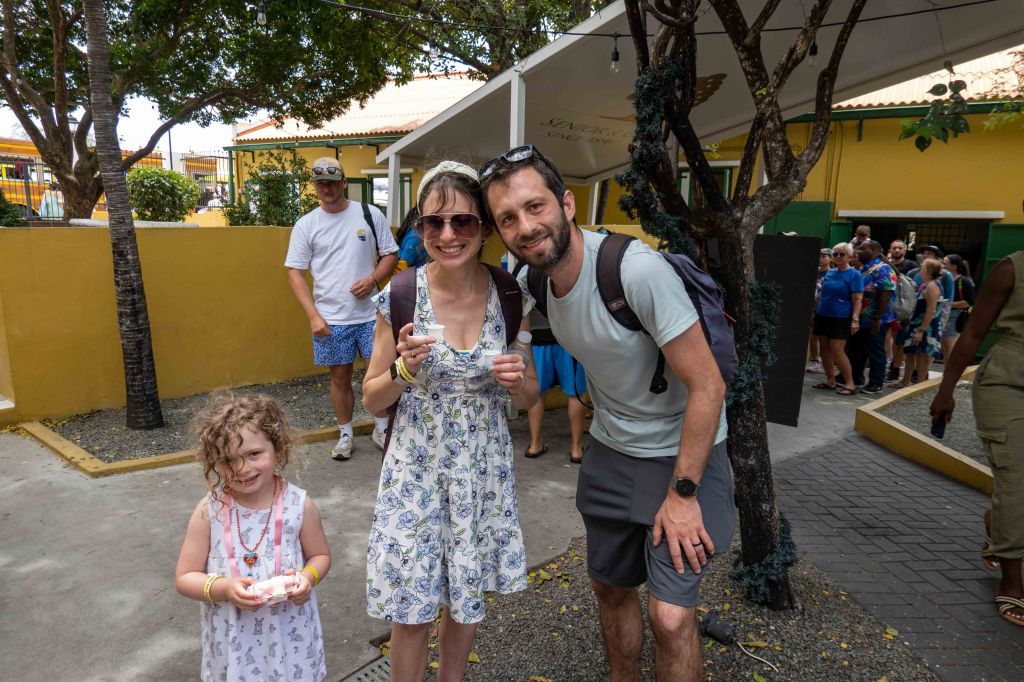

The liqueur is actually clear—but was later dyed bright blue (or green, or orange) just for visual flair. The color has no effect on flavor, but it made the drink wildly popular in tropical cocktails.
Remember the symbol on the house? It’s an orange tree, and this is the symbol of the family that owns the distillery, as well as almost half the city. Every building that is owned by them is marked with the symbol.
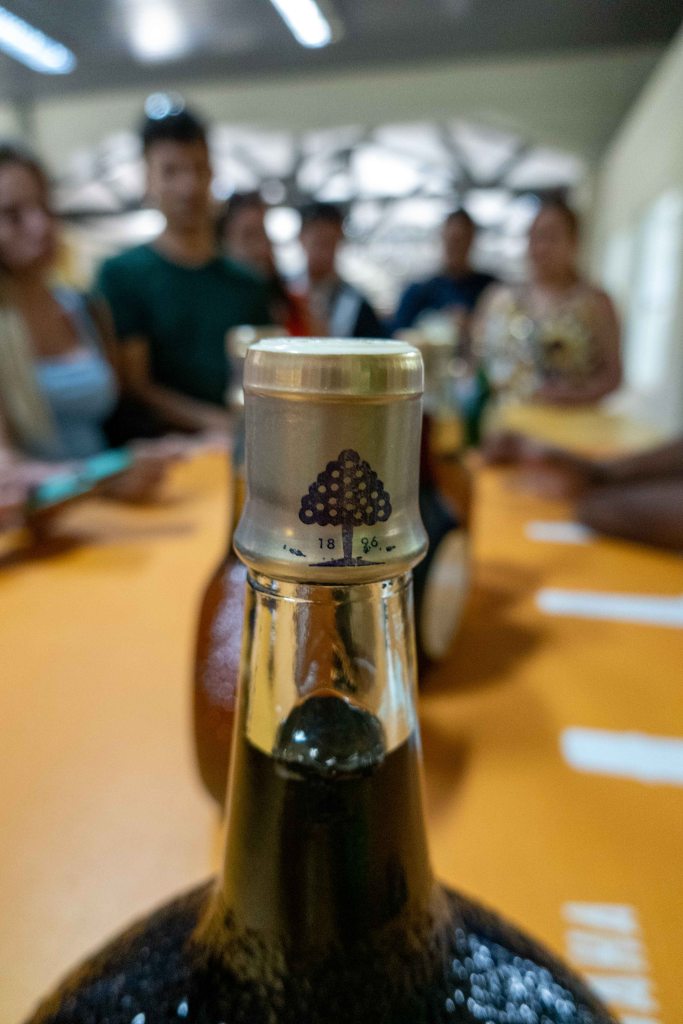
Was it worth the visit? Meh. It’s a total tourist trap, but part of the tour package, so we went with it.
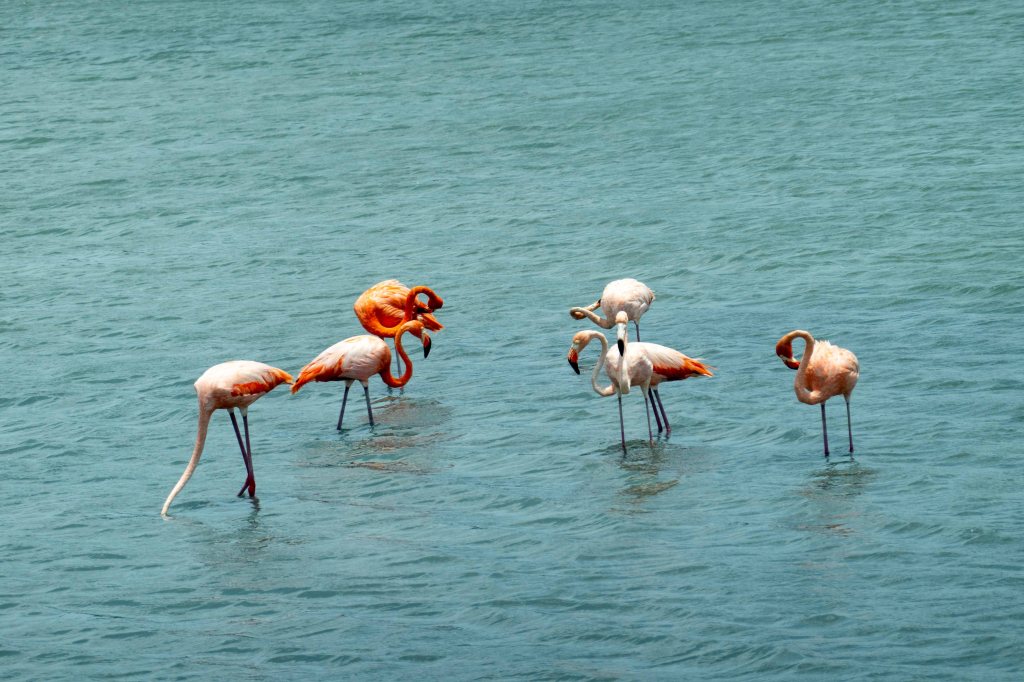
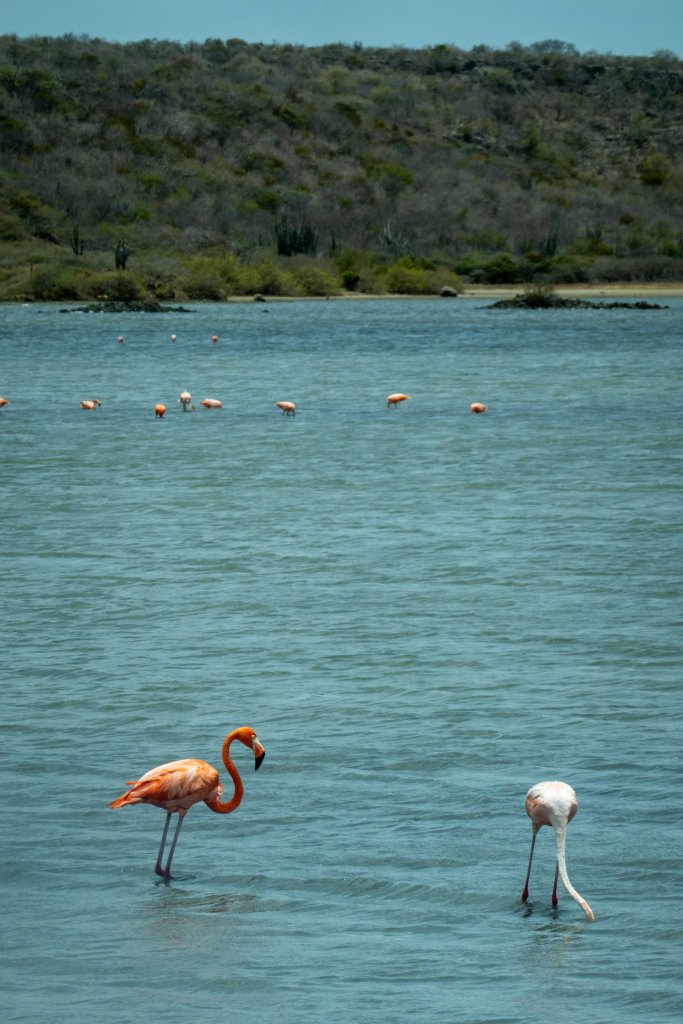
We continued our drive through the island, stopping quickly to spot a few wild flamingos!
In 1915, Shell built an oil refinery on the island, boosting the economy and population. During World War II, Curaçao’s refinery was vital, supplying fuel to the Allied forces.
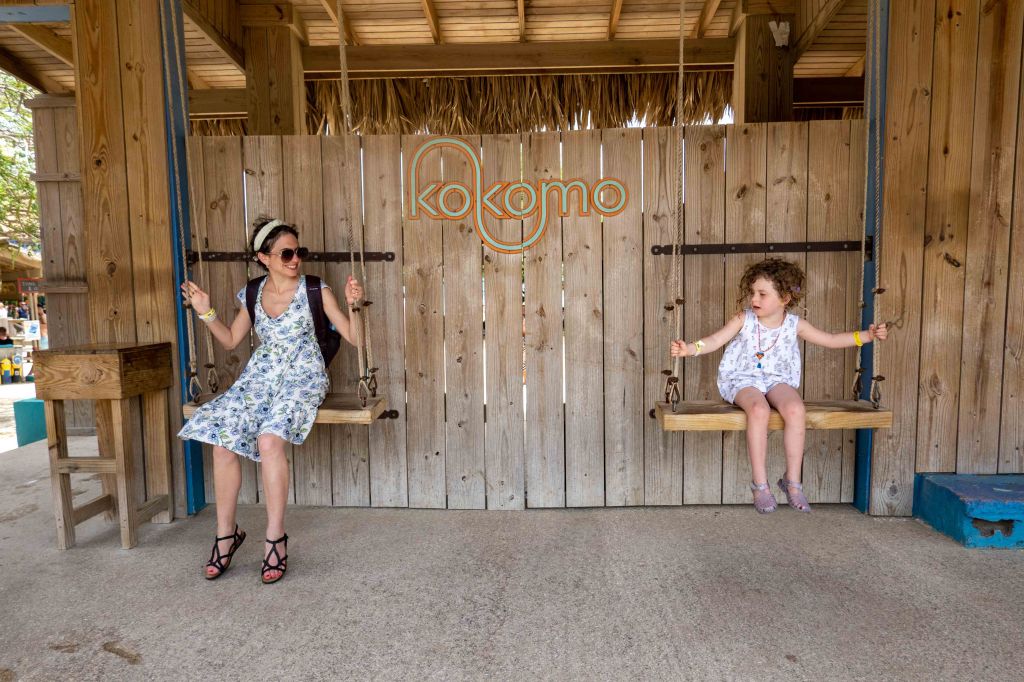
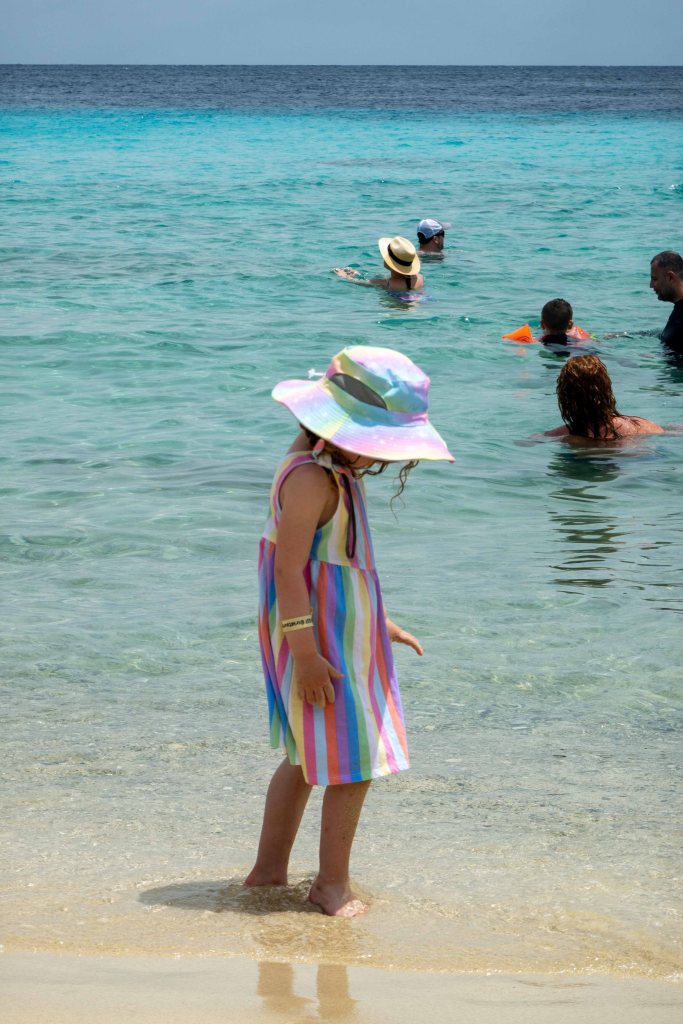
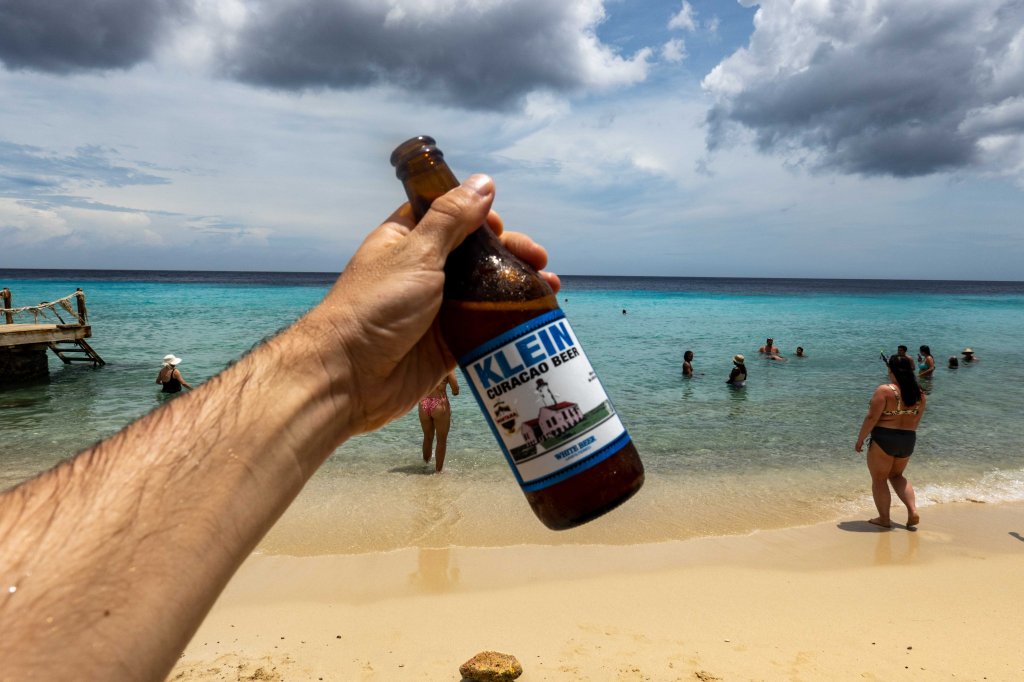
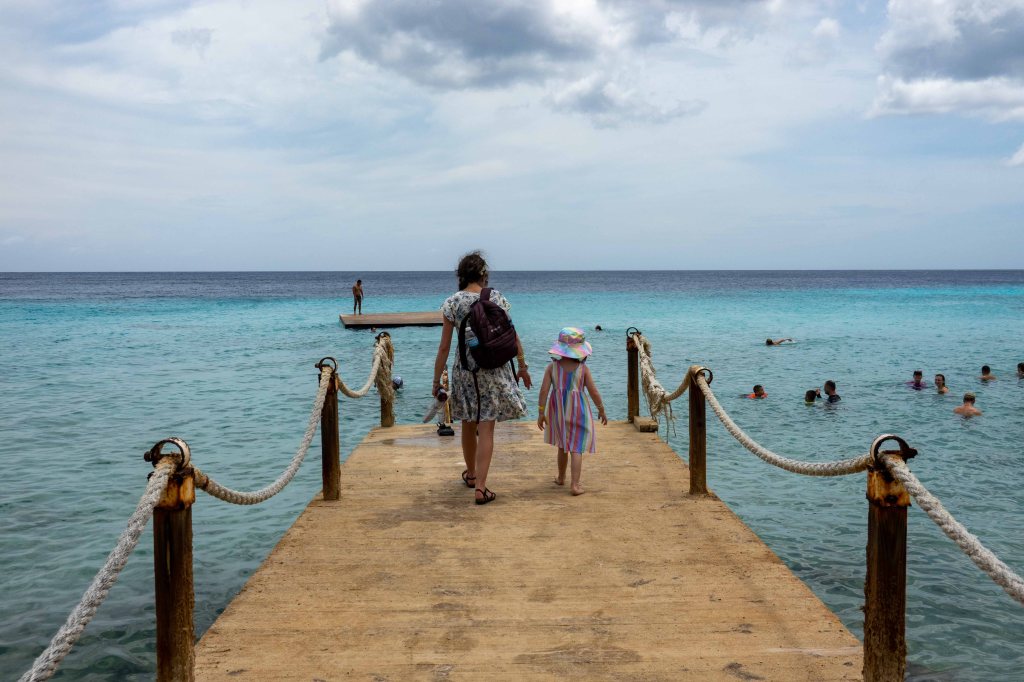
Next, we stopped at the beautiful Kokomo Beach. We had about two hours there and loved every minute—passion fruit popsicles, collecting shells, swimming in turquoise water… pure bliss.

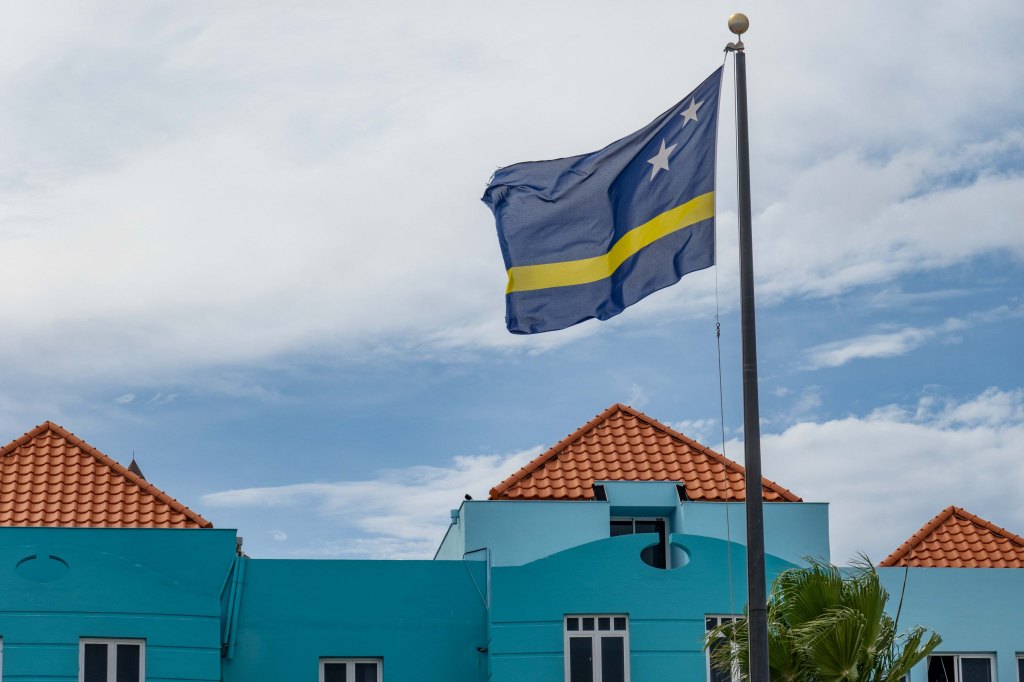
After the war, Curaçao gradually gained more autonomy. It was part of the Netherlands Antilles from 1954 until 2010, when it became a separate autonomous country within the Kingdom of the Netherlands.
Instead of heading straight back to the port, we asked the driver to drop us off in historic downtown Willemstad since we still had a few hours before departure.
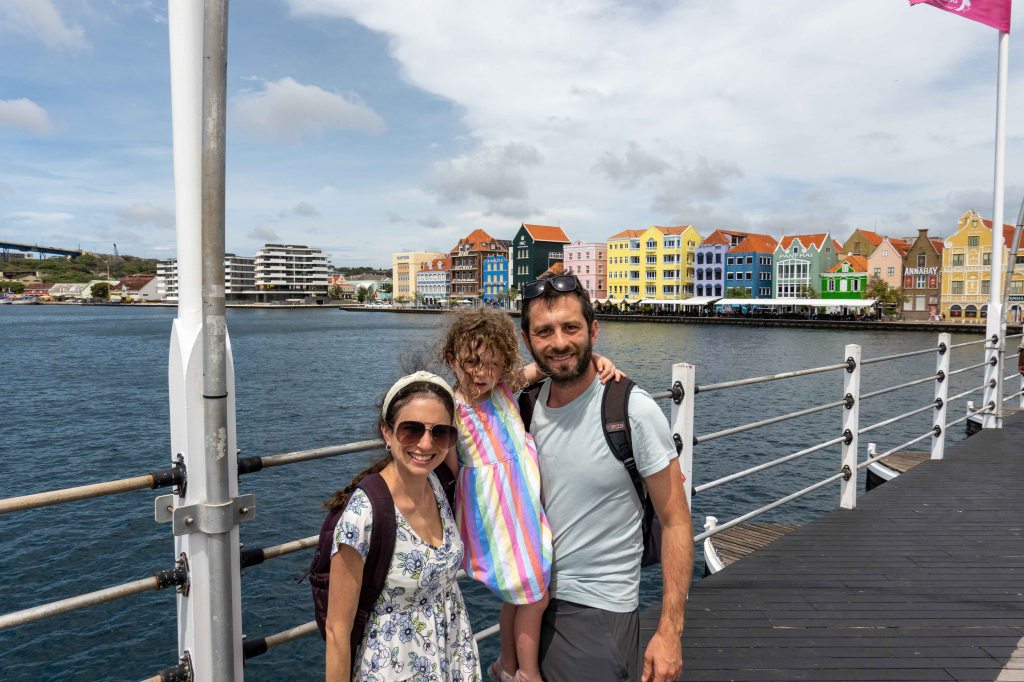
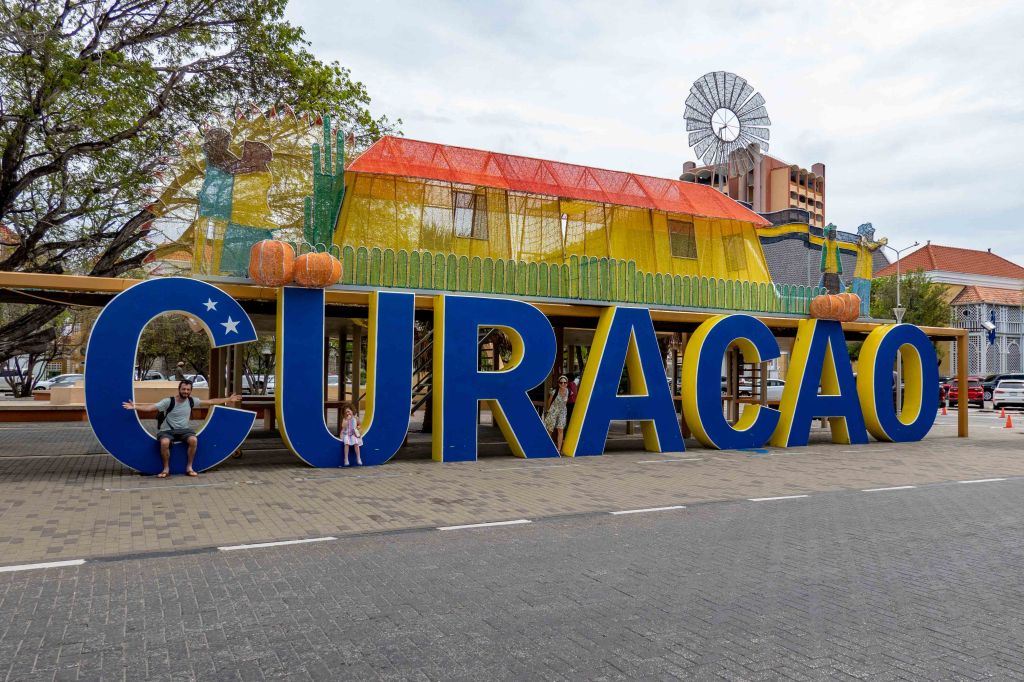
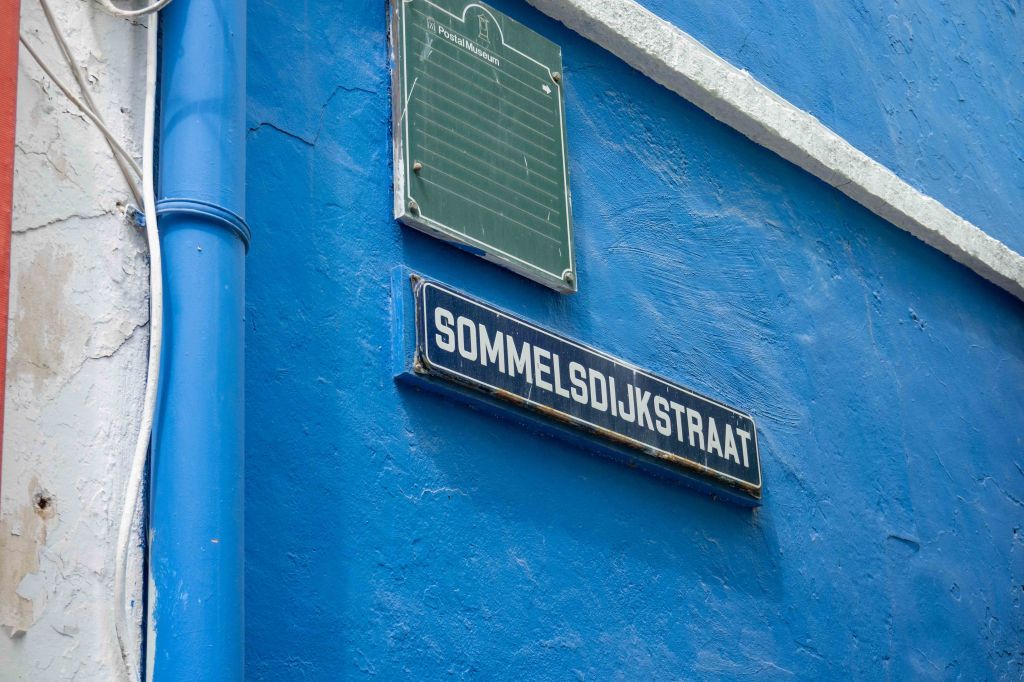
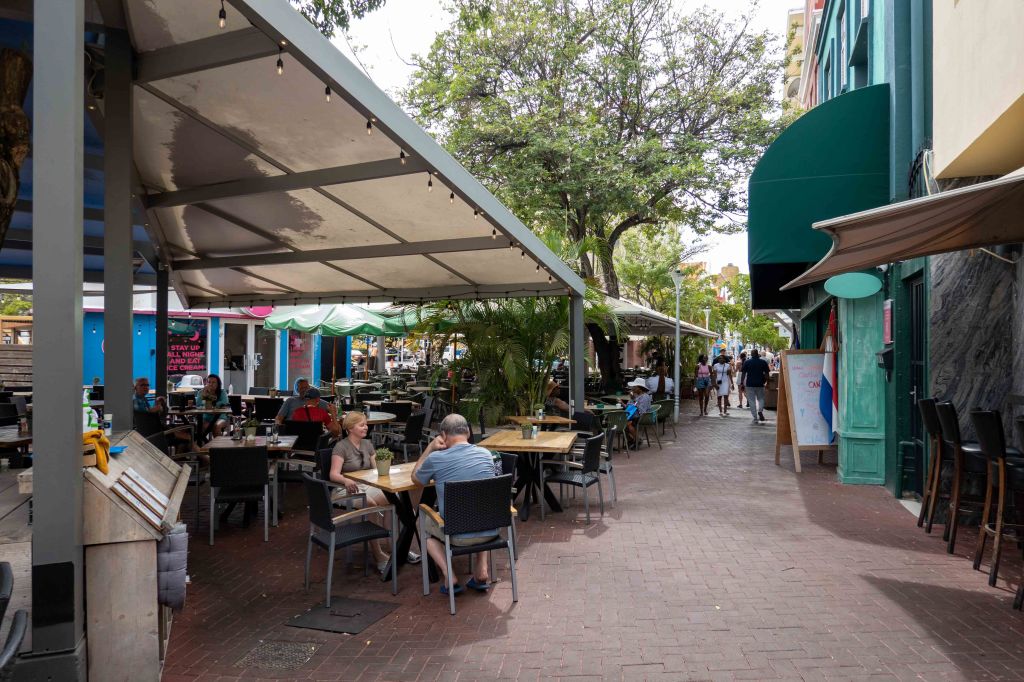
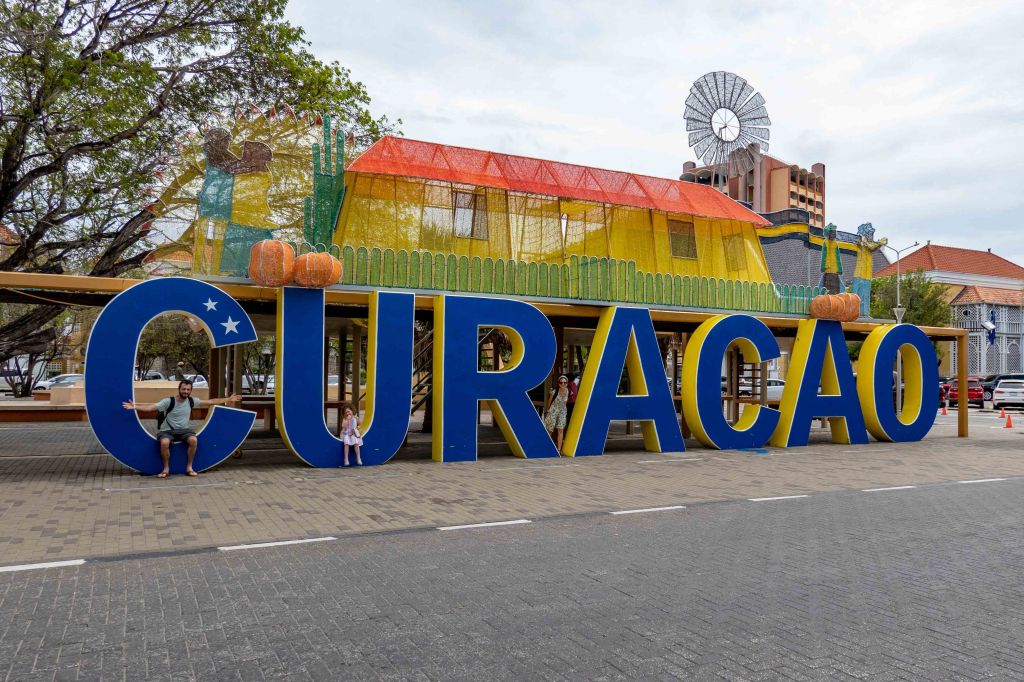
We wandered the pretty streets, grabbed a few snacks, looked for local currency (Eitan’s vacation obsession), and enjoyed the European vibe in the Caribbean. Parts of the city honestly felt like walking through a Dutch town.
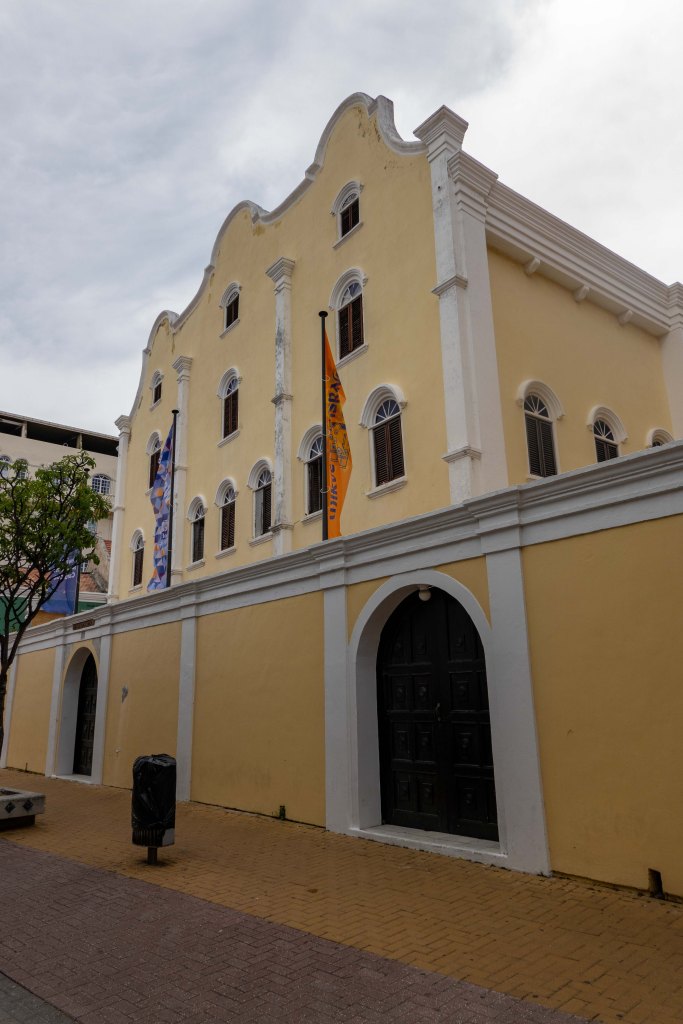
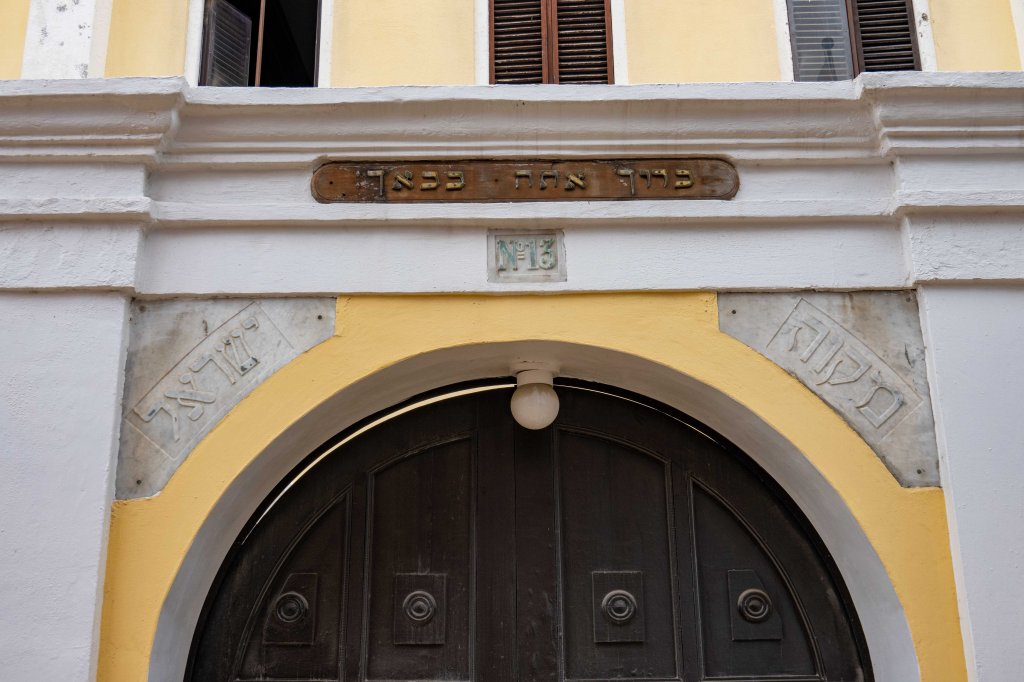
We passed by the Mikvé Israel-Emanuel Synagogue, the oldest continuously used synagogue in the Americas, dating back to 1732. Sadly, it was closed, so we couldn’t go inside—but yes, the floor is made of sand!
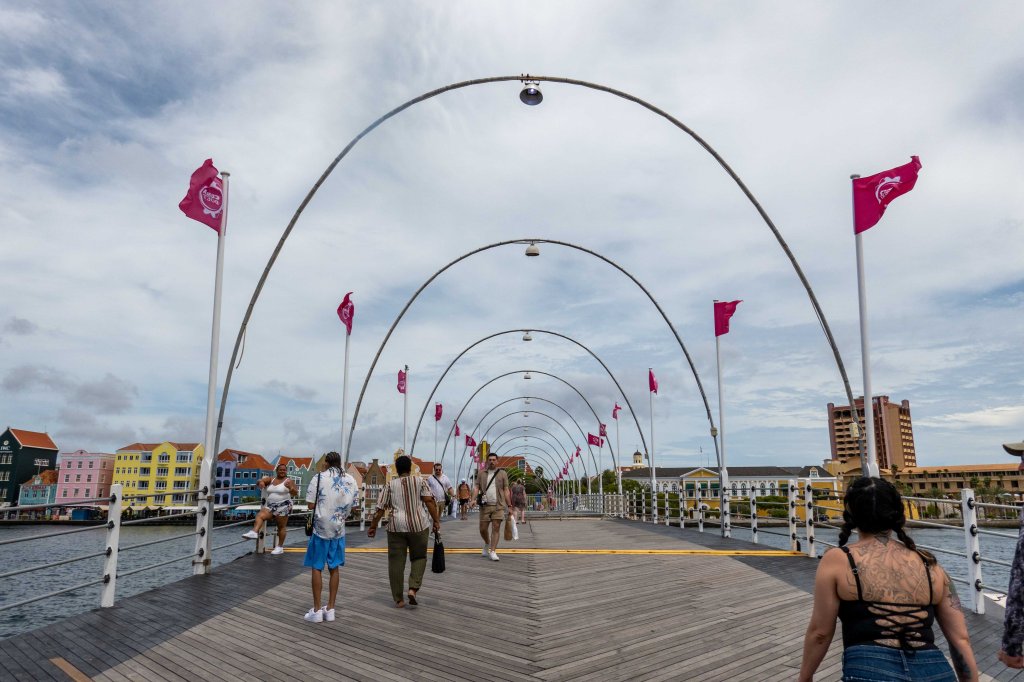
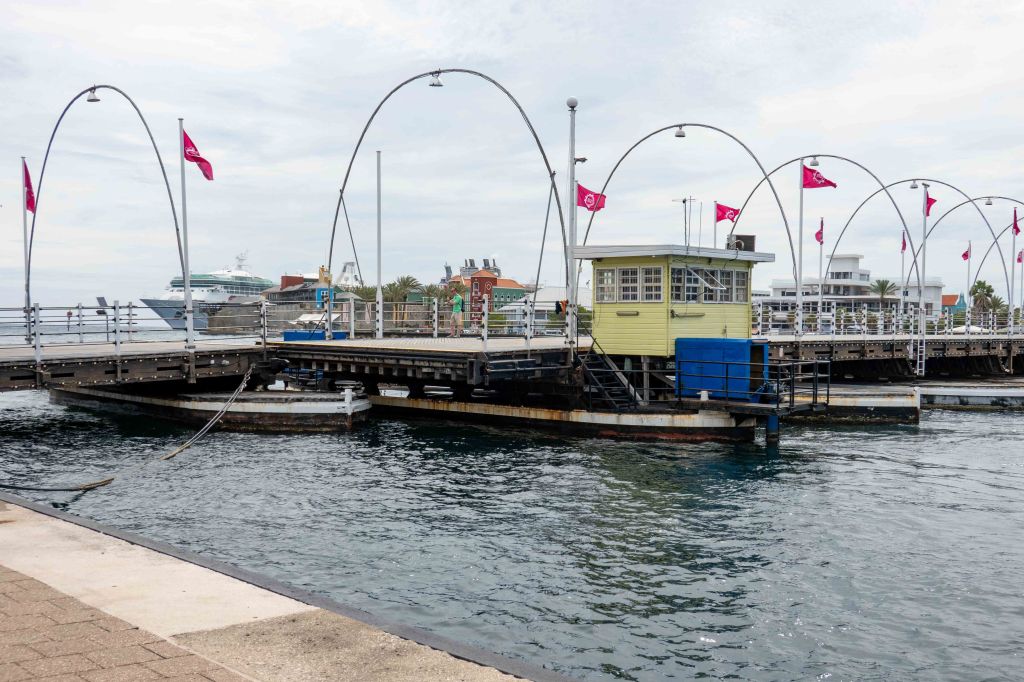
On the walk back, we discovered the Queen Emma Bridge, a one-of-a-kind floating pontoon bridge that swings open to let boats through. It has a little houseboat tug that pulls it back into position—such a cool surprise.
Our final stop was Rif Fort, built in 1828 by the Dutch to defend the harbor’s western entrance. With 56 cannons and walls up to 1.5 meters thick, it was part of the island’s defense against pirates and colonial threats.
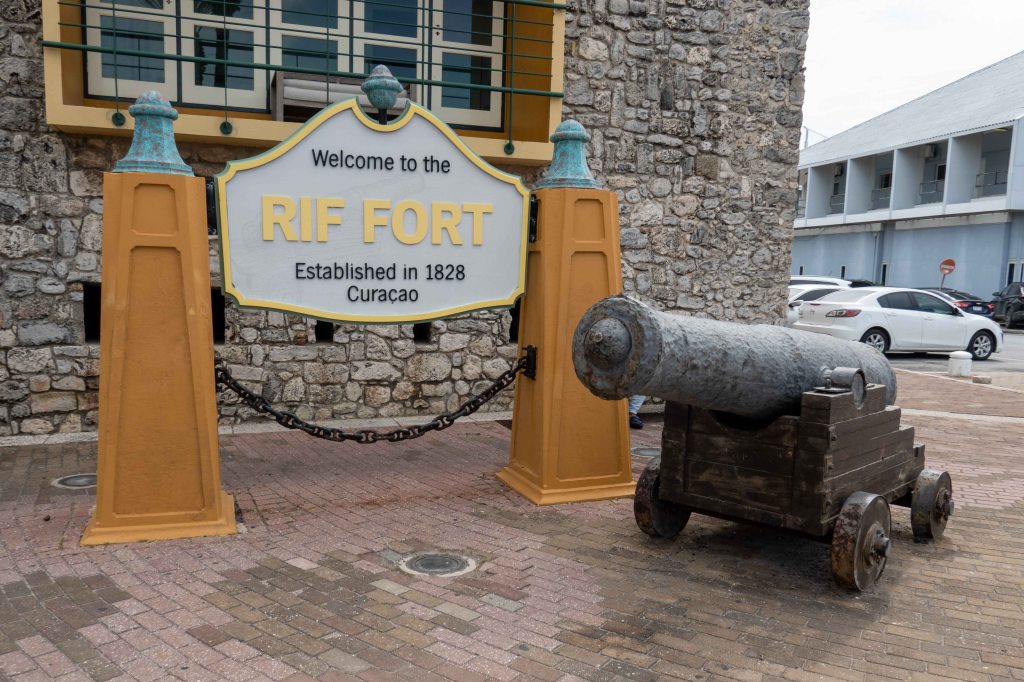

Today, it’s been transformed into a shopping and dining complex. Kind of a letdown after all that history, but at least the structure is preserved.
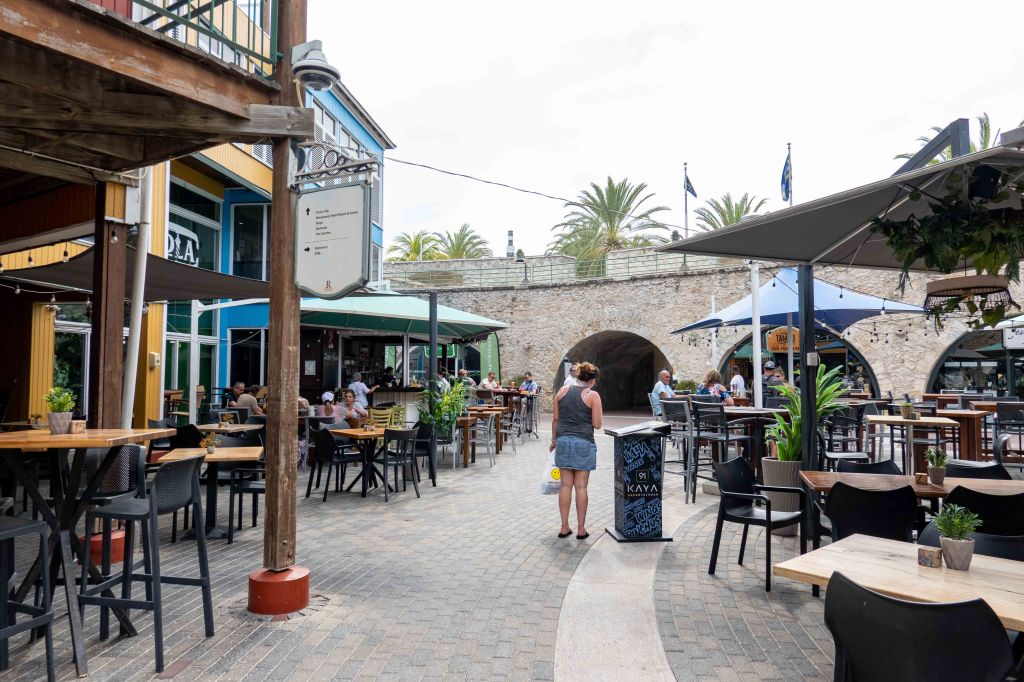
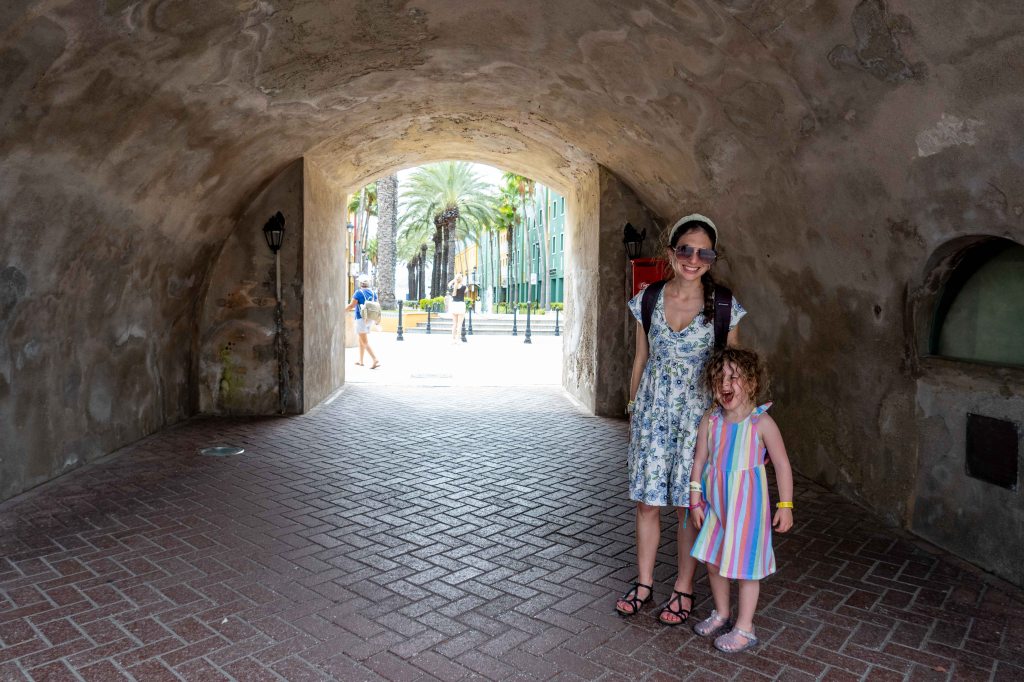
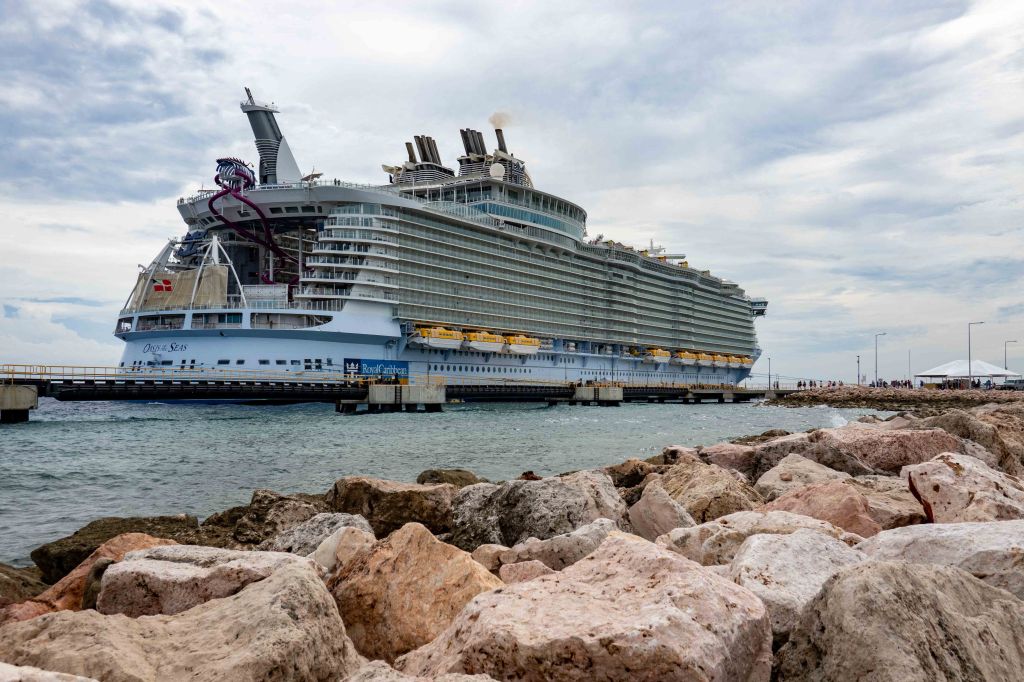
We made it back to the ship just in time for dinner, ready to enjoy the next Caribbean stop… though as mentioned, it probably won’t get its own blog post.
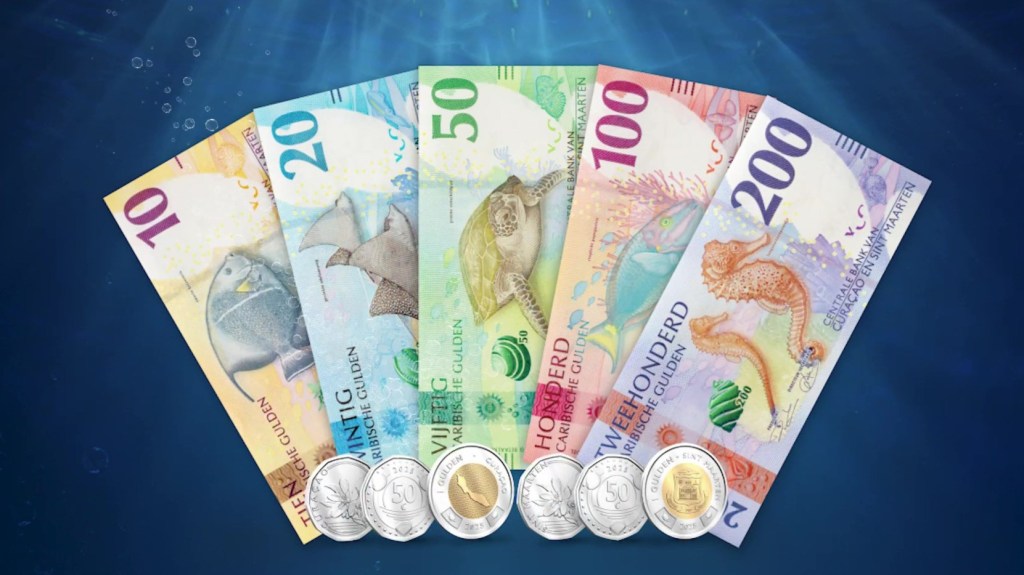
Bonus pic of the day: The currency is called the Gulden (1 ANG = 0.5 USD) . It is actually used in St. Marteen and Curacao under the “Caribbean Gulden” name.

 WHERE IS NOODLE
Thanks for tour Eitan
LikeLike