Our last day of our Oaxaca trip and we choose another 13 hour tour!! yeey!
We were actually dreading this one, but it was the best way to see all the sites and we are so glad we ended up doing it as it was a fantastic experience. This time, after some research form Eitan, we booked a cheaper tour. It seems that no matter who you book with, most tour operators just move people around to fill other tour buses so you end up sharing a tour with people that paid anywhere from 300 to 1500 pesos, depending which tour agency they choose. There were more people on this bus, it was all younger backpacker type people from Europe, and then us with a toddler.
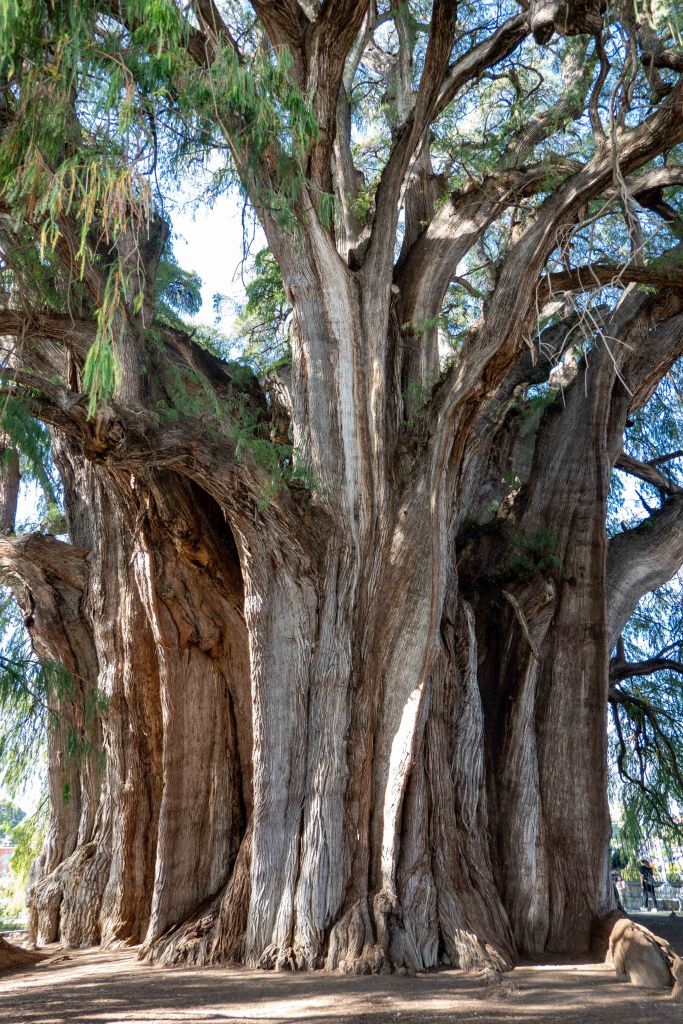
Our first stop was the super famous Tule tree!
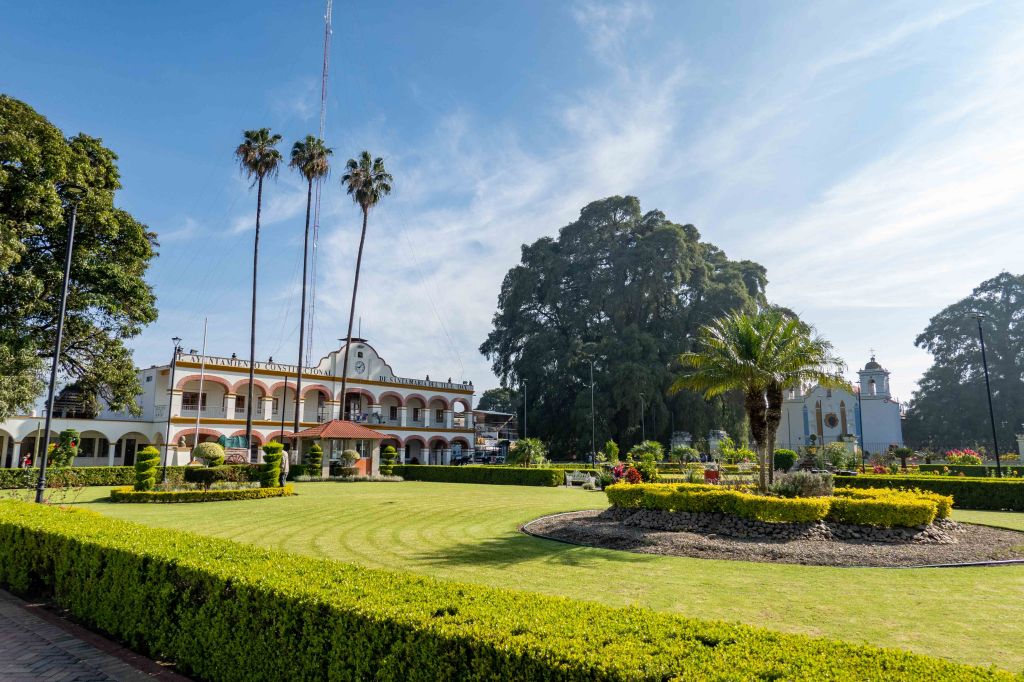
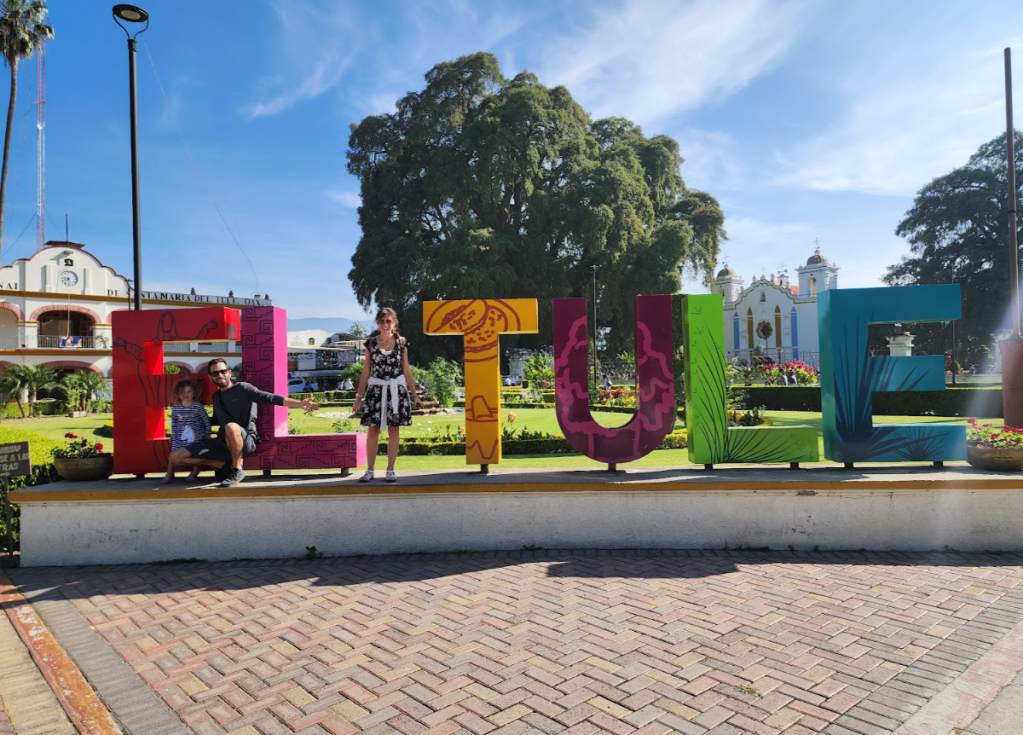
The Tule tree is a massive Montezuma cypress located in the town of Santa María del Tule. It’s famous for having the widest trunk in the world, measuring approximately 42 meters (137 feet) in circumference.
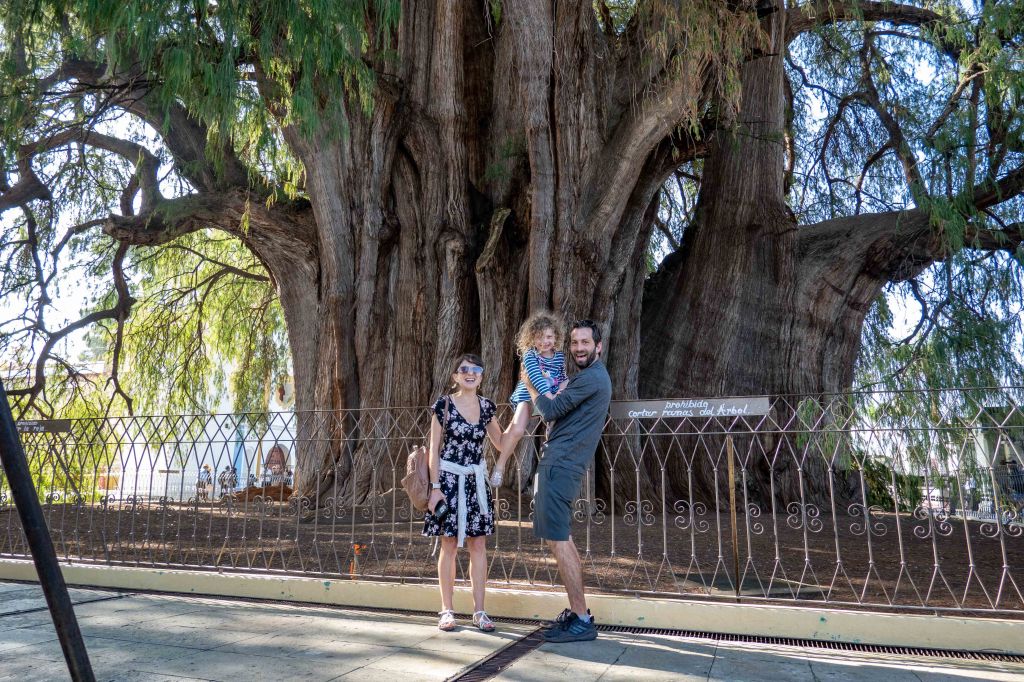
The Tule Tree is estimated to be over 1,000 years old, with some estimates suggesting it could be as old as 3,000 years.
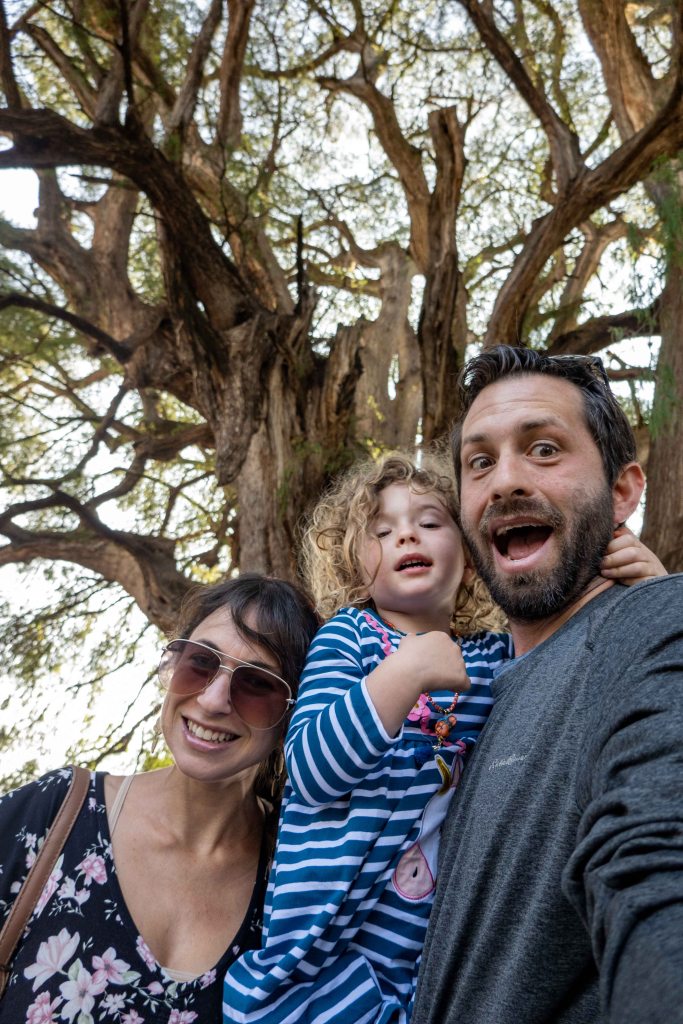
The Tule Tree is deeply rooted in Zapotec culture and mythology. It is often regarded as a sacred tree. The tree is a major tourist attraction and has been recognized as a natural monument by UNESCO.
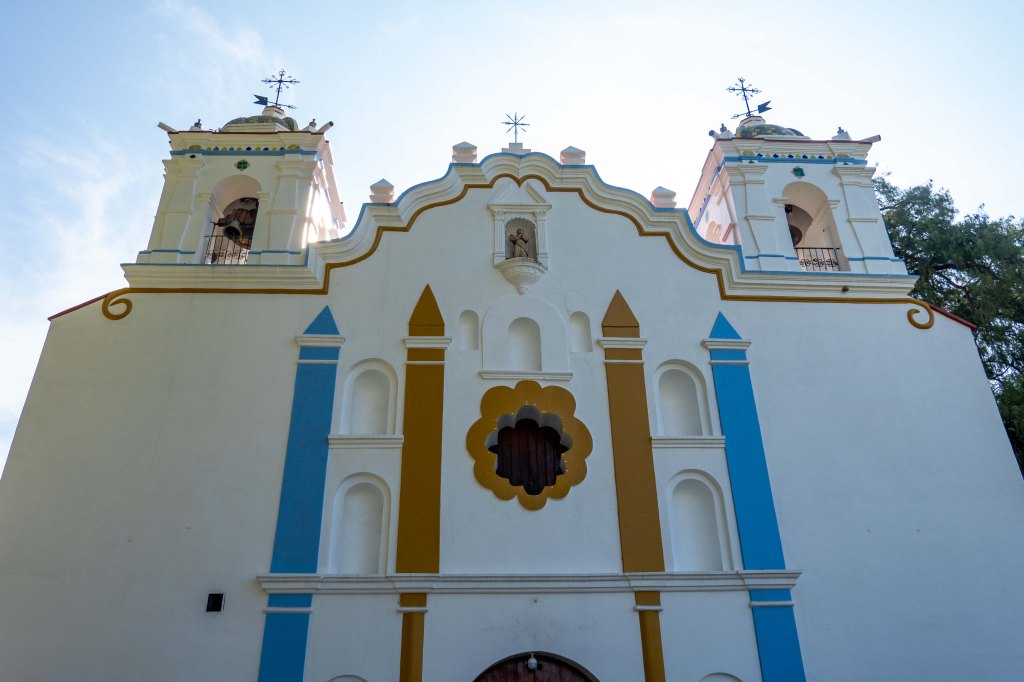
They have a cute church next to the tree, but we did not have time to go in.
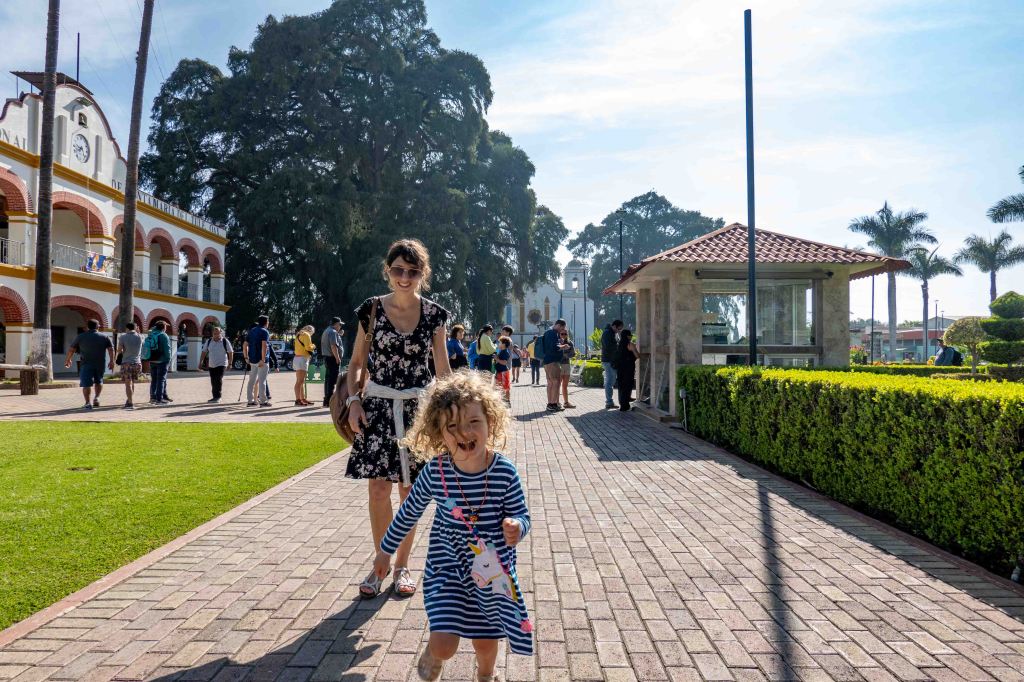
We ran back to the bus for our next stop, the textile factory.
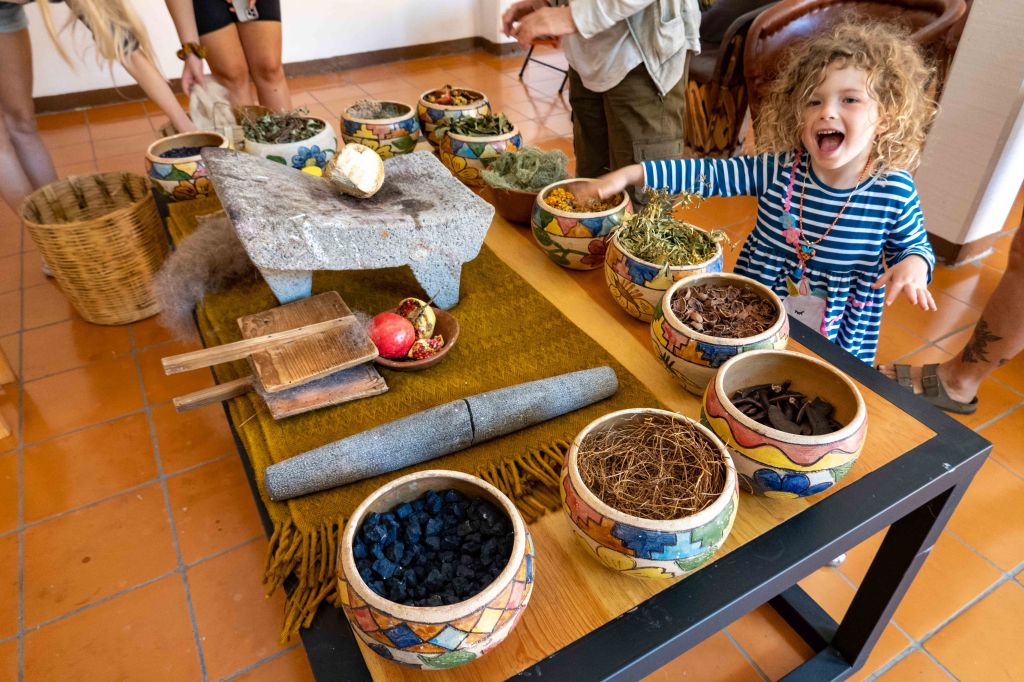
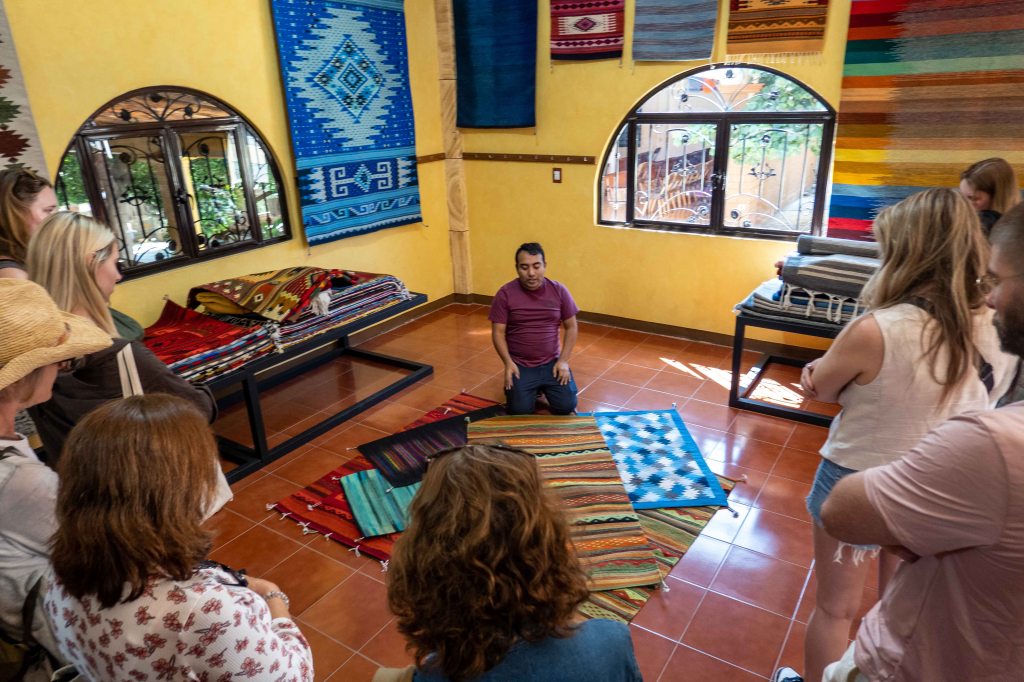
This stop was another typical tourist strap with a demonstration of how they do the textiles, but this time they showed us where they get the colors from. So it was actually very interesting.

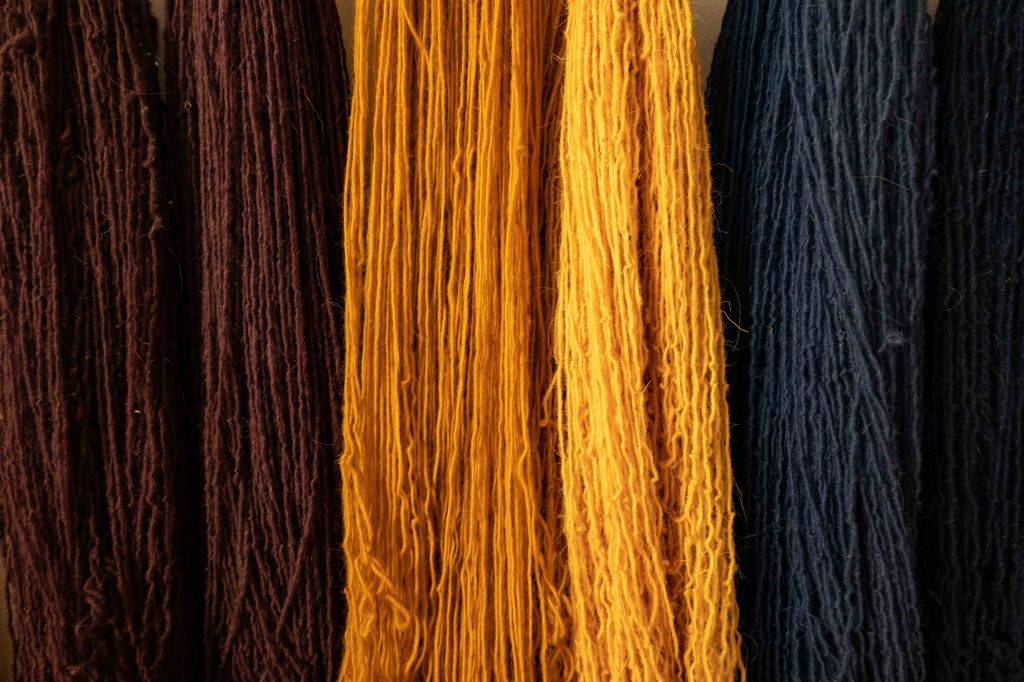
Ariela wanted to touch every color. The dyes are used to color wool and cotton threads for handwoven textiles, such as rugs, rebozos (shawls), and clothing.
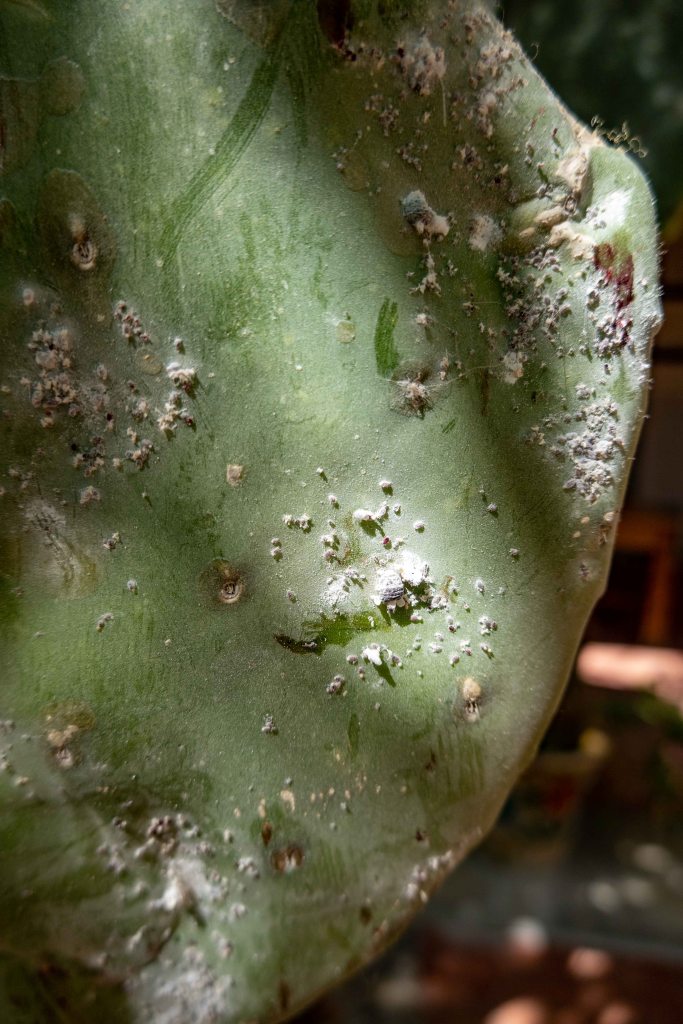
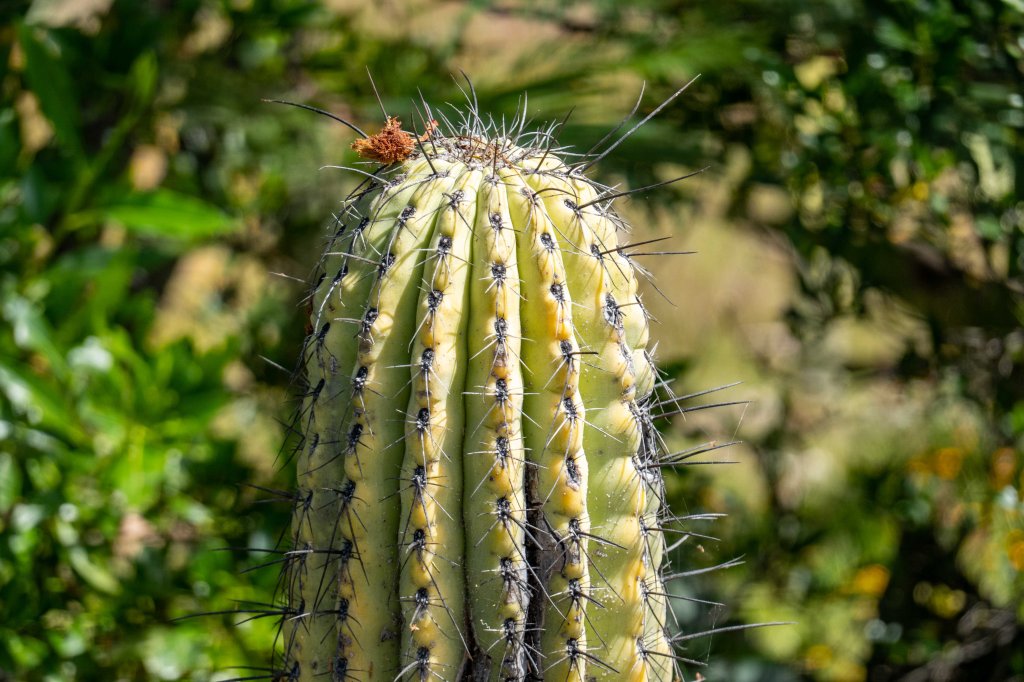
The Carmine color (Between red and magenta) comes from the Cohineal, which is a tiny parasitic insect that lives on the pads of the nopal cactus (prickly pear cactus). You can see it in the picture below as those white small spots protruding from the cactus.
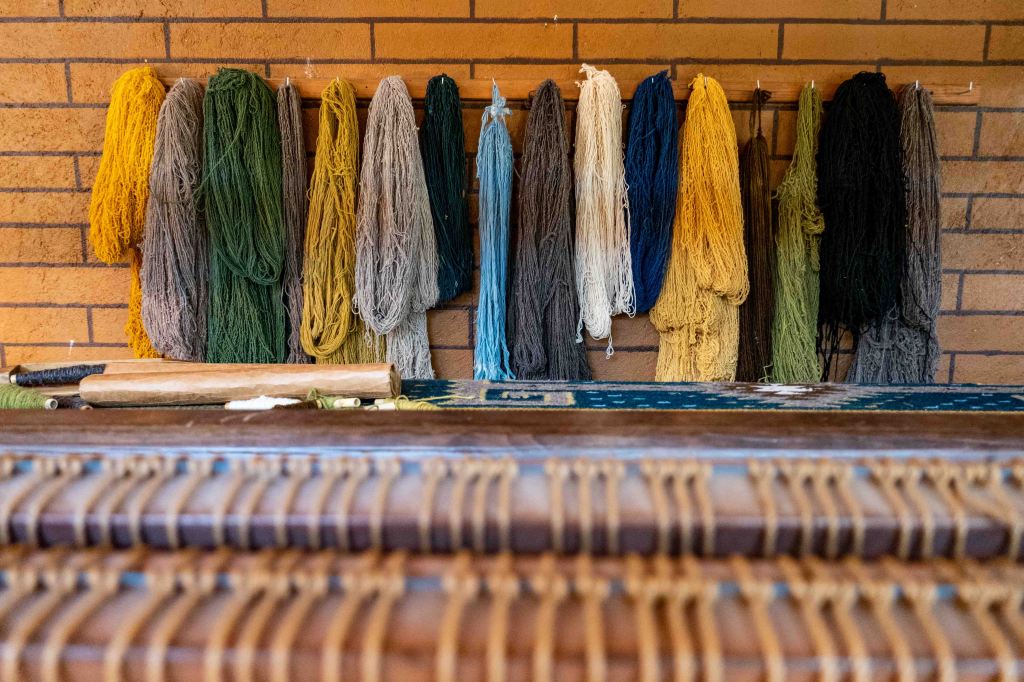
They can create any color by mixing different dyes.
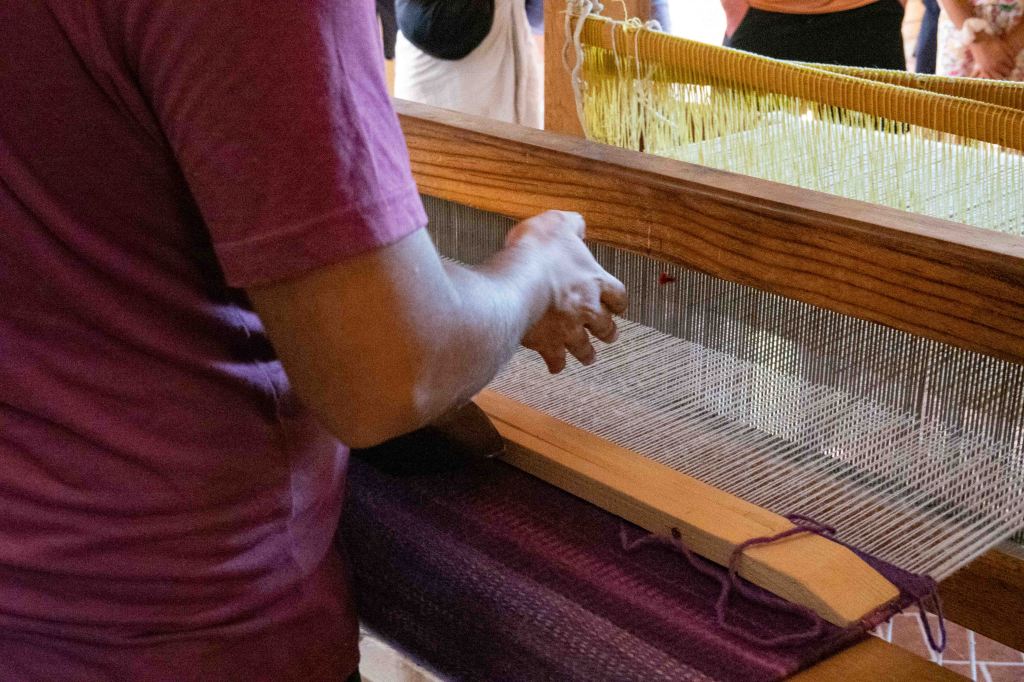
Then they showed us how they weave the textiles. Unfortunately we got yhe curse of the traveler, and this did not excite us as we have seen this multiple times already in several countries.
Then they present the prices and expect the toruists to shell out some big bucks for overprices textiles.
Ariela was more interested in jumping the stairs.

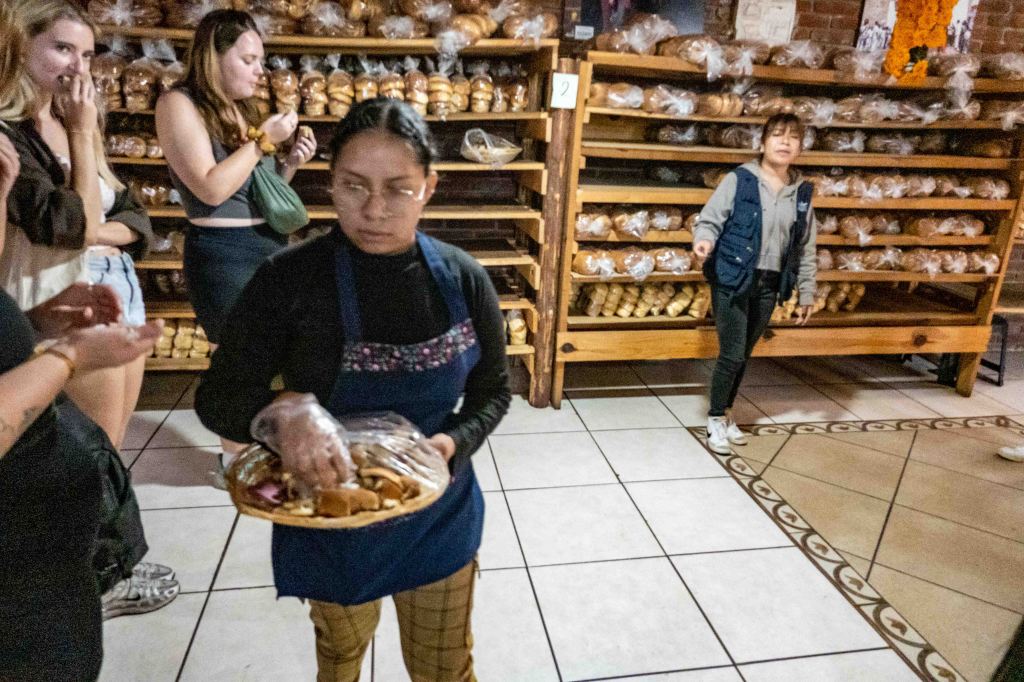
Our next stop was a “surprise” stop. It was a large bakery where we tried 4 different types of bread. There was not any pressure to buy anything, but it was a good snack to tied us over for lunch.
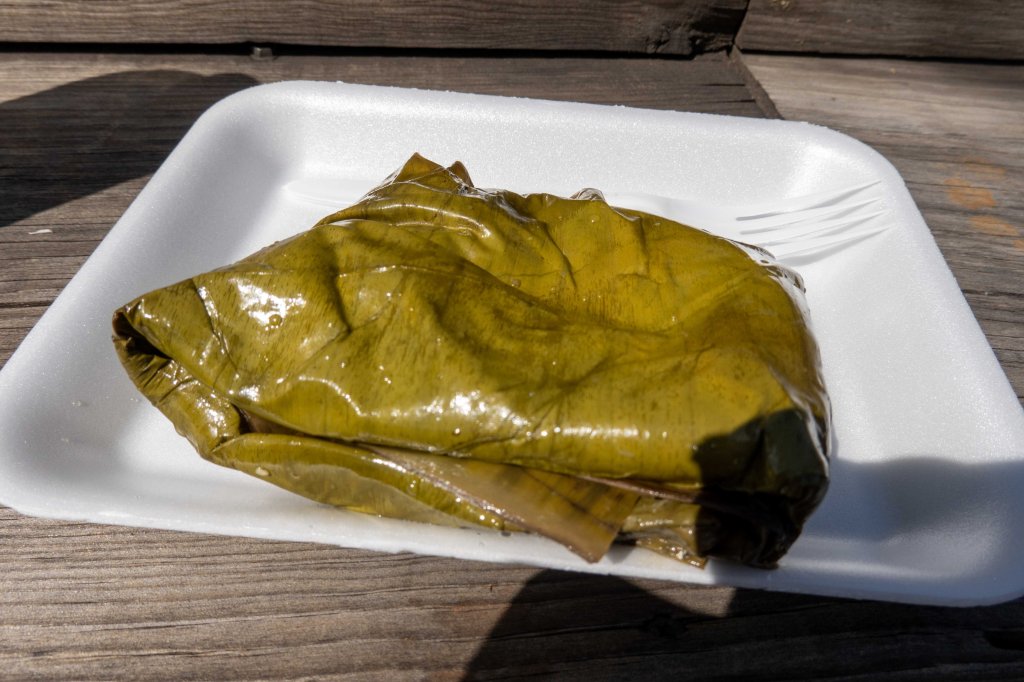
Eitan also got a Chicken Mole Oaxaqueno Tamal, which is his favorite. The Oaxaca variety uses a banana leaf instead of a corn leaf. It is way more moist and delicious.
Another surprise during the drive when the bus stopped in the middle of the road. And someone opened the door from the outside. For a moment I thought we were going to get kidnapped, but it just happens to be the chicharron lady trying to sell some bags. Pheww!

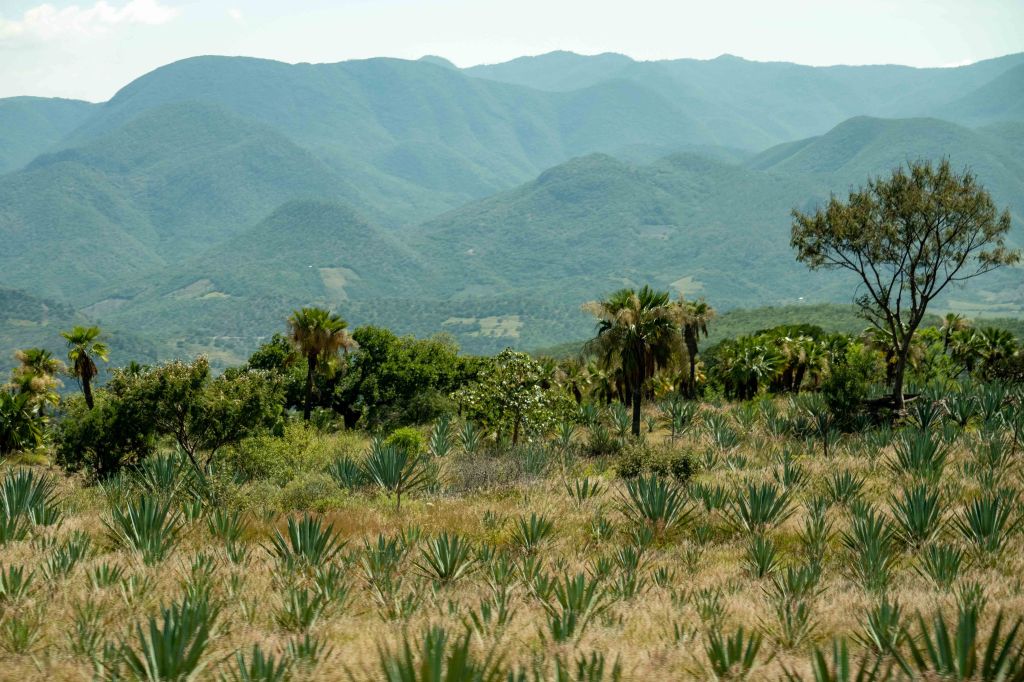
The drive to Hierve el Agua was super pretty. We passed many Agave fields and a nice mountain range (Sierra Madre del Sur).
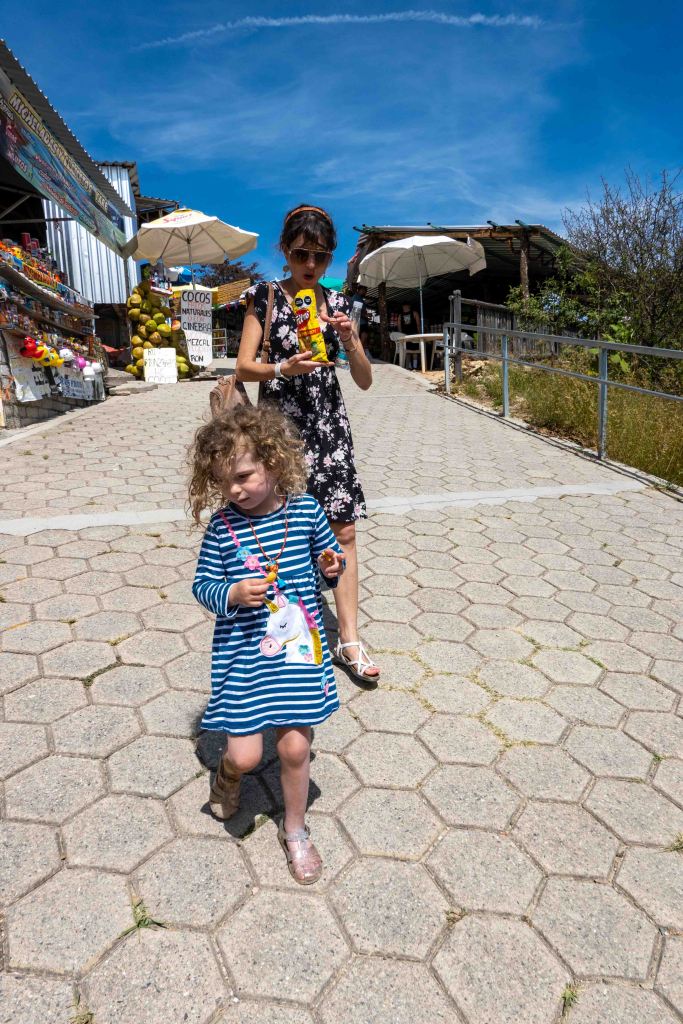
There was a short hike down to the waterfall and pool areas. Ariela did great and was excited to swim as it was super hot that day.
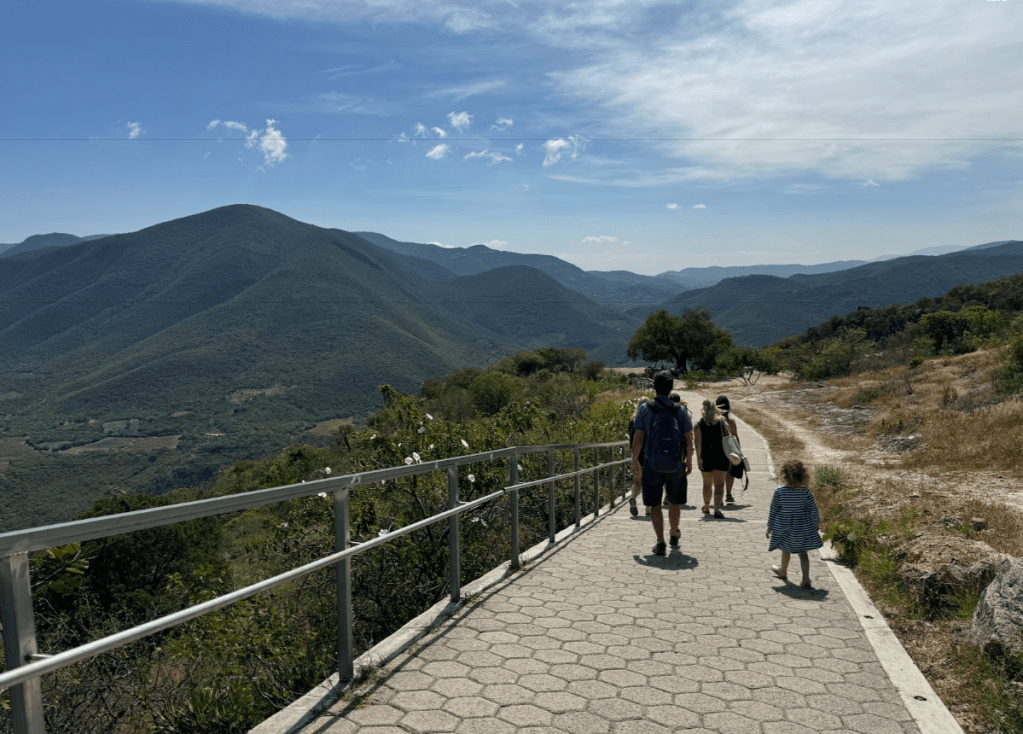
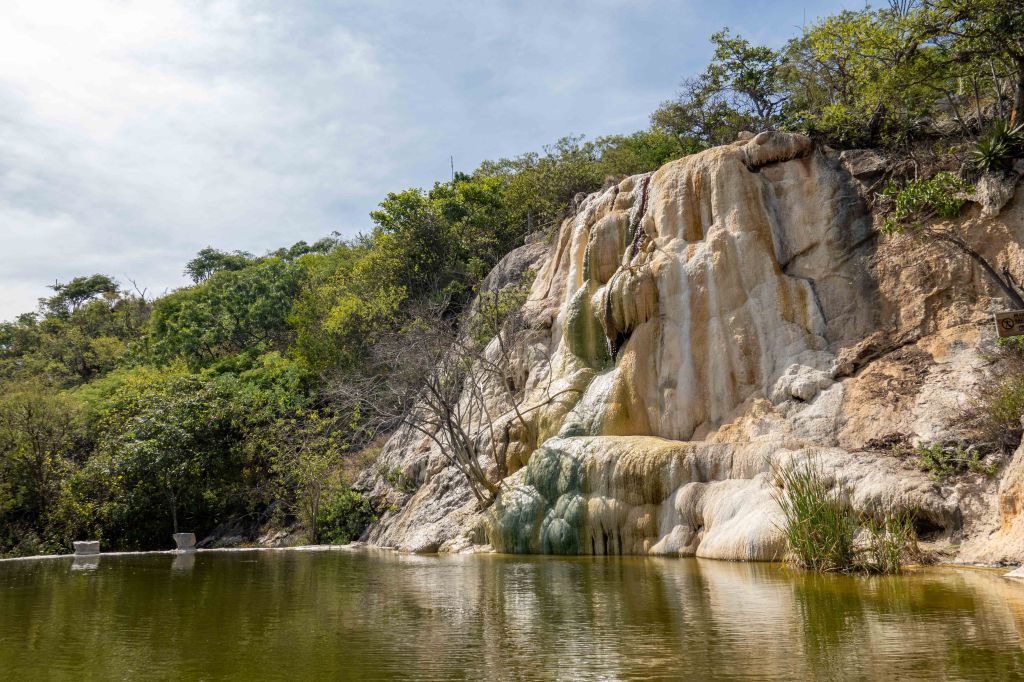
Hierve el Agua is a stunning natural site located around 2 hours drive from Oaxaca City. It is famous for its mineral springs that create unique, petrified waterfalls.
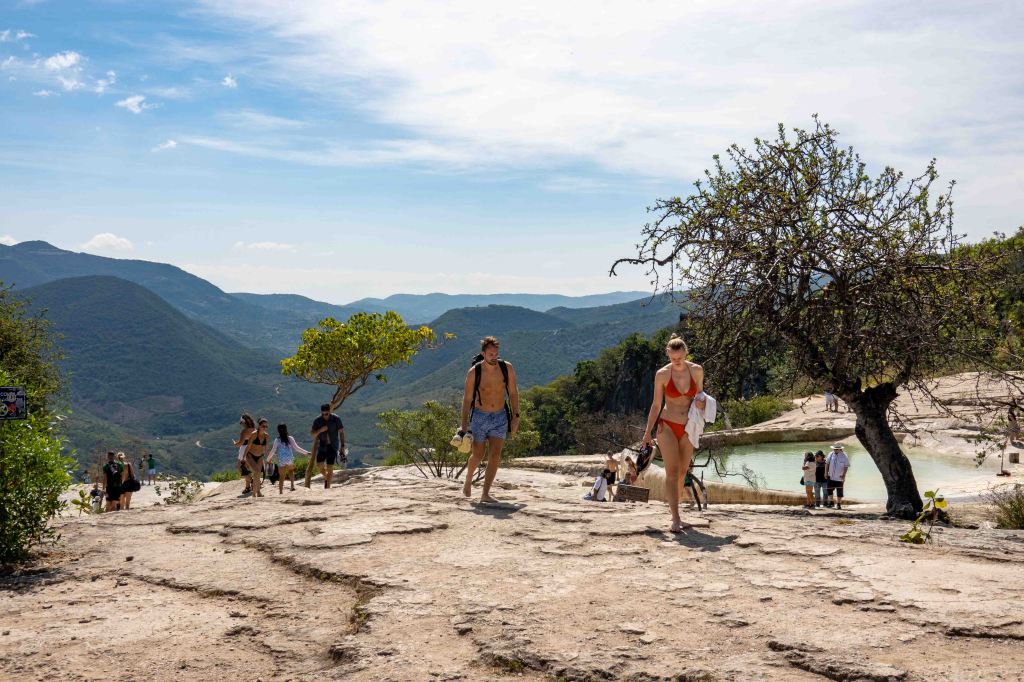
The name “Hierve el Agua” translates to “the water boils,” though the water itself doesn’t actually boil.
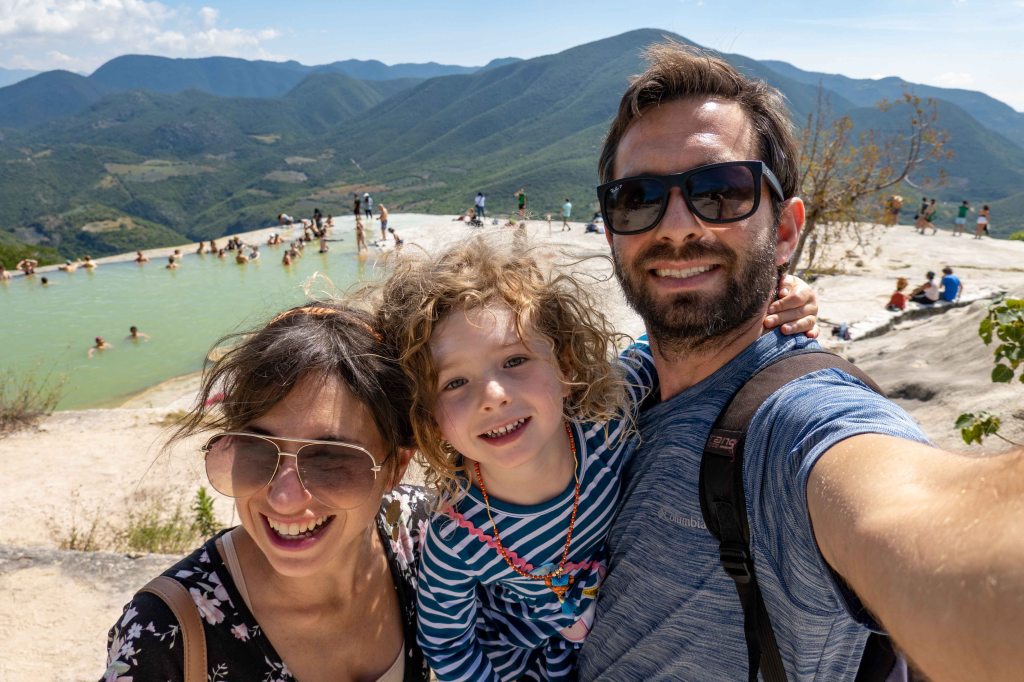
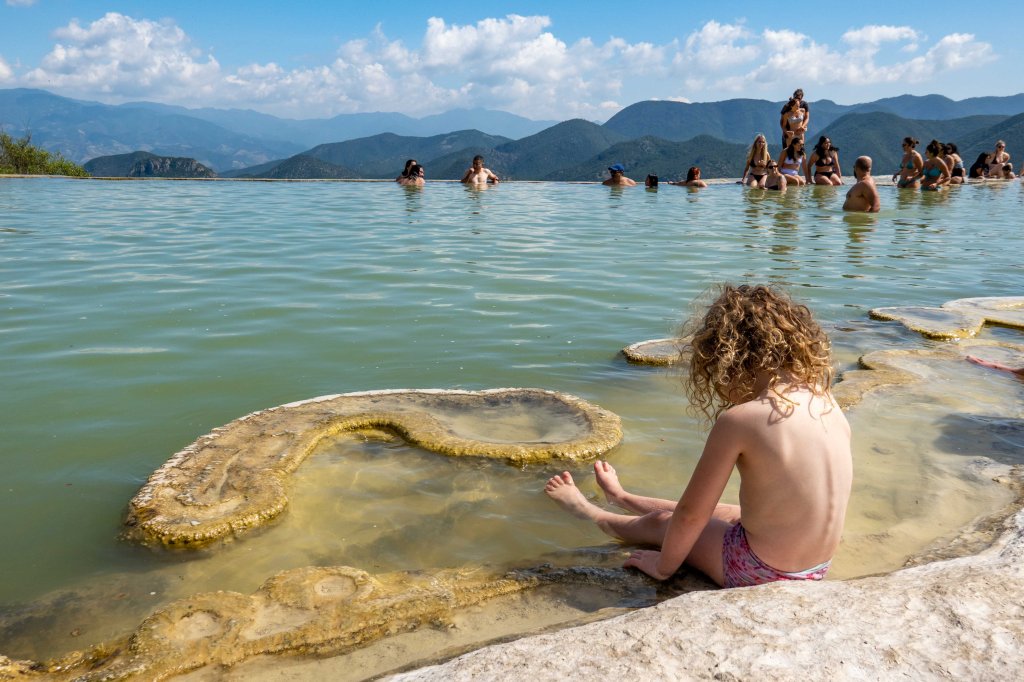
There are several natural pools at the site, where visitors can swim in the cool, mineral-rich waters while enjoying panoramic views of the surrounding mountains and valleys.
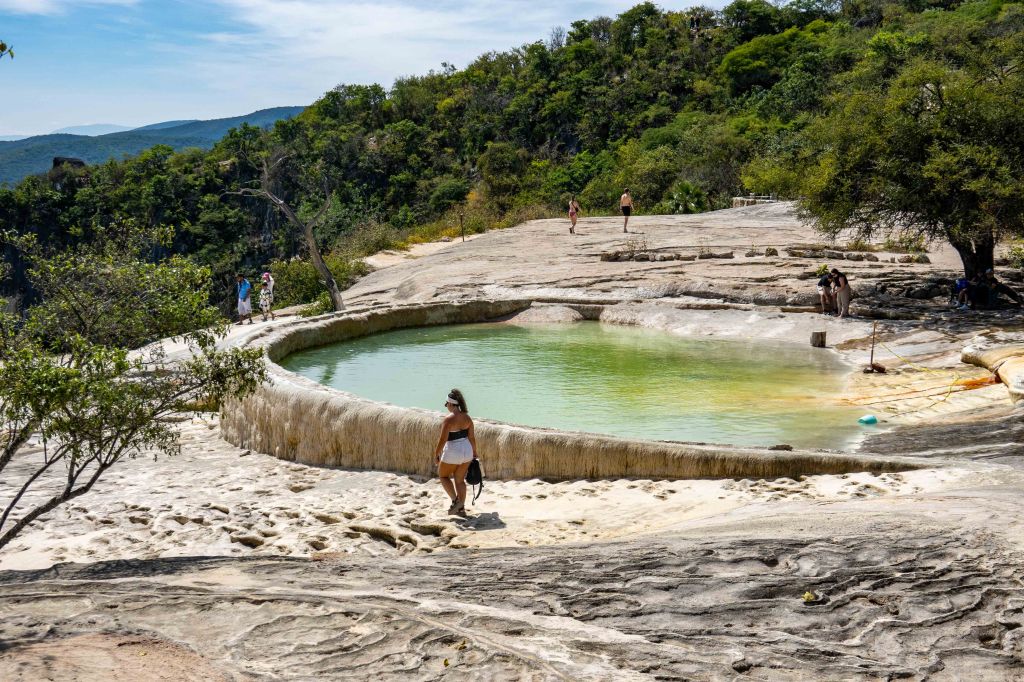
We forgot our swimming suits, but that did not stop us from getting in the way wearing our underwear.
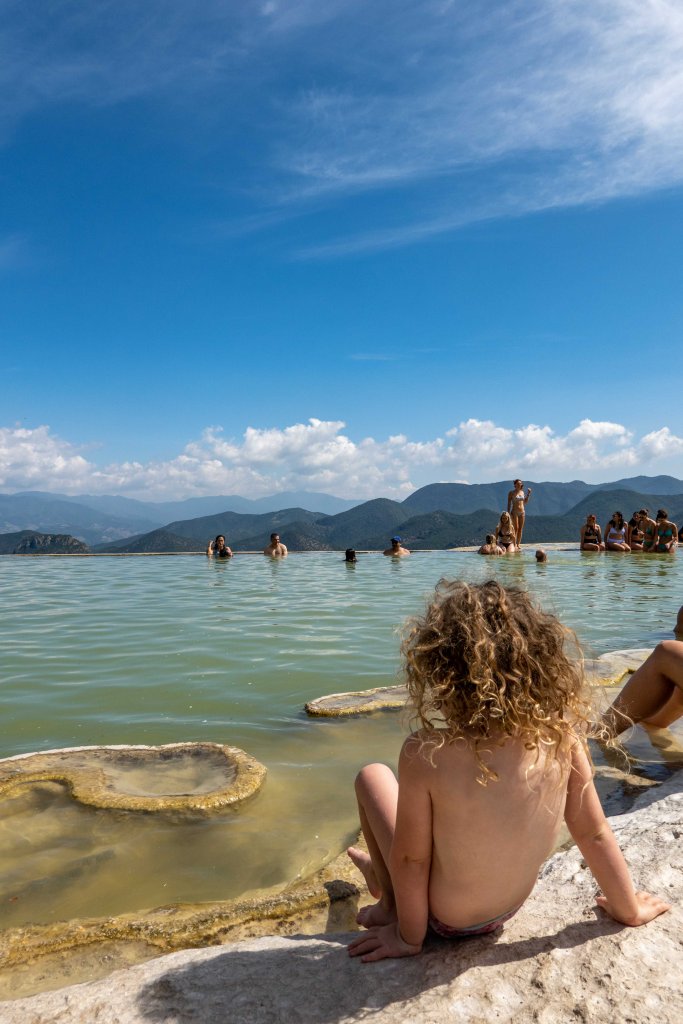
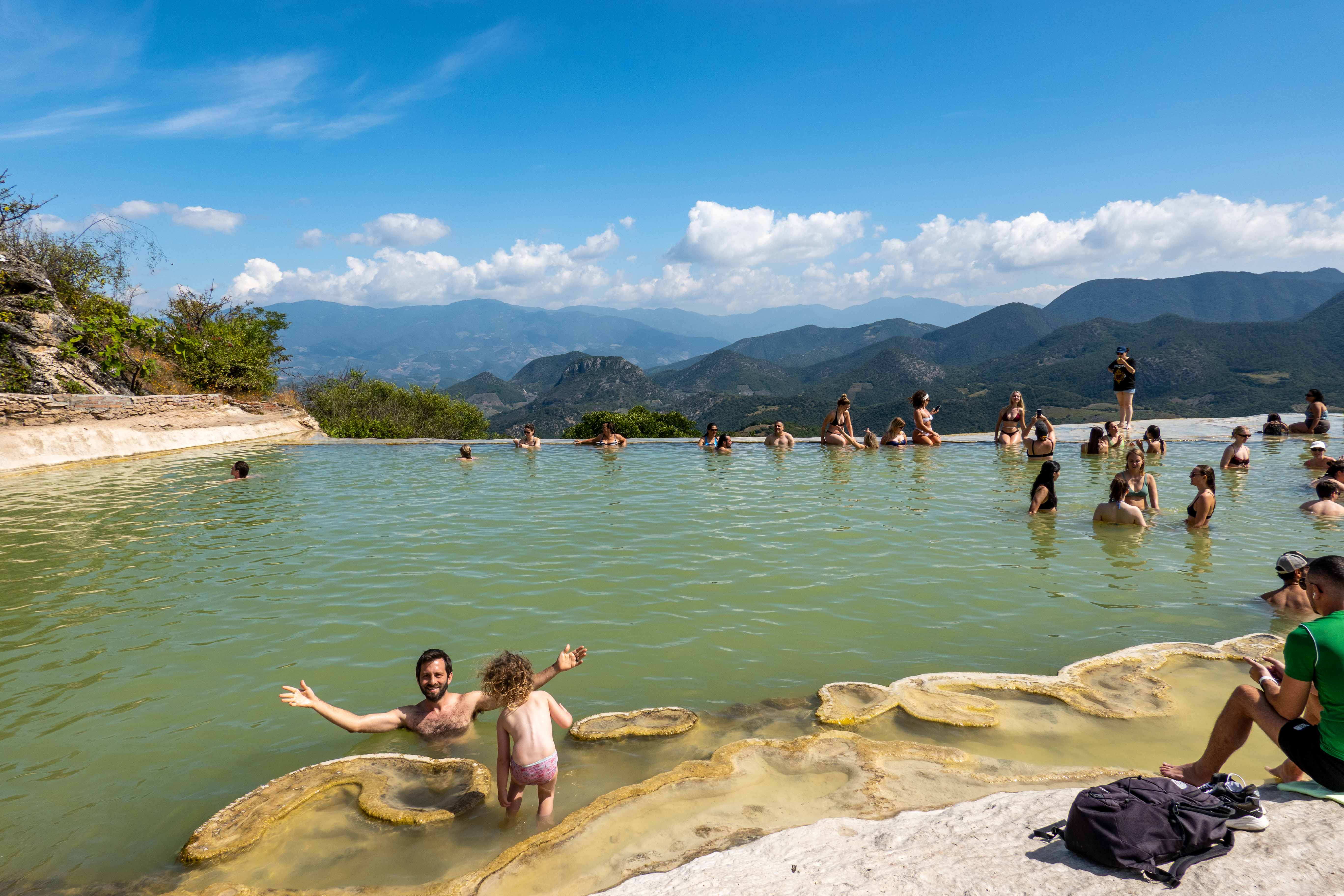
The water was freezing cold, and the floor very slippery, but it was super refreshing to take a dip.
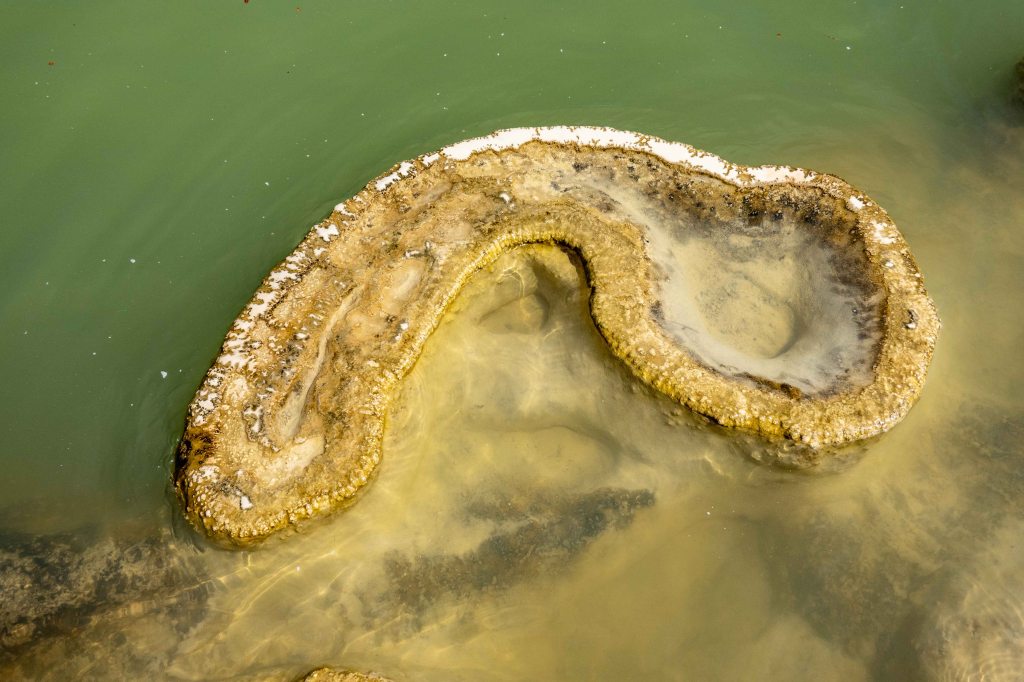
We relaxed on dry land for about 1 more hour. We really enjoyed this spot.
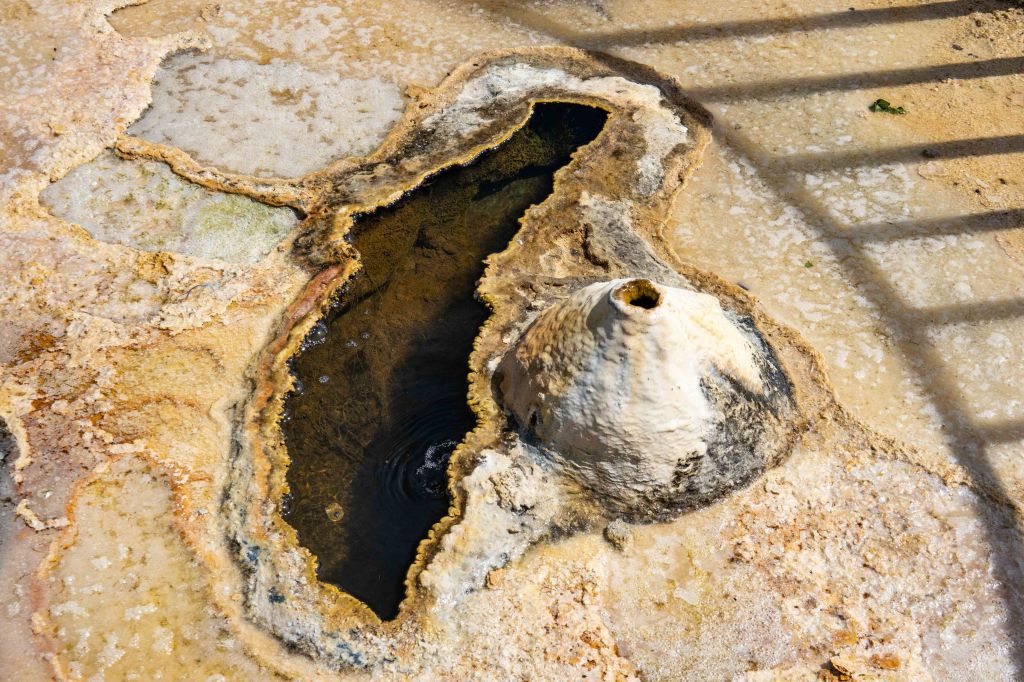
One of the main holes from where the water comes out.
The main attraction is the striking, white mineral formations that resemble waterfalls, which have been formed over thousands of years. Somehow Sarah didn’t see this and on the walk back up asked about the waterfall – luckily Eitan took a photo.
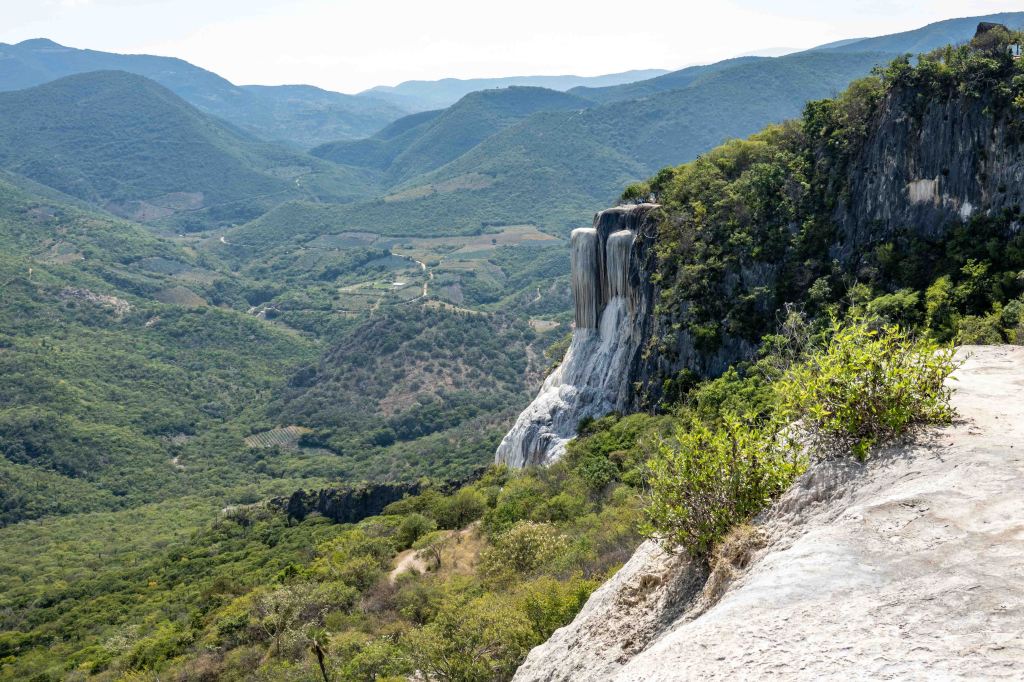
These formations were created by the flow of water rich in minerals, particularly calcium carbonate, which over time has built up, hardening into rock-like structures.
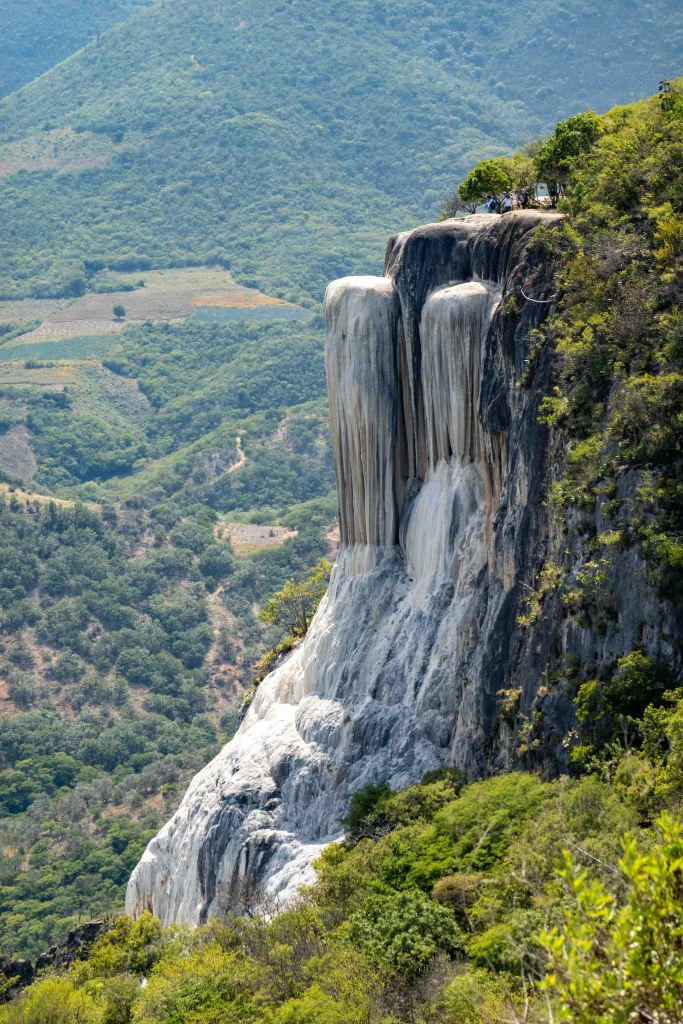
The area around Hierve el Agua was once inhabited by the Zapotec civilization, and archaeological sites nearby suggest that the ancient people may have used the springs for both ceremonial and practical purposes, possibly for water and agriculture.
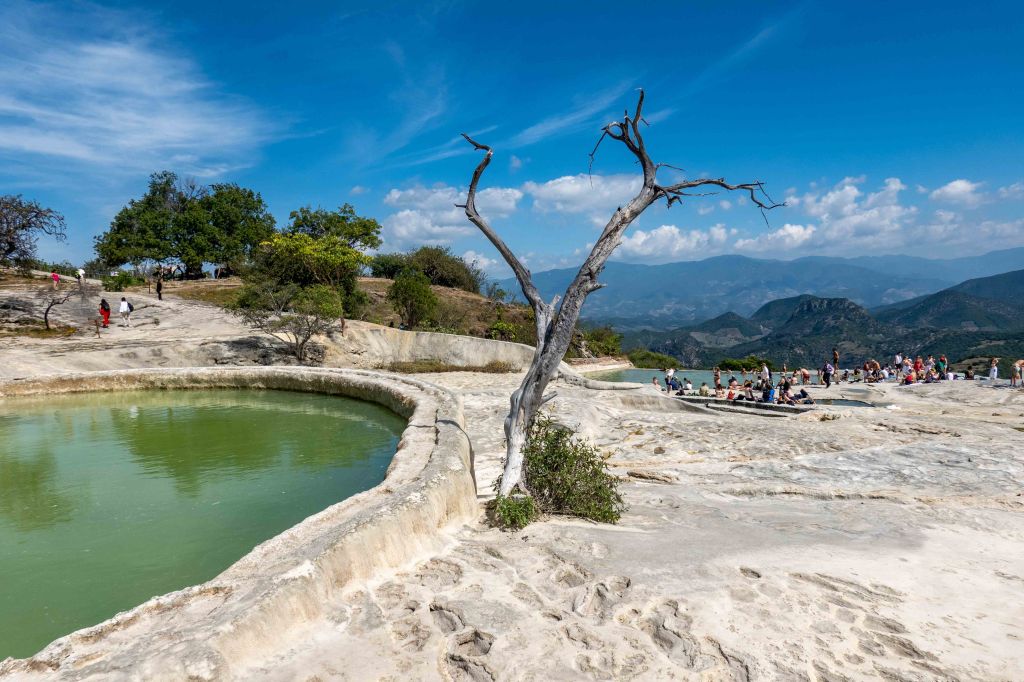
Eitan walked around to take some photos, there were some crazy mineral formations all around this place. Beautiful!
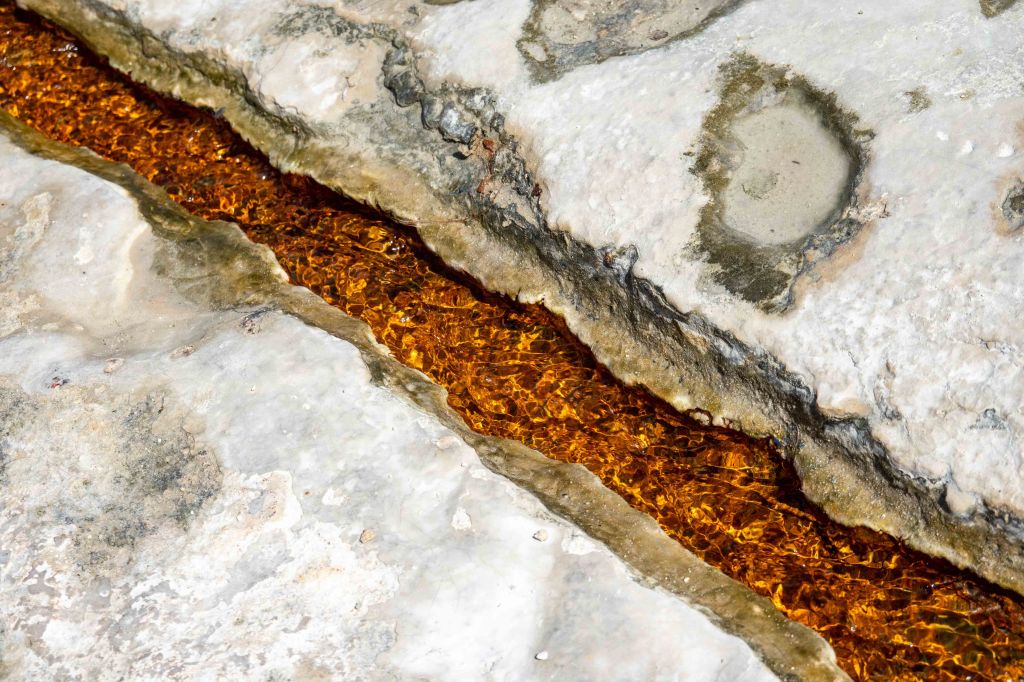
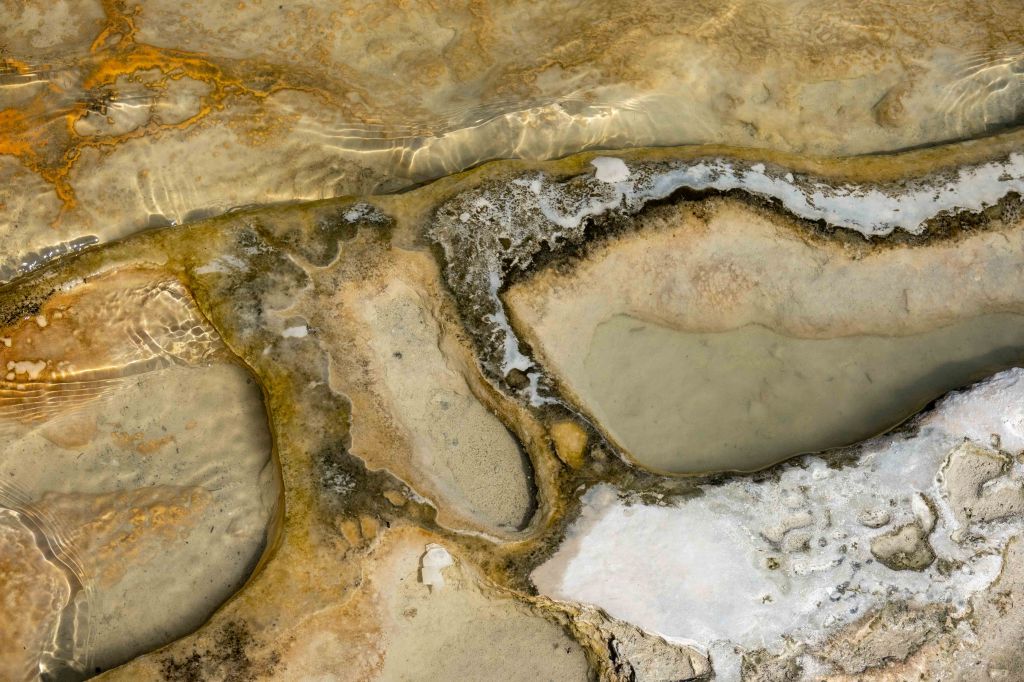
Other pools are closed to the public for swimming.
We found a colorful cricket, the ones they eat! But this one was still very alive.

Back in the bus and on the way to our next stop. The Mitla Archeological Site.
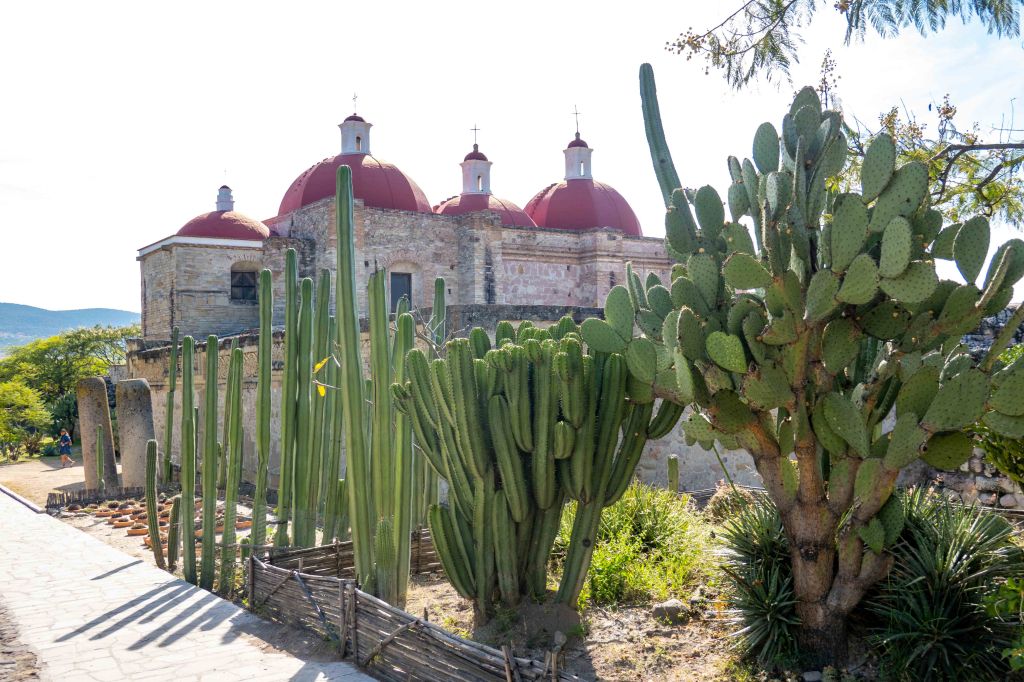
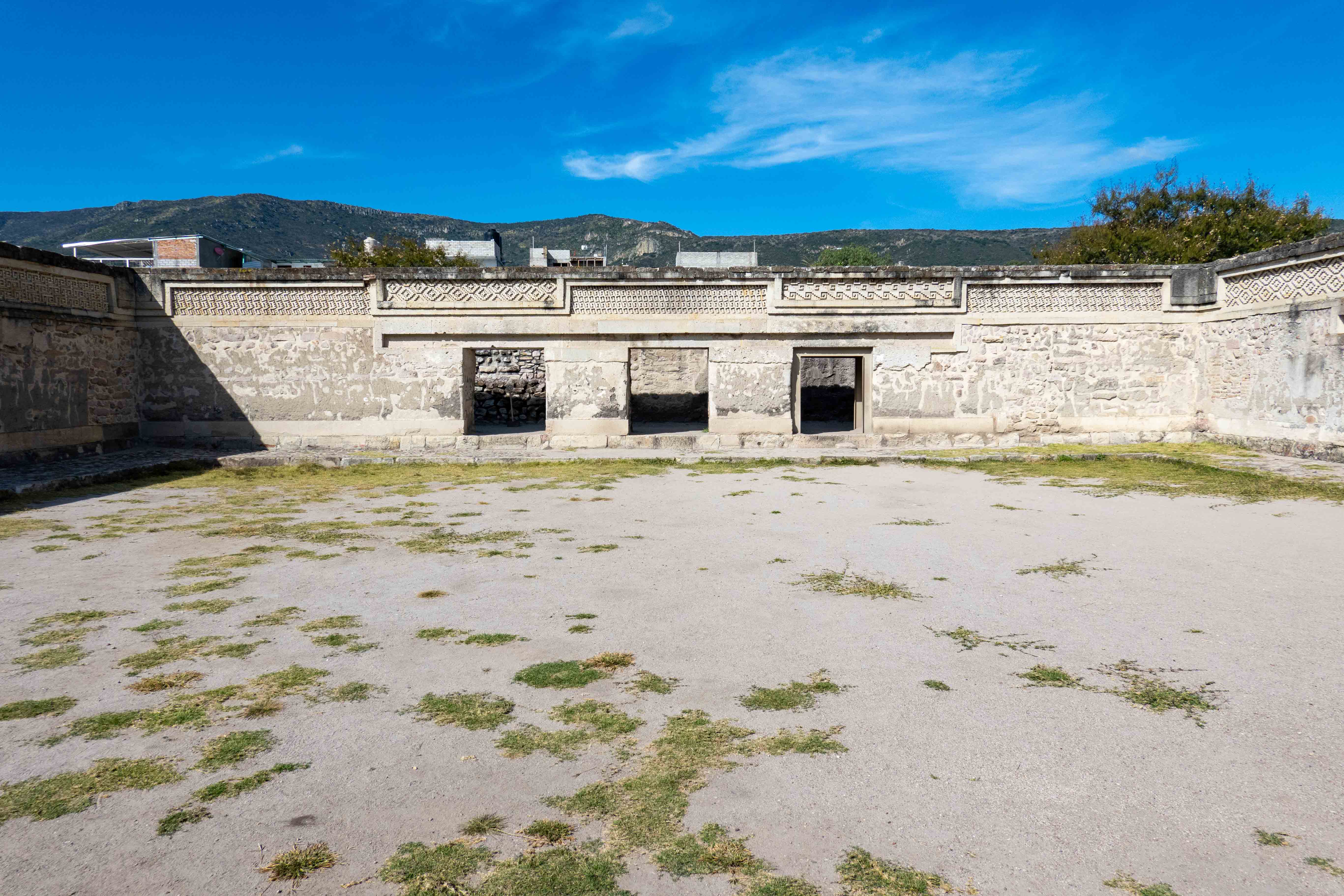
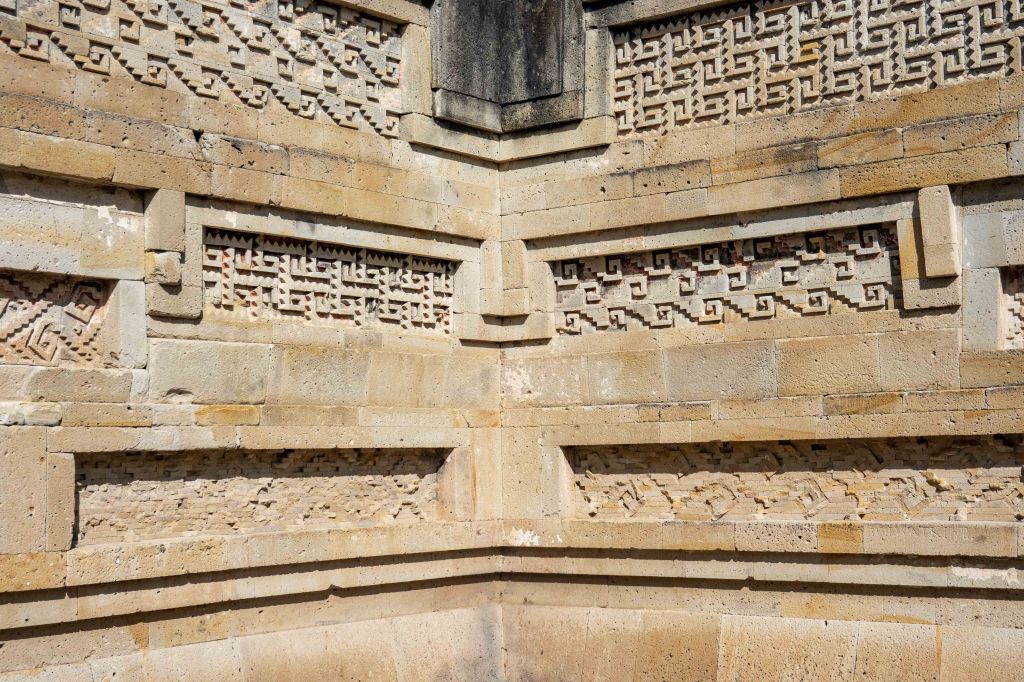
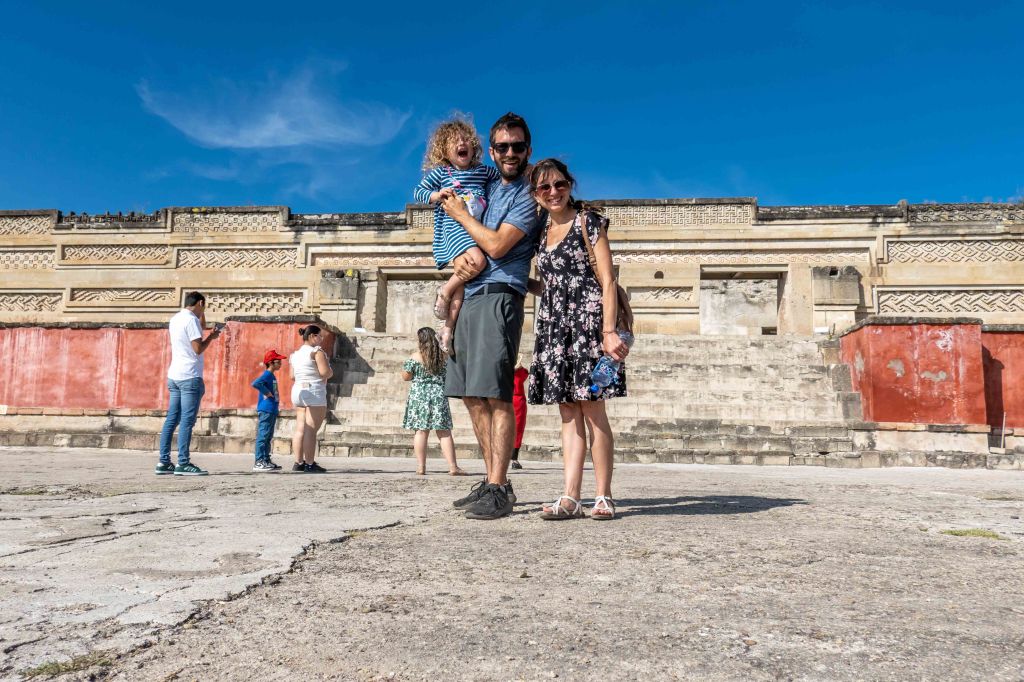
It was an important ceremonial center for the Zapotec civilization and later adopted by the Mixtec people. The site is renowned for its intricate and unique geometric mosaics, which are carved into stone and adorn the walls of its structures. These designs are unlike those found in any other Mesoamerican site.
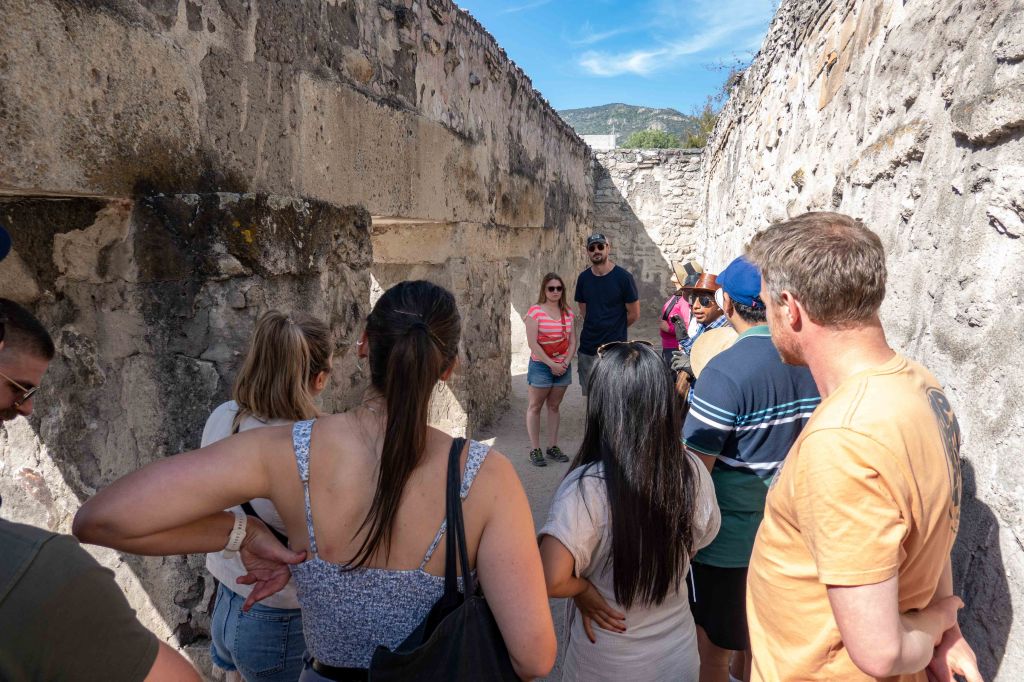
We finally got a great explanation from the local guide with great English. Unfortunately, we were chasing Ariela for half the explanation so we missed a lot of the historical info.
The mosaics are composed of thousands of small, finely cut stones arranged in elaborate patterns. These are thought to have symbolic meanings related to the cosmos and spirituality.
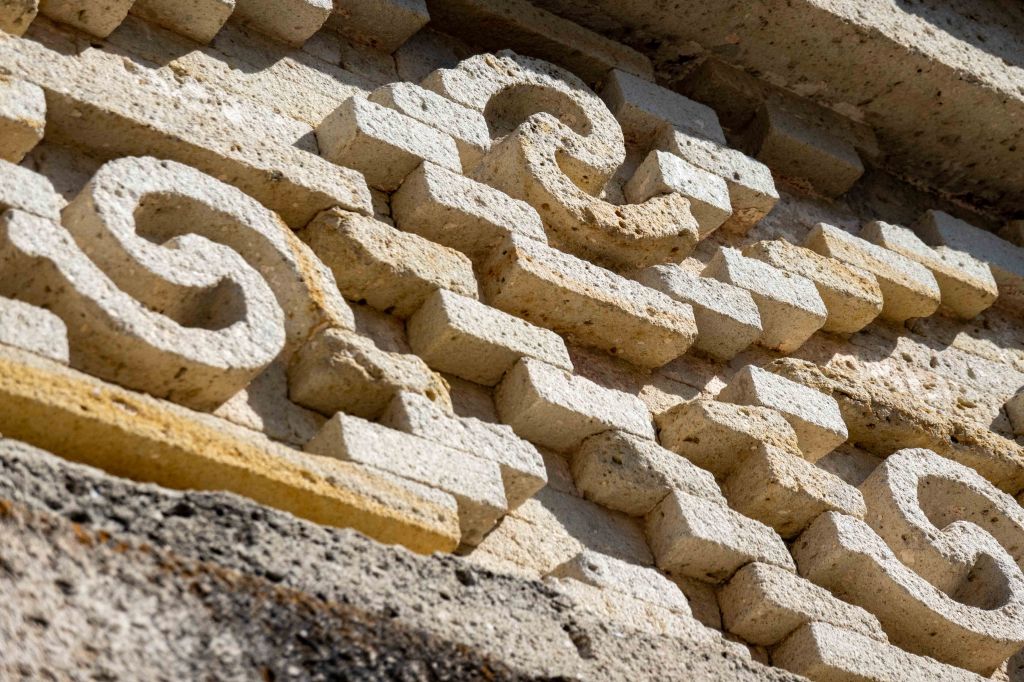
The name “Mitla” comes from the Nahuatl word Mictlán, meaning “Place of the Dead” or “Underworld.” The Zapotec name for the site is Lyobaa, meaning “Place of Rest.” This reflects its role as a sacred burial and ceremonial site.
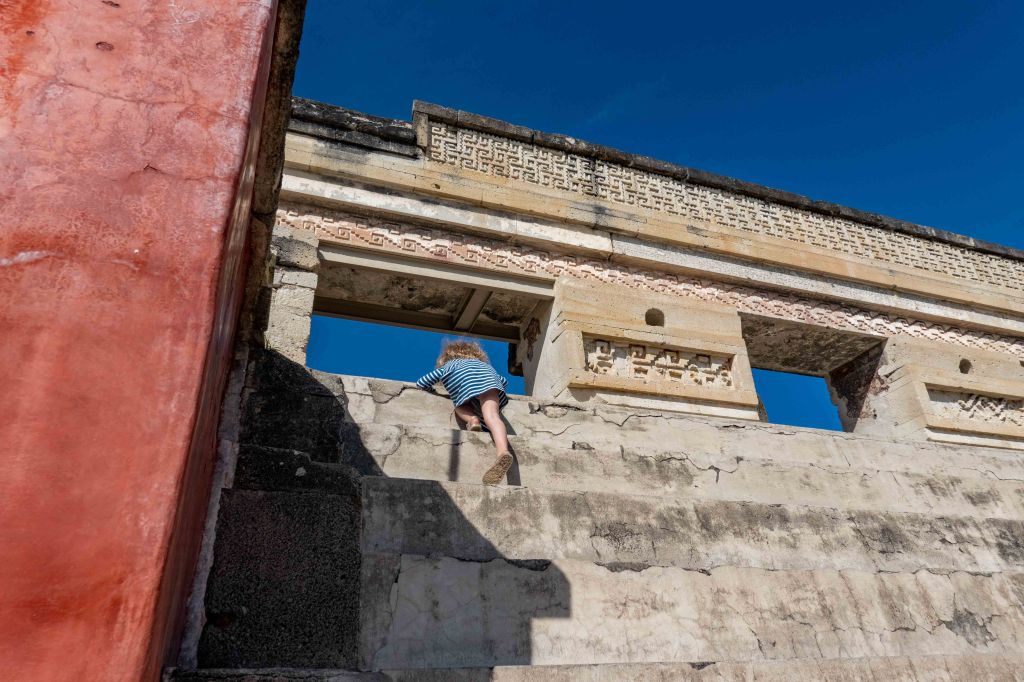
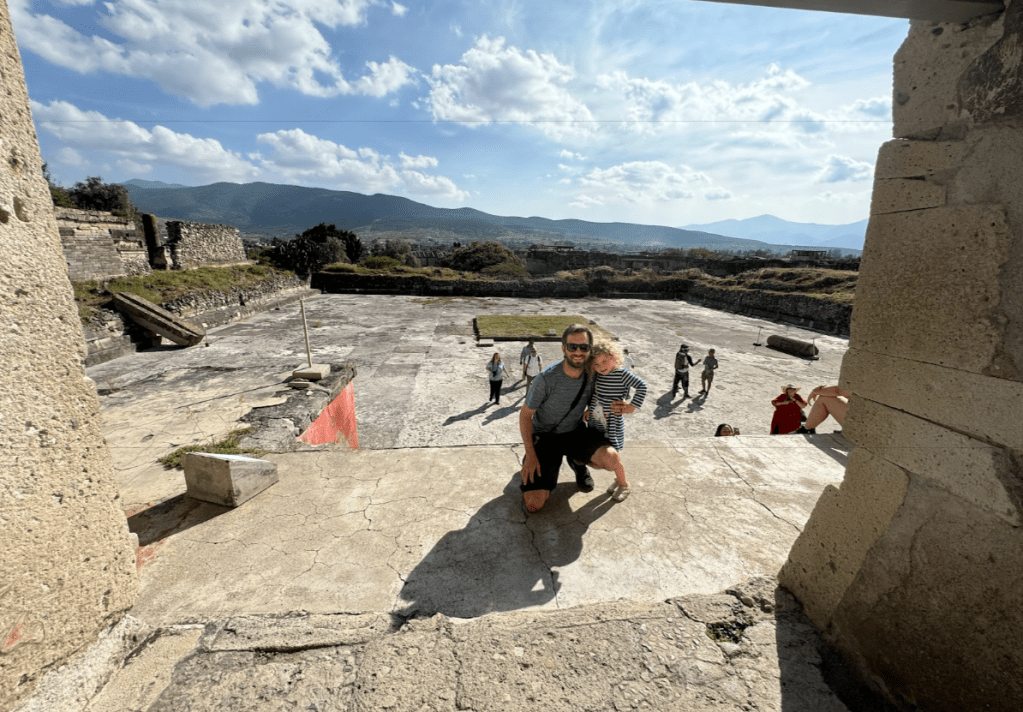
We visited the large hall supported by massive columns, possibly used for ceremonial or administrative purposes.
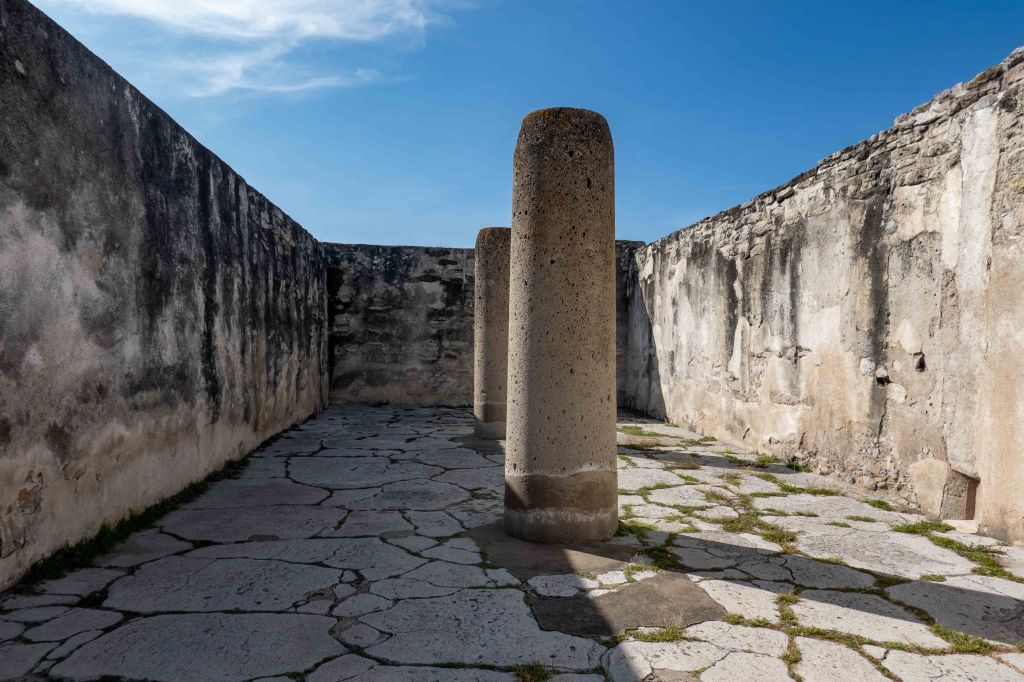
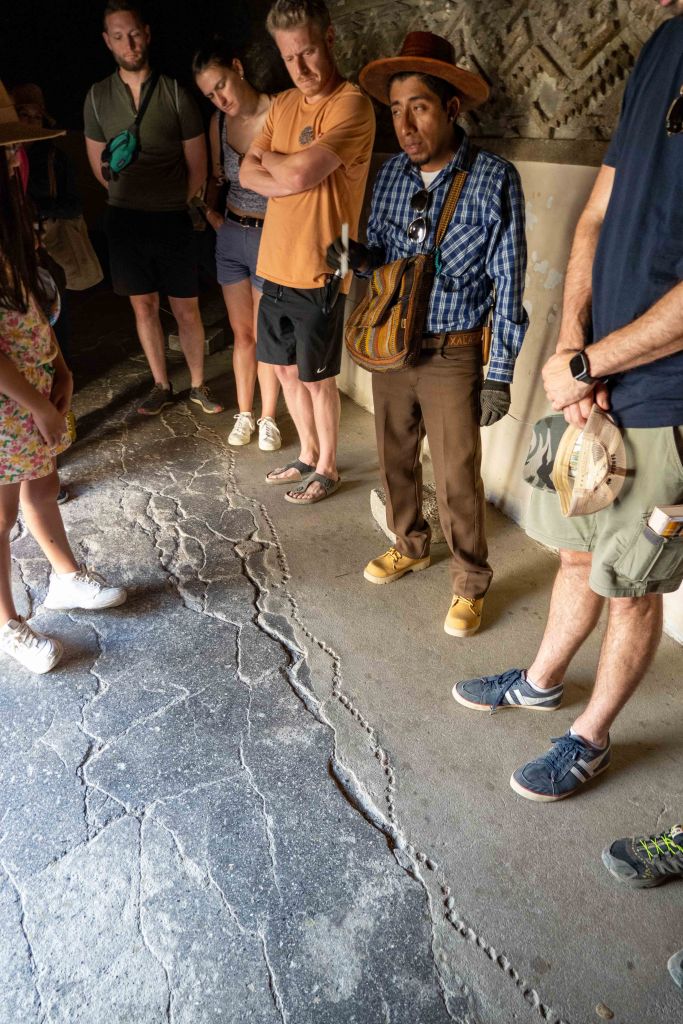
Fun fact. Do you see the “doted” line below? In archaeological excavations, dotted lines on the floor or other surfaces often serve as markers placed by archaeologists to delineate areas that have been systematically explored, studied, or excavated.
Ariela loved this temple and wanted to go in and out of the rooms.
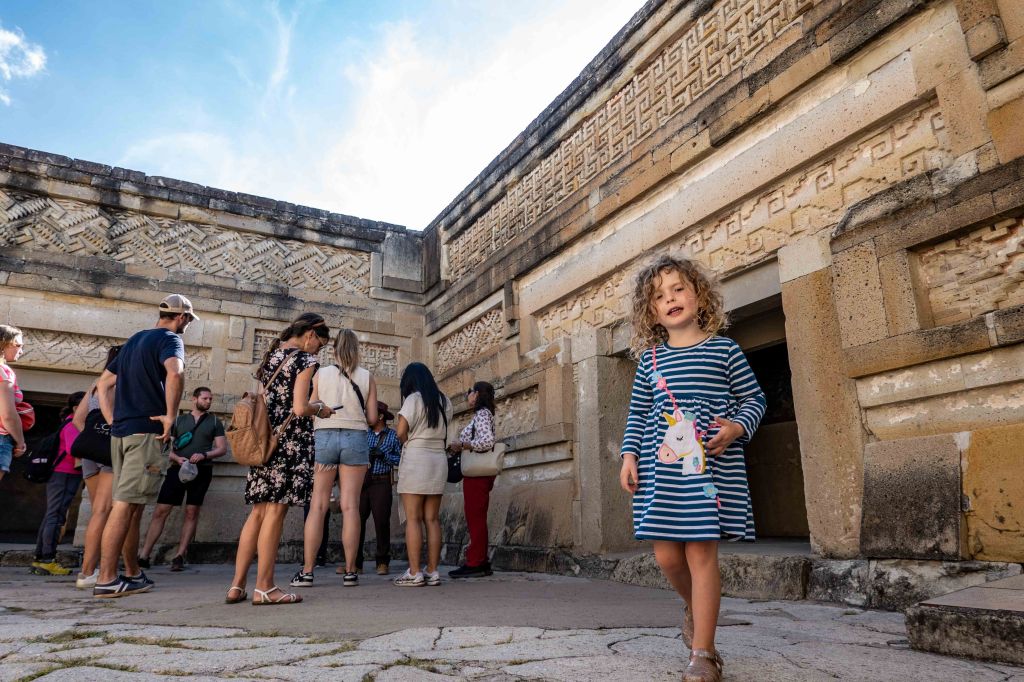
Mitla is a UNESCO World Heritage Site

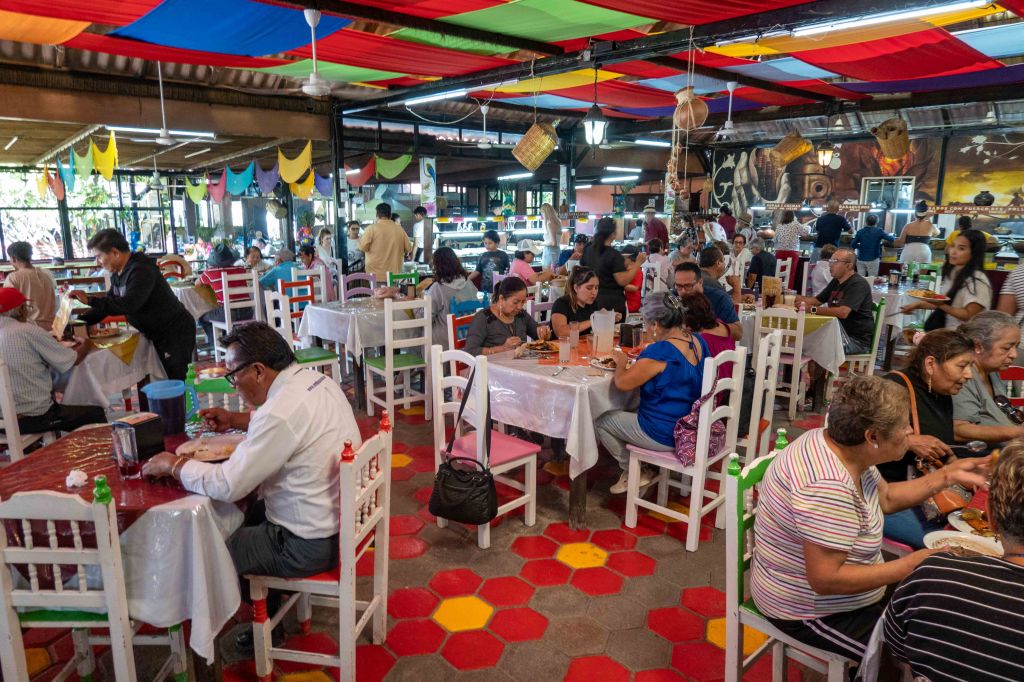
Time for food! We stopped at a great buffet of local food.
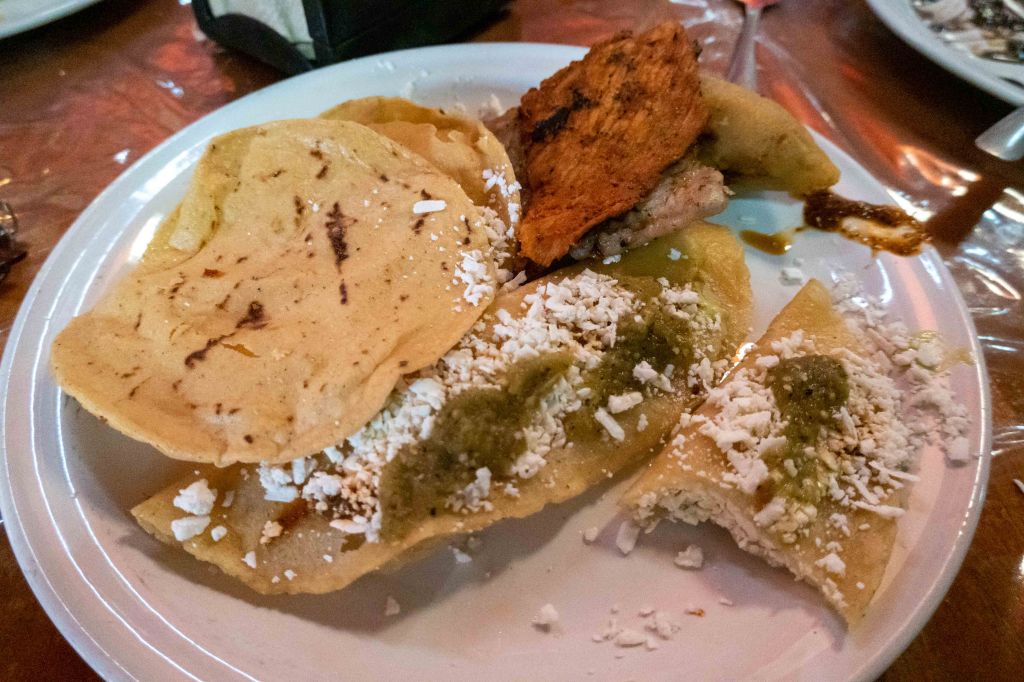
The cheese quesadillas were incredible.
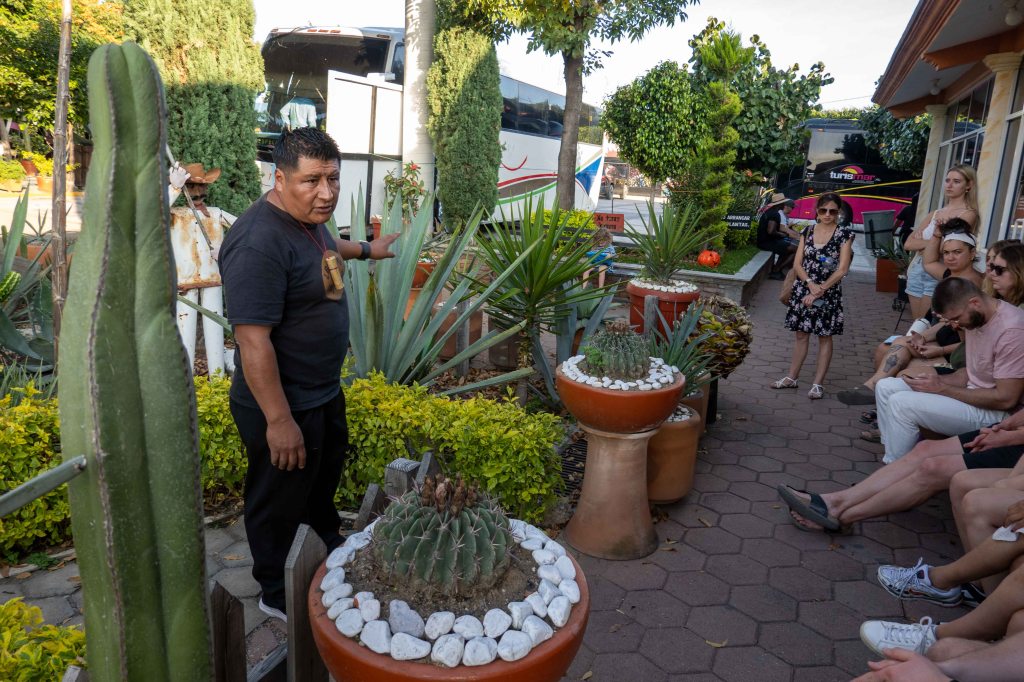
Our last stop of the day was a Mezcal factory, also known as a “Palenque”. We got a quick explanation of the different agaves that can be processed to make mezcal.
If you are wondering what is the difference between Tequila and Mezcal:
Tequila: Must be made in specific regions, primarily in the state of Jalisco and a few municipalities in other states, and it is produced exclusively from the blue Weber agave.
Mezcal: Can be made in nine Mexican states, with Oaxaca being the most famous. It is made from a variety of agave species (over 30 types can be used), including Espadín, Tobalá, and Madrecuixe.
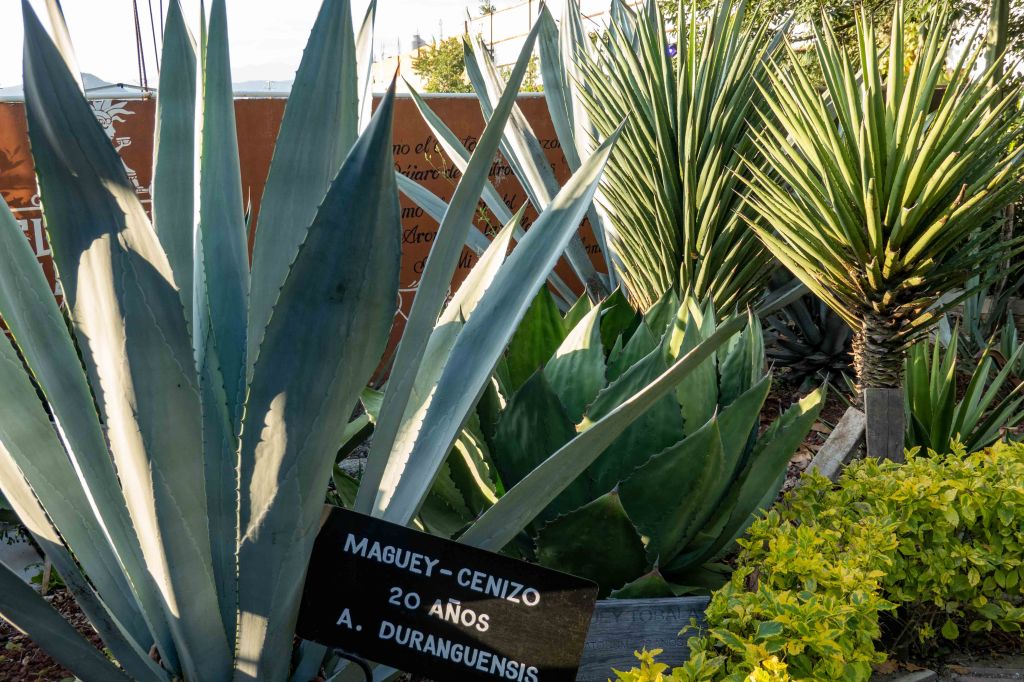
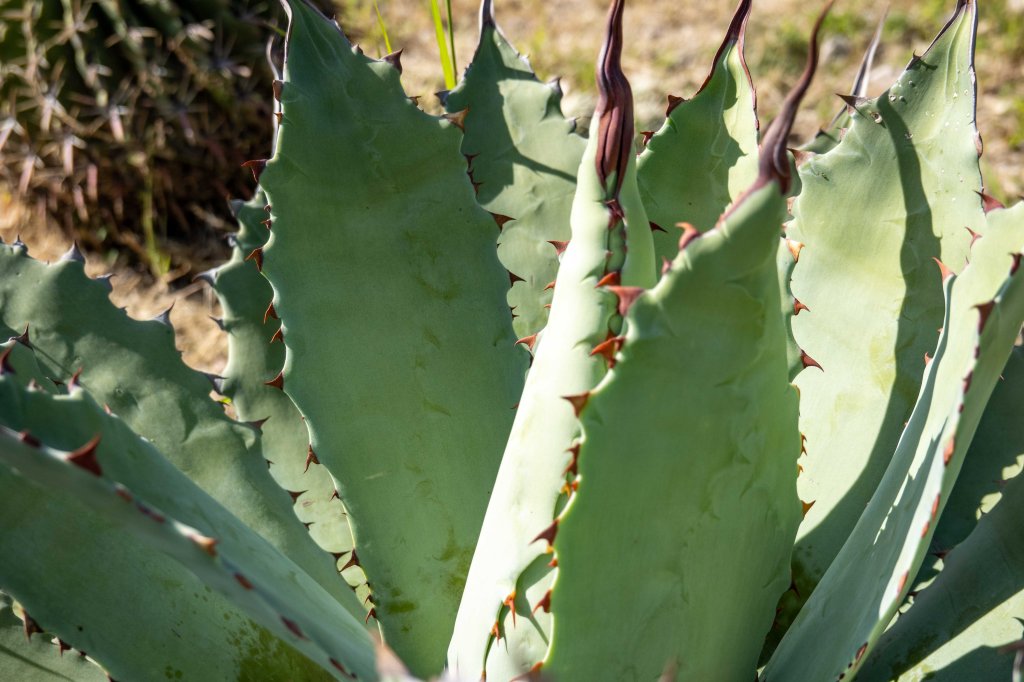
Agave hearts are roasted in underground pits lined with rocks, wood, and charcoal, giving mezcal its signature smoky flavor. Mature agave plants (8–12 years old) are harvested. The leaves (pencas) are stripped away, leaving the piña (heart) of the agave.

The process typically lasts 3–5 days, depending on the desired smokiness.
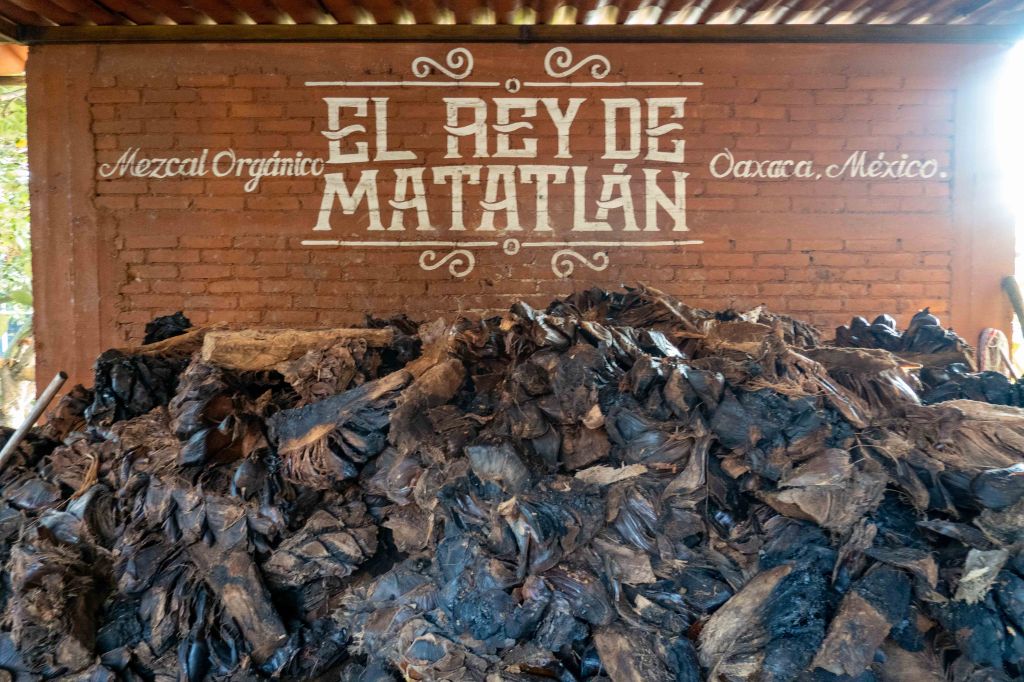
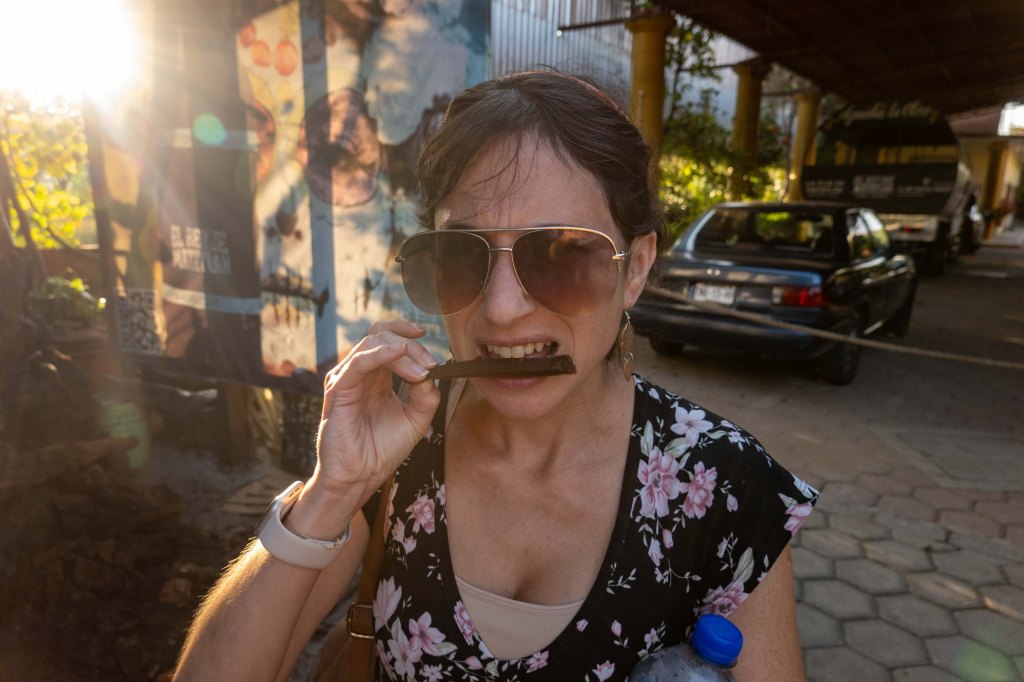
We tried the agave at this stage. It’s not bad, it tastes fermented and sweet. At this stage, they will make the Agave syrup used for cooking (and Margaritas!)
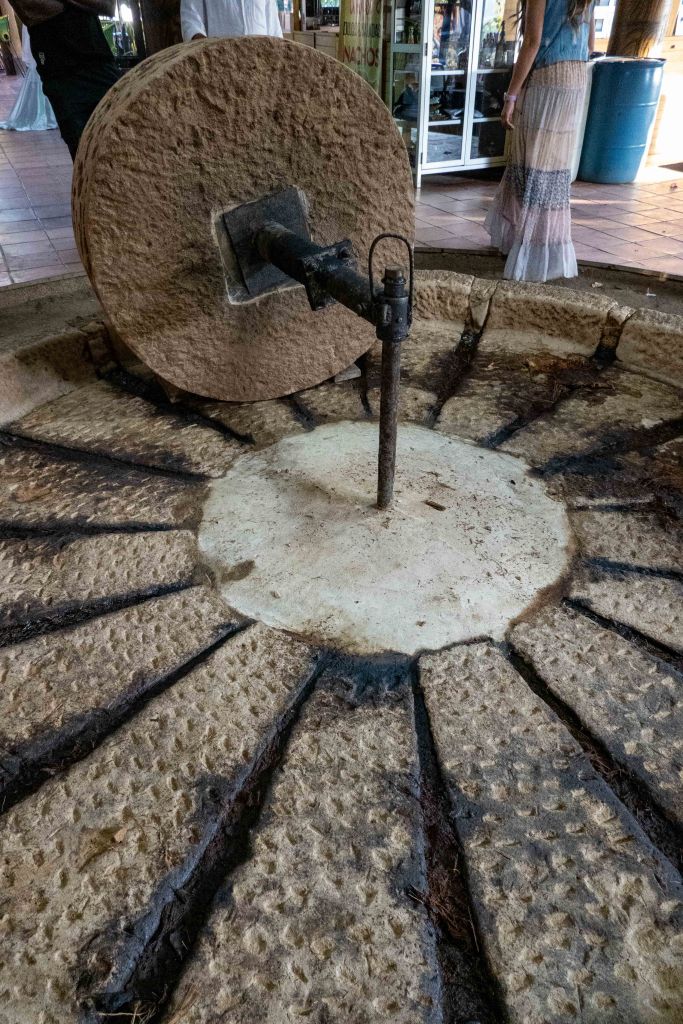
The roasted piñas are crushed by a large stone wheel called a tahona, pulled by animals (like oxen) or machinery.
Finally, we got to taste everything. Literally EVERYTHING.
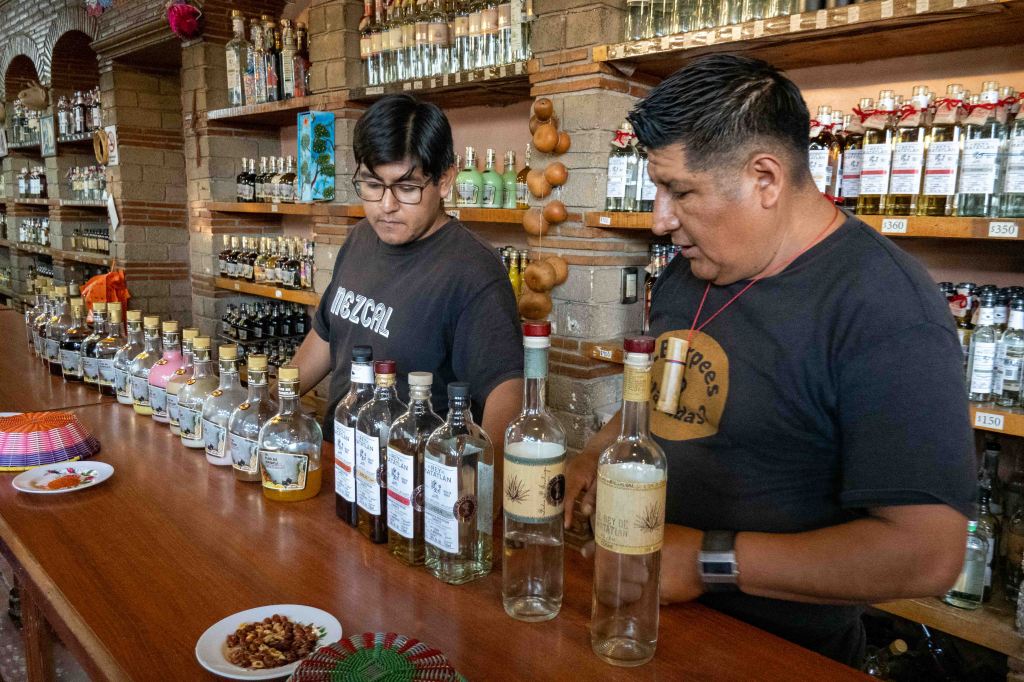
Eitan also got to eat the Mezcal worm… juicy!

Ariela patiently waited for us to complete our tasting. She even joined us trying the orange slices, which is used as a chaser when tasting Mezcal. We were impressed by Ariela and so were all the backpackers who were impressed and I think also relieved that she was pleasant to have on the tour.
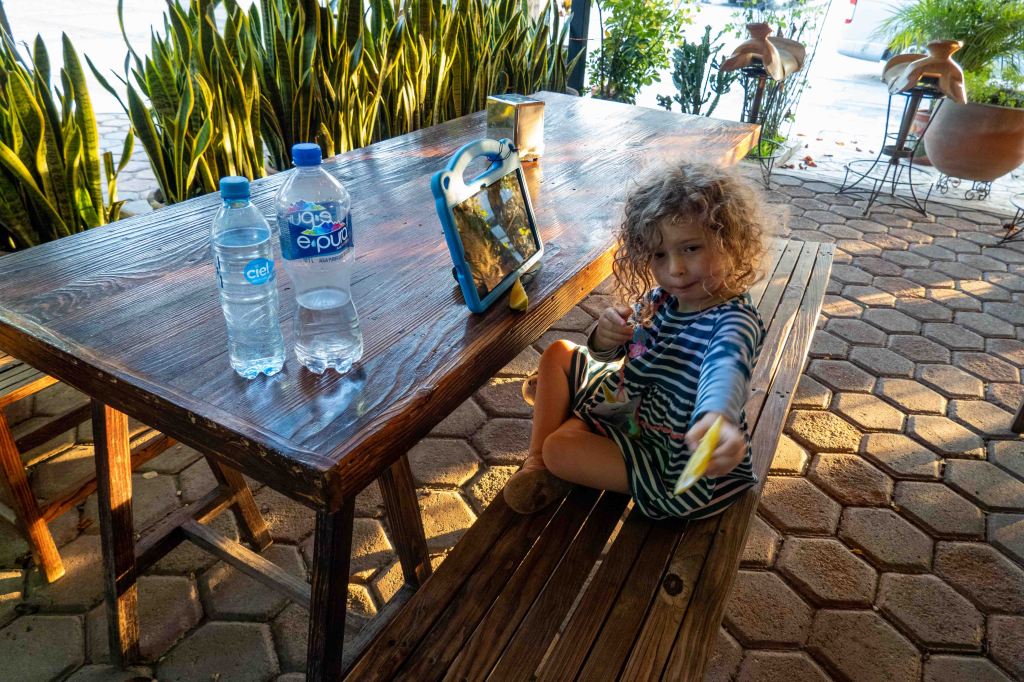
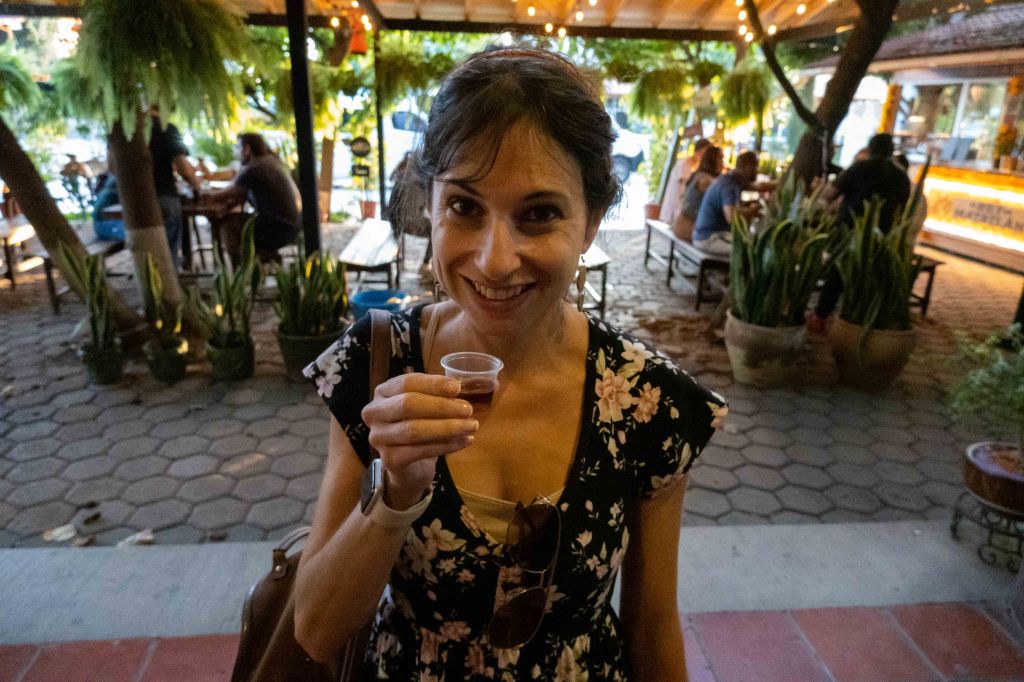
Sarita even liked some of the flavourful liquors, but definitely not the mezcal.
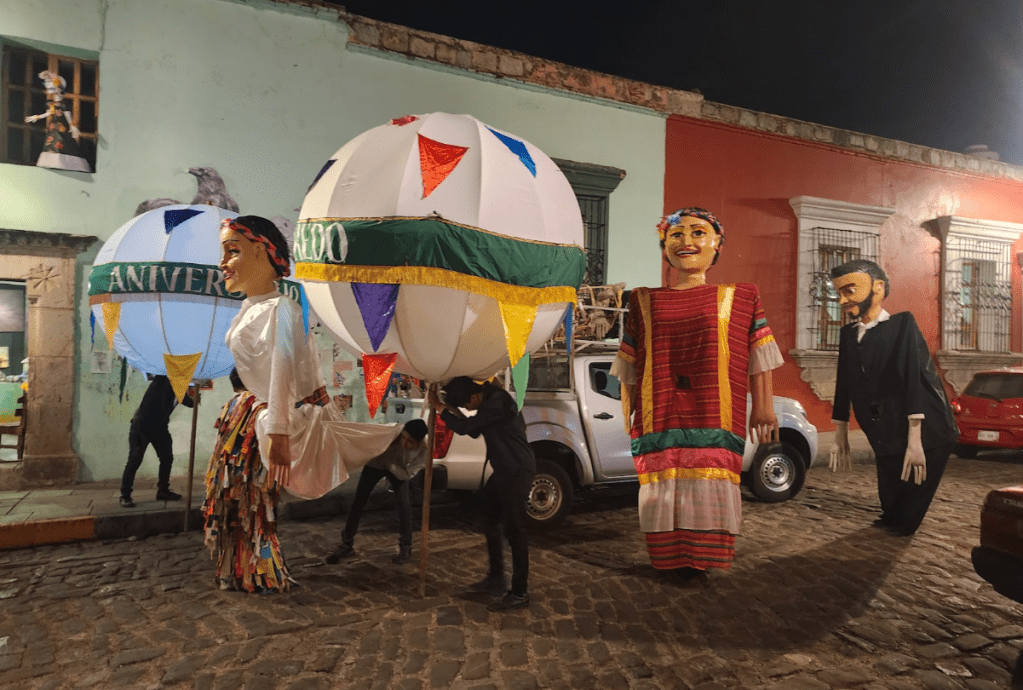
Back at the hotel and absolutely exhausted. We went for a last minute souvenir run for the family, and we even saw another wedding!
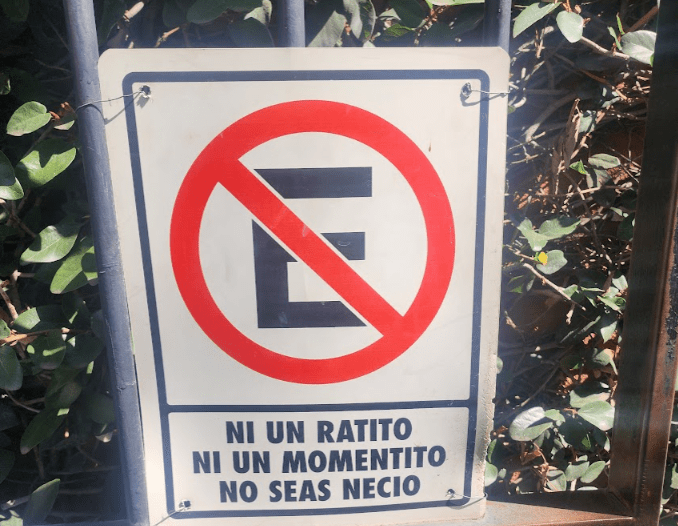
Pic of the Day: This No-Parking sign was very funny to Eitan as it really encompass the Mexican culture. It literally translated to “Don’t Park, not even a little bit, not just a quick moment, don’t be stubborn”

 WHERE IS NOODLE